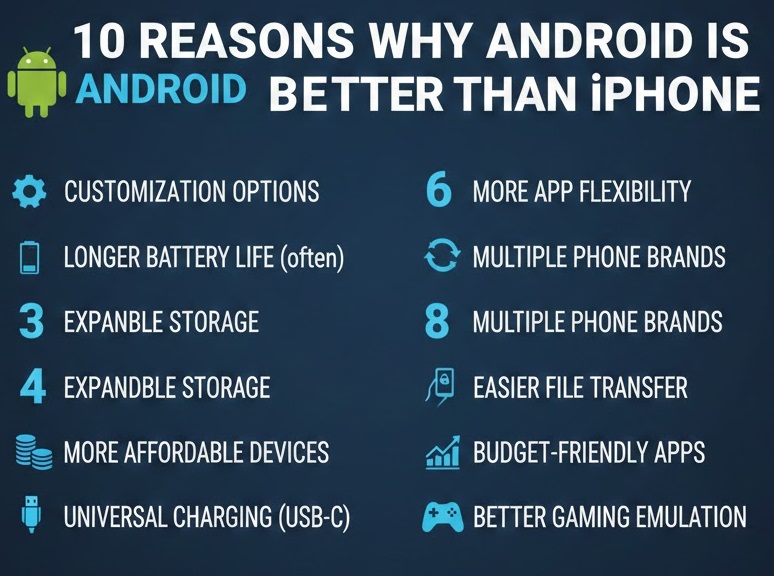

Many smartphone users are captivated by the sleek design and brand prestige of Apple, but there’s a lot more to consider when picking your next device. In this digital age, functionality and personalization play huge roles in how we interact with our smartphones. If you’re looking for flexibility, affordability, and advanced features that cater to your unique lifestyle, Android might just be the better option for you. Let’s dive into ten compelling reasons why Android stands out as a superior choice over its competitor!
Customization Options
Android offers a level of customization that iPhone users can only dream about. From launcher apps to widgets, the options are almost limitless. You can change how your home screen looks and behaves in countless ways.
Want a live wallpaper? No problem. Prefer minimalist icons? Easy to achieve. The Android ecosystem supports third-party applications that allow you to personalize every aspect of your device.
You can even modify system settings without rooting your phone, thanks to various apps available on the Google Play Store. This flexibility means you’re not just using a device; you’re creating one tailored specifically for you.
Whether it’s changing fonts, colors, or layouts, these features let users express their individuality more than ever before—an experience that’s simply unmatched on an iPhone.
Affordability
When it comes to affordability, Android phones take the lead. There’s a vast range of devices available at various price points. Whether you’re looking for a budget-friendly option or a high-end model, there’s something for everyone.
Many manufacturers offer Android phones that won’t break the bank. You can find reliable models with great features starting under $300. These options make it easier for people from different financial backgrounds to own a smartphone without sacrificing quality.
On the other hand, iPhones tend to come with premium pricing attached across the board. This often means that users need to stretch their budgets significantly just to access basic functionalities.
By choosing an Android device, you have more freedom in selecting what fits your wallet while still enjoying top-tier technology and innovation. It’s about having choices that suit your lifestyle and budget perfectly.
Wide Range of Phone Choices
When it comes to smartphone selection, Android shines brightly. Users are greeted with a vast array of choices that cater to various preferences and budgets.
From flagship models boasting cutting-edge technology to budget-friendly options that get the job done, there’s something for everyone. Brands like Samsung, Google, OnePlus, and Xiaomi offer unique features and designs tailored to different lifestyles.
Want a phone with an incredible camera? Look no further than the latest offerings from Google Pixel or Samsung Galaxy series. Interested in gaming? ASUS ROG phones deliver powerful performance.
Android’s diversity doesn’t just stop at brands; you can choose screen sizes, battery capacities, and even specialized features like ruggedness or ultra-lightweight designs. Each device brings its personality while still being part of the larger Android ecosystem, allowing users unparalleled flexibility when selecting their perfect match.
Expandable Storage
One of the standout features of Android devices is their expandable storage options. Unlike iPhones, many Android models allow users to insert a microSD card. This flexibility means you can increase your phone’s memory without breaking the bank.
Imagine capturing countless photos and videos during your travels or downloading apps without worrying about running out of space. With an SD card, you’re in control.
You can easily swap cards between devices or upgrade to larger ones as needed. It’s a simple way to keep your digital life organized and accessible.
Plus, if you’re someone who enjoys media consumption, having that extra storage can make all the difference. Download movies, music, and games at will—no more deleting old content just to make room for new favorites. The freedom truly enhances user experience on Android phones.
More Open Source
Android operates on an open-source platform, allowing developers to access and modify the source code freely. This flexibility fosters innovation and creativity within the developer community.
With Android, there’s a diverse range of applications available. Developers can create unique software experiences for users without strict limitations. They can experiment with features that push boundaries.
Moreover, being open-source means faster updates from manufacturers or third-party developers. Users often benefit from custom ROMs that enhance performance or add new functionalities not found in standard versions.
This openness attracts a global network of enthusiasts who share knowledge and tools. As a result, Android boasts vibrant forums where tips for customization are exchanged regularly.
The end user gains from this dynamic ecosystem as it leads to constant improvements, making devices more adaptable to individual needs. With such variety at hand, Android remains compelling for those seeking personalization and functionality tailored just for them.
Better Battery Life
When it comes to battery life, Android often takes the lead. Many Android devices are equipped with larger batteries than their iPhone counterparts. This means you can enjoy your apps and media for longer without searching for a charger.
Manufacturers like Samsung, OnePlus, and Google offer models that last throughout the day on a single charge. Advanced power-saving modes also help extend usage when you’re running low on juice.
Moreover, some Android phones feature fast charging technology that can get you back in action quickly. You won’t have to waste time waiting around while your device powers up.
The flexibility of choosing from various brands allows users to find a phone tailored specifically to their needs—especially regarding battery performance. With so many options available, it’s easier than ever to select an Android device designed for longevity and efficiency.
Google Assistant vs Siri
When it comes to voice assistants, Google Assistant and Siri are often the top contenders. Each brings its unique set of features to the table.
Google Assistant shines with its ability to understand context and provide more accurate answers. It pulls from Google’s vast search database, making it incredibly versatile for various queries. You can ask it about anything—from simple calculations to complex trivia—and expect a thorough response.
Siri, on the other hand, is tightly integrated into Apple’s ecosystem. It excels in controlling smart home devices and managing tasks within iOS apps. However, some users find Siri’s responses limited compared to Google Assistant.
While both have their strengths, many Android users appreciate the breadth of functionality that Google Assistant offers across different platforms and services. This versatility makes everyday tasks easier and more efficient for those who prefer an open experience.
No Forced Updates
One of the standout features of Android is the freedom it offers regarding software updates. Users have control over when and if they want to update their devices. This flexibility can be a game-changer for those who prefer stability over novelty.
Many people cherish their current setup and don’t want to risk potential bugs that come with new versions. With Android, you can choose to hold off on updates until you’re ready.
This choice allows users to fully enjoy their device without feeling pressured to comply with manufacturer timelines. It’s all about personal preference here—some love staying up-to-date, while others appreciate sticking with what works best for them.
Additionally, this approach caters well to older devices that might struggle with newer software requirements. You can retain functionality longer without being forced into an upgrade cycle.
Compatibility with Other Devices
Android devices shine when it comes to compatibility with a variety of other gadgets. Unlike the iPhone, which often limits you to Apple’s ecosystem, Android opens up a world of options.
Whether connecting to smart home devices, wearables, or even gaming consoles, Android users enjoy seamless integration. Many third-party manufacturers design their products to work well with Android systems. This flexibility is a major advantage for tech enthusiasts who love experimenting with different brands.
Moreover, if you’re into customizing your setup, Android allows easy connections across platforms like Windows and Linux. File transfers are straightforward too; no need for proprietary software.
This level of compatibility lets users choose the best products that fit their lifestyle without being locked into one brand’s offerings. The freedom that comes with an open system makes every interaction more enjoyable and efficient.
Conclusion
Choosing between Android and iPhone ultimately comes down to personal preference. However, the benefits of using an Android device are hard to ignore. With extensive customization options, affordability, and a wide range of phone choices, it’s easy to find an Android that fits your specific needs.
Expandable storage is another significant advantage for those who prioritize flexibility in their devices. Additionally, the open-source nature allows for greater innovation and functionality than many might expect. Battery life tends to be better on various Android models as well, ensuring you stay connected longer throughout the day.
When it comes to virtual assistants like Google Assistant versus Siri, many users prefer Google’s capabilities and integrations with other platforms. Speaking of compatibility, Android does not force updates on its users—the choice is yours when you want to upgrade.
With all these advantages combined—along with seamless integration with a variety of devices—it becomes clear why so many people choose Android over iPhone. The features cater more closely to user preferences while providing excellent performance across a broad spectrum of functionalities available today.

