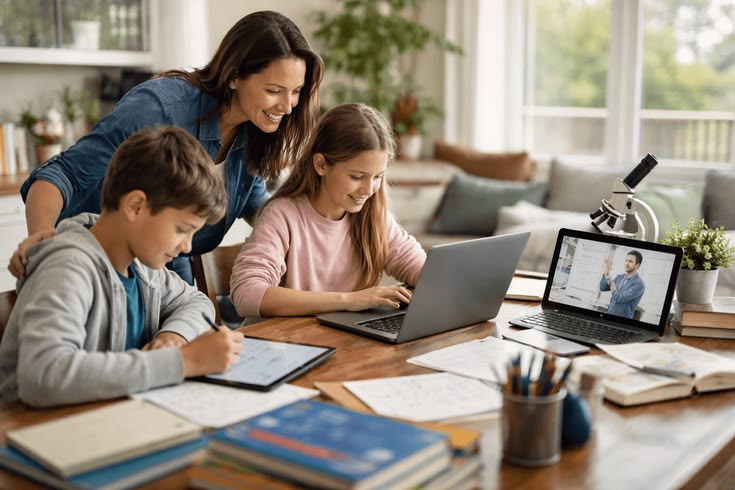
Hybrid homeschooling is becoming more and more popular across Florida, and it’s easy to see why. Families want flexibility, but they also want structure, community, and support. Instead of choosing between full homeschooling and traditional school, hybrid models combine both, usually mixing online coursework with in-person classes, co-ops, or learning centers. Florida’s flexible legal framework makes this especially workable, which is why more families are building custom setups rather than sticking to one model.
What hybrid homeschooling looks like in Florida
There isn’t a single definition of “hybrid” in Florida law. The term covers a mix of approaches, often built around two main structures:
Virtual learning + co-ops or enrichment programs
Many families use online platforms (full-time or part-time) and then layer in-person experiences on top. This can include weekly co-ops, science labs, group classes, or even drop-off “micro-school” days. These programs may meet 1–3 days per week and focus on subjects that benefit from collaboration.
Florida doesn’t formally regulate co-ops or hybrid programs as a category, so they operate independently. That gives families flexibility, but also means parents need to vet quality and safety themselves.
Umbrella schools (private school cover) with flexible instruction
Umbrella schools are a big part of the hybrid ecosystem. In Florida, these are private schools that allow students to learn at home while the school handles administrative requirements.
Once enrolled, the child is legally considered a private school student, not a homeschooler.
These schools often track attendance (usually around 180 days), provide transcripts or diplomas, and offer optional classes, meetups, or online tools
Families then mix in co-ops, tutors, or virtual courses to build a hybrid schedule.
How hybrid compares to traditional homeschooling
Florida already gives homeschoolers a lot of freedom, so the decision often comes down to how much structure a family wants and what benefits they are looking for.
Hybrid schooling wins when it comes to:
- Built-in structure: Hybrid programs create a weekly rhythm. That helps parents who don’t want to plan everything from scratch. It also makes it easier for kids to stay on track without constant reminders.
- Social interaction: Co-ops, group classes, and shared learning days give kids consistent peer interaction, which is one of the biggest concerns in pure homeschooling. Over time, this builds friendships that feel more stable than occasional meetups.
- Shared teaching load: Parents don’t have to handle every subject. Group instructors or online teachers can take over math, science, or writing, which frees up time during the day. Some parents use that window to catch up on personal tasks or unwind with quick entertainment, like playing popular Bitcoin crash games.
- Administrative support (umbrella schools): Umbrella schools remove paperwork pressure by handling compliance, records, and sometimes evaluations. That support helps families stay organized without needing to track every requirement on their own.
But pure homeschooling offers some other benefits, including:
- Maximum flexibility: Under Florida’s Home Education Program, there are no required subjects, schedules, or school days. Hybrid setups often come with fixed days or expectations.
- Lower cost: Co-ops, hybrid programs, and umbrella schools usually involve fees, even if they’re lower than private school tuition.
- Full control over curriculum: Hybrid programs may require or recommend specific materials, especially under umbrella schools.
In short, hybrid models trade some freedom for structure and support. For many families, that’s a good deal, but not always.
Legal compliance: What Florida families need to know
Florida is considered a “moderate regulation” state, but the rules are straightforward once you pick a path.
There are three main legal options:
Home Education Program (most common)
- File a Notice of Intent with your county
- Keep a portfolio of work
- Complete an annual evaluation
This is the route most hybrid families use when combining online learning and co-ops.
Umbrella (private) school
- Enroll in a private school that supports home-based learning
- Follow the school’s attendance and reporting rules
- No need to file with the district yourself
This option simplifies compliance but shifts control to the school.
Private tutor option
- Requires a Florida-certified teacher
- Must meet 180-day requirement (numaschool.com)
This is less common in hybrid setups.
All three paths satisfy Florida’s compulsory attendance law for children ages 6–16.
How to balance structure and socialization
Hybrid homeschooling works best when families treat it as a system and follow a few core rules.
Start with your “anchor”
Pick one primary structure, either an umbrella school or a consistent weekly program. Everything else should support that, not compete with it.
Build a weekly rhythm
For example:
- 2–3 days at home (core academics)
- 1–2 days in co-ops or classes
- 1 flexible day for projects or field trips
Consistency helps kids stay on track without feeling boxed in.
Be intentional about social time
Successful families plan socialization through sports, clubs, co-ops, or recurring meetups. Florida has a strong homeschool community, and local groups can fill that gap quickly.
Track progress even if it’s not required
If you’re under an umbrella school, formal evaluations may not be mandatory. Still, keeping a portfolio or periodic assessments helps you stay accountable and spot gaps early.
Avoid overloading the schedule
Hybrid setups can easily turn into “too much of everything.” A packed week defeats the purpose of homeschooling flexibility. Keep margins in the schedule.
Final Take
The state’s laws in Florida make hybrid homeschooling possible without heavy restrictions, which is why these setups keep growing. The key is finding the right balance: enough structure to stay consistent, enough flexibility to keep it sustainable.

