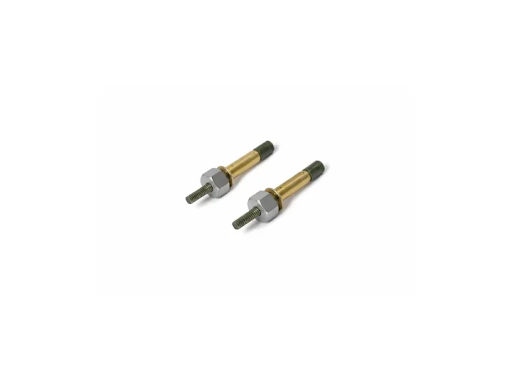

Mechanical assemblies in industries are continually subjected to vibration, stress and dynamic movement. Equipment like vehicles, industrial machinery, heavy equipment and structural systems operate in an environment where components move, rotate and are subject to repeated mechanical loads. In such environments, keeping secure connections between parts is extremely important. Even a little loosening in a fastener can eventually result in a malfunction of the equipment or the structure itself.
This is why engineers are careful to select fastening systems built especially for demanding environments. Composi-Lok fasteners are commonly used in assemblies that require resistance to vibration and strong and reliable joints. Their design enables them to form secure structural connections, making them an important part in applications where safety and durability are important factors.
The Importance of Vibration Resistance in Mechanical Systems
Vibration is a natural occurrence of many mechanical operations. Machines that rotate, compress, transport or generate power frequently produce continuous vibration. Over a long period, this vibration can cause damage to the stability of the joints and fasteners that hold equipment together.
Traditional threaded fasteners rely on friction between threads to secure them in position. However, when exposed to repeated vibration, that friction can be slowly reduced. As a result, bolts may gradually become loose and components may move out of alignment. When this occurs, it can lead to wear between parts and decrease efficiency and increase the risk of mechanical failure.
In industries like manufacturing, transportation, aerospace and heavy engineering, vibration resistant fastening solutions are a must. Engineers require fasteners that are stable even under repeated stress and movement. This is where the structural fasteners like Composi-Lok play an important role. Their design helps ensure that connections are tight and secure even in environments with vibration being unavoidable.
What Are Composi-Lok Fasteners?
Composi-Lok fasteners are structural blind fasteners that are designed for applications which require strong and reliable connections. Compared to more traditional nuts and bolts which require access to both sides of a structure, blind fasteners can be installed from one side only. This makes them especially useful in assemblies where the back side of the joint is difficult to get at.
These fasteners are made for making strong structural joints while ensuring a uniform clamp force. The installation process creates a secure connection that keeps materials together in a tight manner. Due to this design, they are commonly used in assemblies where stability of the joint is of great importance.
Another important feature of Composi-Lok fasteners is the fact that they work well with different materials. Modern engineering structures often incorporate metals with composite materials. Fasteners used for such structures must be able to transfer strength without damaging the surrounding structure. The design of Composi-Lok fasteners help to address this requirement.
How Composi-Lok Fasteners Prevent Loosening
One of the main reasons Composi-Lok fasteners are used in vibration-prone assemblies is their locking design. These fasteners include internal locking features that prevent the fastener from loosening after installation. Once properly installed, the fastener remains secured in place even when the assembly experiences continuous vibration.
This locking capability is important because it reduces the possibility of rotational movement within the fastener. When fasteners rotate or shift slightly due to vibration, the joint may gradually loosen. The locking design helps eliminate this risk by maintaining a stable connection.
Another factor that contributes to their reliability is the controlled installation process. During installation, the fastener creates a tight and consistent clamp between the materials being joined. This ensures that the components remain firmly connected and reduces the chance of movement within the joint.
Because of these design elements, Composi-Lok fasteners provide dependable fastening in environments where traditional bolts might struggle to maintain long-term stability.
Load Distribution and Structural Strength
Another reason these fasteners perform well in vibration-resistant assemblies is their ability to distribute load effectively. When mechanical loads are concentrated in a small area, materials may experience excessive stress. Over time, this can lead to cracking, deformation, or structural damage.
Composi-Lok fasteners help reduce this risk by distributing load across a wider surface area. When installed, the fastener forms a blind-side upset that spreads the load more evenly across the joint. This reduces localised stress and improves the durability of the connection.
Better load distribution also helps maintain structural integrity during vibration. When forces are spread across a larger area, the materials being joined experience less concentrated pressure. This contributes to longer-lasting assemblies and reduces the likelihood of joint failure.
In applications where structural stability is critical, this ability to distribute load efficiently becomes a significant advantage.
Compatibility with Composite Materials
Many modern engineering applications use composite materials because they provide excellent strength while remaining lightweight. Composite materials are commonly used in aerospace structures, transportation equipment, and advanced manufacturing systems.
However, composites behave differently from traditional metals when subjected to mechanical loads. Fasteners designed for metal structures may sometimes damage composite materials by concentrating stress in small areas.
Composi-Lok fasteners are designed to address this challenge. Their structure allows loads to be distributed across a larger surface area, which helps protect composite materials from damage. This makes them suitable for applications where composites and metals must be joined together in a reliable manner.
Additionally, these fasteners are available in materials such as titanium and corrosion-resistant steel. These material options help ensure compatibility with different structural requirements and environmental conditions.
Installation Advantages in Complex Assemblies
Another benefit of Composi-Lok fasteners is their ability to simplify installation in complex assemblies. Many mechanical systems have enclosed spaces where accessing both sides of a joint is difficult. Installing conventional bolts in such areas can be time-consuming and challenging.
Because Composi-Lok fasteners are blind fasteners, they can be installed from one side of the structure. This reduces installation complexity and allows engineers to create strong joints even in areas with limited access.
The installation process is also designed to provide consistent clamp force, which helps ensure reliable fastening. Proper installation is important because it directly affects the performance and durability of the fastener.
By simplifying installation while maintaining strong structural performance, these fasteners offer practical advantages in many engineering applications.
Reliability in High-Stress Environments
Mechanical assemblies often operate in environments where they are exposed to multiple stress factors. These may include vibration, temperature changes, heavy loads, and exposure to moisture or chemicals. Fasteners used in such environments must be able to maintain their performance over long periods of time.
Composi-Lok fasteners are designed to perform reliably under such demanding conditions. Their locking features help resist loosening caused by vibration, while their material options provide durability and corrosion resistance.
In addition to vibration resistance, some versions of these fasteners are capable of providing fuel-tight sealing. This makes them useful in applications where preventing fluid leakage is important. Such features further enhance their reliability in specialised industrial environments.
Because of their ability to maintain secure connections in challenging conditions, these fasteners are widely used in critical structural assemblies.
Conclusion
Fasteners play a crucial role in ensuring the stability and safety of mechanical systems. In environments where vibration is constant, conventional fasteners may gradually loosen and compromise the reliability of the assembly. This makes vibration-resistant fastening solutions an essential part of modern engineering design.
Composi-Lok fasteners address this challenge through a combination of structural strength, controlled clamp force, and built-in locking mechanisms. Their design helps maintain secure joints even in assemblies exposed to continuous vibration and mechanical stress.
By distributing loads effectively, supporting composite materials, and allowing installation in restricted areas, these fasteners provide practical advantages for many industrial applications. Their ability to maintain long-term joint stability makes them an important solution for vibration-resistant assemblies in modern engineering systems.

