A leaf curls. A patch changes colour. A pest problem that looked small on Monday starts spreading by Thursday. In crop protection, trouble rarely arrives with a formal warning. It shows up quietly, then pushes the farmer into a race against time.
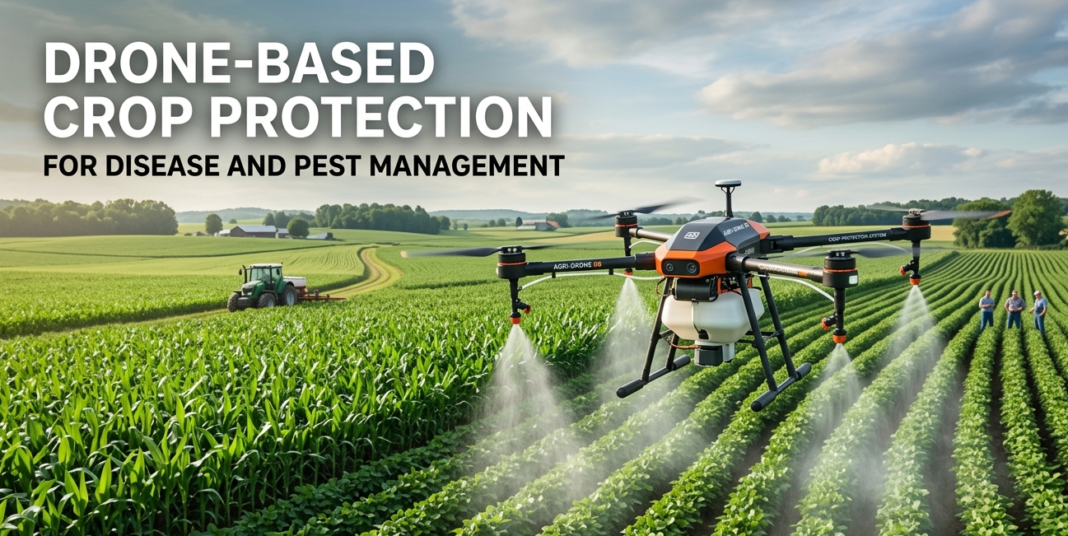
That is where drone-based crop protection has begun to change the conversation. It offers a way to respond faster, cover fields with more control, and handle disease and pest pressure without turning every spray cycle into a labour-heavy scramble.
Interest in Agricultural Drones is growing for a simple reason: crop protection is no longer just about spraying and hoping for the best. Farmers want better timing, cleaner coverage, and less disruption in the field.
At the same time, there is still confusion around what drones can actually do. Some see them as expensive gadgets. Others treat them like a magic fix. The truth sits in the middle, and that is exactly where this topic becomes useful.
Myth 1: Drones Are Only About Speed
Speed is part of the appeal, but that is not the full story.
When a disease starts moving through a crop or pests begin attacking at a sensitive stage, speed helps. A delayed response can turn a manageable issue into a bigger one. But farmers are not looking at drones only because they move quickly. They are looking at them because drones change how the job gets done.
A drone can cover the crop without forcing workers to walk through muddy, dense, or delicate fields. It can help reduce the chaos that often comes with last-minute spray arrangements. It can also bring more consistency to a task that is often affected by fatigue, uneven movement, and hard field conditions.
So yes, drones are fast. But the bigger advantage is that they make crop protection more manageable during moments when timing and field access both matter.
Myth 2: A Drone Solves Pest And Disease Problems On Its Own
It does not.
A drone is a delivery tool. It improves the application side of crop protection. It does not replace field judgement, crop monitoring, or the need to decide what treatment is right in the first place.
If the diagnosis is wrong, the drone will not fix that. If the timing is poor, the drone cannot undo the delay. If the operator or farmer applies the wrong input for the problem, the technology does not rescue the decision.
This is where the smartest users stand out. They do not treat drones as a shortcut to avoid thinking. They use drones to execute crop protection decisions better.
That distinction matters. Good disease and pest management still depends on reading the crop correctly, acting at the right stage, and choosing the right response. The drone makes that response easier to carry out.
Myth 3: Traditional Spraying And Drone Spraying Are Basically The Same
They are not the same in practice.
Traditional spraying often asks for more people, more physical effort, and more field movement. Workers may need to carry equipment, walk row by row, and manage difficult terrain under heat or humidity. Coverage can vary depending on who is spraying, how tired they are, and how the field is behaving that day.
Drone spraying changes the operating pattern. The field is approached from above, not step by step from inside it. That shift affects more than convenience.
It can help in situations like:
- Crops where walking through the field can disturb plants.
- Wet or uneven ground where manual spraying becomes difficult.
- Urgent response windows where waiting for labour creates delay.
- Large spray tasks where uniformity becomes harder to maintain manually.
The result is a different crop protection workflow, not just a faster version of the old one.
Myth 4: Drones Are Too Advanced For Everyday Indian Farming
That idea is fading quickly.
Farmers do not need to become drone engineers to benefit from drone-based crop protection. In many cases, they are not even expected to own the equipment themselves. Service models are becoming part of the story, and that changes access.
A farmer may work with a trained operator. A local agri-service provider may handle the drone operations. A community or group model may make the service easier to reach during spray periods.
This matters because adoption is often about access, not ownership.
In practical terms, that means drone-based crop protection can fit into Indian farming without demanding that every farmer become deeply technical. The technology becomes useful when it arrives in a format that matches farm reality.
What Drones Actually Improve In Disease And Pest Management
Once the myths are stripped away, the value becomes clearer.
Drones improve execution. That matters because disease and pest management is often lost or won in the execution stage.
A farmer may already know the threat is present. The difficulty begins when the field has to be treated quickly, properly, and with minimal disruption. This is where drones start earning their place.
They can help by improving:
Timely Response
When crop health issues emerge, delays create risk. Drones can make it easier to act during narrow windows.
Field Reach
Fields are not always easy to enter, especially after rain or during sensitive crop stages. A drone can reduce the challenge of physical access.
Spray Consistency
Manual spraying often changes with pace, pressure, and fatigue. Drones introduce a more structured pattern of application when handled well.
Reduced Physical Strain
Crop protection work can be exhausting. Drones reduce the need for heavy manual movement across the field.
Lower Direct Exposure During Spraying
For many farmers and workers, this is a serious practical advantage. The person is not carrying and spraying in the same direct way as with older methods.
These improvements do not make drones magical. They make them useful.
Where Drones Fit Best In Real Farm Scenarios
The strongest case for Agricultural Drones usually appears when conditions on the ground are difficult enough to expose the weakness of older methods.
Take a dense crop that needs treatment at the right stage. Walking through it may damage plants or slow the work. Or think of a field that stays wet after irrigation or rain. Reaching all areas manually can become frustrating and messy. In another case, the labour may simply not arrive on time, even when the crop cannot wait.
These are not rare scenarios. They are normal farm realities.
In such situations, drones fit well because they reduce delay, reduce dependence on physical access, and help the farmer act with less disruption. The stronger the field challenge, the easier it becomes to see the value of drone-based crop protection.
What Farmers Should Watch Before Depending On A Drone Service
Enthusiasm is useful. Blind trust is not.
Farmers who want better disease and pest management through drones still need to ask practical questions before making the service part of their routine.
A few of the most important ones are:
Is The Operator Reliable During Peak Need?
A drone is only useful if it is available when the crop needs it, not days later.
Does The Team Understand The Crop And Spray Context?
The service should not feel mechanical. Crop stage, urgency, and field condition all affect the job.
Is The Application Planned Properly?
Even a good machine gives poor results if the preparation is weak.
Can The Service Handle Local Field Conditions?
Small plots, irregular layouts, mixed cropping patterns, and difficult terrain all shape how useful a drone will be.
Is There Clear Communication Before The Job Starts?
The farmer should know what is being done, when it will be done, and how the spray plan is being handled.
These questions help separate serious service providers from weak ones.
The Shift Is Bigger Than One Spray Cycle
Drone-based crop protection is not just about replacing one spraying method with another. It is part of a bigger change in how farm operations are being organised.
It pushes crop protection toward planned action rather than physical struggle. It creates space for rural service businesses. It changes how labour gets used. It helps farmers respond to disease and pest pressure with less friction between decision and execution.
That does not mean drones suit every field in the same way. It means they are becoming harder to dismiss, especially where disease and pest control already puts pressure on time, labour, and field access.
Why This Technology Is Earning Trust
Farmers trust tools that solve real problems.
Not polished presentations. Not fashionable language. Not promises that sound too smooth.
The trust around Agricultural Drones is building because they answer a very old farming problem in a new way: how to protect the crop quickly and properly when the field is difficult, the work is urgent, and the margin for error is small.
That is why drone-based crop protection is getting serious attention in disease and pest management. It is not replacing judgement. It is improving response. And in farming, that can make all the difference.
FAQs
Can drone-based crop protection be used for both pest and disease management?
Yes. Drones can support application work in both cases, as long as the crop issue has been identified correctly and the treatment plan is suitable for the field.
Do farmers need to buy Agricultural Drones to use them?
No. Many farmers can access drone services through operators or local providers instead of purchasing the equipment themselves.
Are drones suitable only for large farms?
No. They can also be useful in smaller or difficult-to-access fields, especially when local service models make them available in a practical way.
Does a drone reduce the need for crop scouting?
No. Farmers still need proper crop observation and correct diagnosis. The drone helps with application, not with replacing field judgment.
What makes a drone service worth trusting for crop protection work?
Reliability, trained operation, clear planning, crop awareness, and timely availability matter more than flashy claims. A good service should fit the actual needs of the field.

