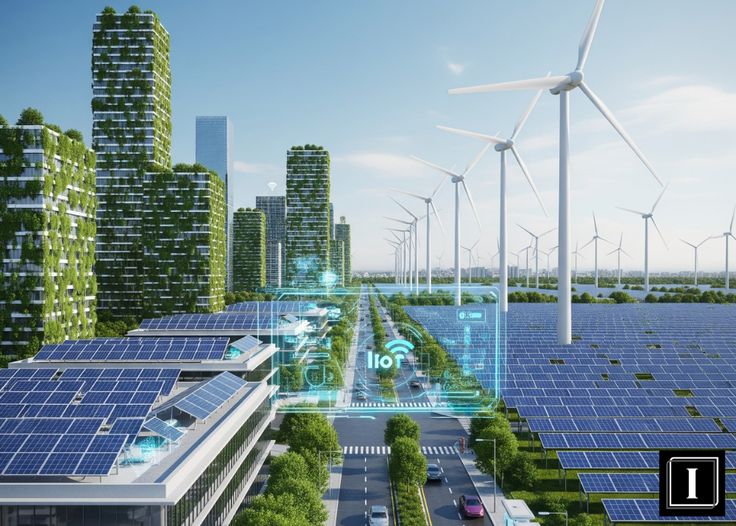
Introduction to Green Technology
Green technology, often referred to as sustainable technology, encompasses various processes and products that utilize renewable resources while aiming to reduce pollution and environmental degradation. This innovative approach is crucial in addressing pressing environmental issues such as climate change, resource depletion, and biodiversity loss. Its importance is underscored by the necessity of a sustainable future, where economic growth can coexist harmoniously with ecological balance.
At its core, green technology focuses on the development and implementation of solutions that minimize environmental impact. These solutions hinge on incorporating renewable energy sources, such as solar, wind, and geothermal power, into everyday applications. Additionally, the use of sustainable materials, recycling processes, and efficient waste management practices contribute to reducing the carbon footprint of various industries.
Key components of green technology include clean energy production, energy efficiency, sustainable transportation, and green building practices. Each of these elements plays a significant role in fostering a greener future. For instance, clean energy production not only generates power with lower emissions but also promotes energy independence. Similarly, sustainable transportation aims to reduce the reliance on fossil fuels by encouraging electric vehicles and public transport systems, contributing to a significant reduction in urban pollution.
Furthermore, green building practices focus on the design and construction of buildings that are resource-efficient and environmentally responsible throughout their lifecycle. These methodologies enhance energy conservation, improve indoor air quality, and promote the use of sustainable resources. Collectively, these innovations in green technology are imperative for advancing sustainable development and ensuring a healthier planet for future generations.
Recent Innovations in Renewable Energy
The energy landscape is undergoing a significant transformation, with renewable energy technologies at the forefront of these changes. Solar energy, wind energy, and hydropower have seen remarkable advancements that enhance their efficiency, storage capabilities, and integration into existing power grids. These innovations are vital as they contribute to a more sustainable future.
Recent advancements in solar technology include the development of bifacial solar panels that can capture sunlight from both sides. This technology has been shown to increase energy production by up to 30%. Furthermore, transparent solar panels, which can be applied to windows, represent a pioneering step toward integrating solar energy generation into urban environments without occupying additional land.
Wind energy innovations are also noteworthy, particularly in turbine design and materials. The introduction of larger, more efficient turbines allows for harnessing wind energy in areas with lower wind speeds. Additionally, floating wind farms have emerged, which enable the installation of turbines in deeper waters that were previously inaccessible, thus expanding the potential for wind energy generation.
Hydropower has experienced technological advancements as well, particularly in small-scale and run-of-the-river systems. These innovations have made hydropower more accessible and environmentally friendly, as they minimize ecological disruption compared to traditional hydroelectric dams. New turbine designs can also operate in lower water flows, maximizing energy extraction even in challenging conditions.
Grid integration remains a critical aspect of these renewable innovations. Advanced grid management systems utilize artificial intelligence and machine learning to optimize the distribution of renewable energy. This not only enhances grid reliability but also facilitates the incorporation of diverse energy sources, leading to a more resilient energy infrastructure.
These recent developments in renewable energy technologies are significant milestones towards achieving global energy sustainability goals. As innovations continue to emerge, they will play a crucial role in reducing reliance on fossil fuels and decreasing carbon emissions, paving the way for a greener future.
Smart Agriculture Advances
In recent years, agricultural technology has significantly transitioned towards more sustainable practices, giving rise to innovations that enhance food production while mitigating environmental impacts. One of the prominent advancements in this regard is precision agriculture, which utilizes technology such as GPS, sensors, and data analytics to optimize farming practices. By allowing farmers to make data-driven decisions, precision agriculture helps minimize the use of water, fertilizers, and pesticides. This targeted approach not only increases crop yields but also reduces the ecological footprint of farming activities.
Vertical farming is another method that exemplifies advancements in smart agriculture. This innovative approach involves growing crops in vertically stacked layers, often within controlled environments. Vertical farms utilize LED lighting, hydroponics, and aeroponics, which significantly reduce the need for land and water compared to traditional farming. By maximizing space and minimizing resource consumption, vertical farming presents a sustainable solution to urban food production, reducing transportation emissions by allowing food to be grown closer to consumers.
Biotechnology also plays a crucial role in advancing smart agriculture. Genetic engineering and molecular breeding techniques enable the development of crops that are more resilient to pests, diseases, and changing climate conditions. These enhanced varieties can lead to increased food security while lowering the need for chemical inputs. Moreover, biotechnology can contribute to the development of crops that require less water or can survive in less fertile soils, making it a pivotal component in the quest for sustainable farming practices.
Incorporating these innovations in smart agriculture not only addresses the challenges posed by a growing global population but also promotes a more sustainable future for farming. As technology continues to evolve, the potential for enhancing agricultural efficiency while preserving the environment becomes increasingly attainable.
Green Building Technologies
Innovations in green building technologies have considerably advanced the field of sustainable architecture and construction practices. These innovations aim to minimize environmental impact and improve energy efficiency, aligning with global sustainability goals. One of the most significant breakthroughs in this domain is the widespread use of energy-efficient building materials. These materials, such as recycled steel, bamboo, and advanced insulation systems, offer improved thermal performance, reducing the need for heating and cooling systems. Consequently, buildings constructed with these materials contribute to lower energy consumption.
Another notable trend in green construction is the implementation of green roofs. These roofs are adorned with vegetation, which not only enhances the aesthetic appeal of buildings but also helps in mitigating urban heat island effects. By providing insulation, green roofs reduce the heating and cooling loads, thus lowering energy consumption. Additionally, they play a vital role in stormwater management by absorbing rainwater, lessening runoff and improving local water quality.
Furthermore, the integration of smart home technologies has revolutionized energy use in modern constructions. These systems utilize sensors, automated controls, and smart devices to optimize energy consumption in residential and commercial buildings. For example, smart thermostats learn user preferences and adjust heating and cooling accordingly, resulting in reduced energy use without sacrificing comfort. Other innovations, such as energy-monitoring appliances and smart lighting solutions, enable homeowners to track and manage energy consumption effectively.
By combining energy-efficient building materials, innovative green roofs, and state-of-the-art smart home technologies, the construction industry is making significant strides towards sustainable living. These advancements not only benefit the environment but also create healthier and more efficient spaces for occupants.
Electric Vehicles and Sustainable Transportation
The transportation sector is undergoing a significant transformation driven by innovations in green technology, particularly the development of electric vehicles (EVs). EVs represent a pivotal shift away from traditional internal combustion engines, promoting a cleaner and more sustainable mode of transport. By utilizing electric power, these vehicles help in reducing greenhouse gas emissions, contributing to improved air quality, and decreasing reliance on fossil fuels.
Public transit solutions, such as electric buses and light rail systems, also play a crucial role in sustainable transportation. These innovations enable cities to reduce the overall environmental impact of commuting, as they facilitate efficient mass transit options that are less polluting than individual car journeys. Furthermore, advancements in battery technology are enhancing the range and efficiency of these electric public transport vehicles, making them an increasingly viable option for urban environments.
Alternative fuel technologies, including hydrogen fuel cells and biofuels, are additional avenues being explored to achieve sustainable mobility. Hydrogen fuel cell vehicles, for instance, emit only water vapor as a byproduct, making them an environmentally friendly transport choice. The development and adoption of biofuels also presents a solution that utilizes organic materials, thus minimizing carbon footprints in the automotive sector.
The push for sustainable transportation is further compounded by global initiatives aimed at reducing carbon emissions and combating climate change. Policymakers are embracing electric vehicles through incentives, subsidies, and investment in charging infrastructure. As we look towards the future, it is evident that the integration of electric vehicles and other sustainable transportation practices will significantly shape the mobility landscape, aligning it closer to environmental sustainability goals.
Waste Management Innovations
Advancements in waste management are critical to addressing the escalating challenges posed by waste generation worldwide. Innovations in recycling technologies, waste-to-energy systems, and circular economy principles have emerged as pivotal solutions in promoting sustainability and minimizing environmental degradation.
Recycling technologies have significantly evolved over recent years. Modern innovations, such as advanced sorting systems equipped with artificial intelligence, enhance the efficiency of waste sorting processes. These systems can accurately identify and separate recyclables from non-recyclable waste at a faster rate. As a result, they maximize the volume of materials recovered for recycling, contributing to a more sustainable waste management model.
Another noteworthy advancement is the development of waste-to-energy systems, which convert non-recyclable waste into energy. These systems leverage processes such as anaerobic digestion and incineration to extract energy from waste, reducing reliance on fossil fuels while minimizing waste sent to landfills. The energy recovered can be utilized for heating, electricity production, or even as fuel, offering a dual benefit of waste disposal and energy generation.
Circular economy principles further bolster innovations in waste management by promoting the notion of keeping products and materials in use for as long as possible. This approach extends beyond traditional recycling; it encompasses redesigning products for durability, repurposing materials, and embracing sustainable consumption habits. By aiming for a closed-loop system, circular economy practices help to drastically reduce waste generation and encourage resource efficiency.
In summary, the impact of these advancements in waste management extends beyond immediate waste reduction. They not only contribute to environmental sustainability but also present new avenues for economic growth and resource conservation. Consequently, effective implementation of these innovations is paramount for fostering a cleaner, greener future.
Water Conservation Technologies
As the global demand for fresh water intensifies, innovative technologies designed for water conservation have emerged as critical solutions to combat water scarcity. Various advancements facilitate more efficient use of water resources, drastically reducing waste and enhancing sustainability.
Smart irrigation systems represent one of the most promising innovations. These systems utilize moisture sensors, weather data, and advanced algorithms to optimize the watering process in agriculture and gardening. By providing precise amounts of water based on real-time conditions, smart irrigation not only conserves water but also helps in reducing labor costs and improving crop yields. Automation in irrigation practices leads to more efficient water usage, addressing the critical concern of over-irrigation.
In addition to smart irrigation, modern water purification techniques have made significant strides in conserving water. Traditional purification methods often lead to significant water losses. However, new methods such as reverse osmosis and membrane filtration operate on reduced water footprints. These techniques effectively remove contaminants while minimizing water waste, ensuring safe drinking water for millions of people around the world. Moreover, advancements in water recycling technologies have enabled the repurposing of wastewater for industrial or agricultural use, further enhancing water conservation efforts.
Lastly, desalination innovations are gaining prominence as a viable alternative for addressing freshwater shortages, particularly in coastal regions. Enhanced processes, including solar desalination and electrodialysis, are being developed to make desalination more energy-efficient and less costly. These innovations hold the potential to convert abundant saltwater resources into potable water, thereby alleviating pressure on freshwater ecosystems.
In conclusion, the implementation of these water conservation technologies is paramount in addressing global water scarcity. As we strive towards sustainable development, it becomes increasingly important to adopt these innovations to preserve our most vital resource effectively.
The Role of Artificial Intelligence in Green Technology
Artificial Intelligence (AI) is increasingly becoming a pivotal component in advancing green technology, playing a significant role in optimizing energy management, enhancing predictive analytics, and improving conservation efforts. By leveraging AI, businesses and governments can design more efficient systems that reduce energy waste and promote sustainable practices.
One of the most notable applications of AI in green technology is in energy management. Through machine learning algorithms, AI systems can analyze vast amounts of data from various energy sources, including renewable options like wind and solar power. This analysis allows for real-time monitoring and adjustments in energy distribution, ensuring that supply meets demand efficiently. For instance, smart grids use AI to predict peak energy consumption times, enabling utilities to better manage energy loads and reduce unnecessary generation.
Moreover, AI-enhanced predictive analytics assists in forecasting renewable energy outputs. By using historical data and environmental variables, AI can predict the availability of solar or wind energy with high accuracy. This capability is crucial for integrating these resources into broader energy systems, as it helps ensure that renewable sources are utilized effectively, mitigating reliance on fossil fuels.
Optimizing conservation efforts is another area where AI demonstrates promising potential. AI technologies enable advanced monitoring of wildlife and ecosystems, analyzing data patterns that can help identify threats to biodiversity and environmental health. For example, AI-driven tools can assess habitat disruptions and suggest management strategies that enhance animal preservation. By automating data collection and analysis, AI allows conservationists to focus on implementing effective strategies rather than being encumbered by tedious data processing tasks.
In conclusion, the integration of artificial intelligence in green technologies presents a transformative approach to energy management, renewable resource analytics, and conservation of ecosystems. As technology continues to evolve, AI’s role will undoubtedly expand, offering innovative solutions to some of the most pressing environmental challenges we face today.
Future Trends and Challenges in Green Technology
The landscape of green technology is rapidly evolving, signaling a transformative era that holds immense potential for fostering sustainable practices. Several trends are shaping the future of this sector, including the increasing integration of artificial intelligence and machine learning in energy systems. These technologies enhance efficiency in energy consumption and optimize resource allocation, allowing for smarter grid management and renewable energy integration.
Furthermore, advancements in smart materials and nanotechnology are expected to revolutionize various applications. Innovations in solar panels, for instance, are paving the way for more efficient energy solutions. These developments not only promise to reduce carbon footprints but also create new economic opportunities centered around green jobs. As companies and governments invest in research and development, they lay the groundwork for a robust green tech ecosystem.
However, despite these encouraging trends, several challenges persist that could hinder progress. One of the most pressing is the need for significant policy reforms and regulatory frameworks that support green innovations. Without clear guidelines and incentives, many promising technologies may struggle to gain traction within traditional markets. Investment plays a crucial role in overcoming these barriers; therefore, increased funding from both the public and private sectors is necessary to accelerate technological advancements.
Moreover, societal acceptance and adaptation of new technologies pose an additional challenge. Public perception can be a significant barrier, as individuals often resist changes due to misinformation or a lack of understanding. Therefore, education and outreach efforts are vital for fostering acceptance of green innovations.
In conclusion, the future of green technology is filled with potential as well as challenges. With the right investments, policy reforms, and public engagement, the transition towards sustainable practices can be successfully achieved, ultimately leading to a more sustainable future.

