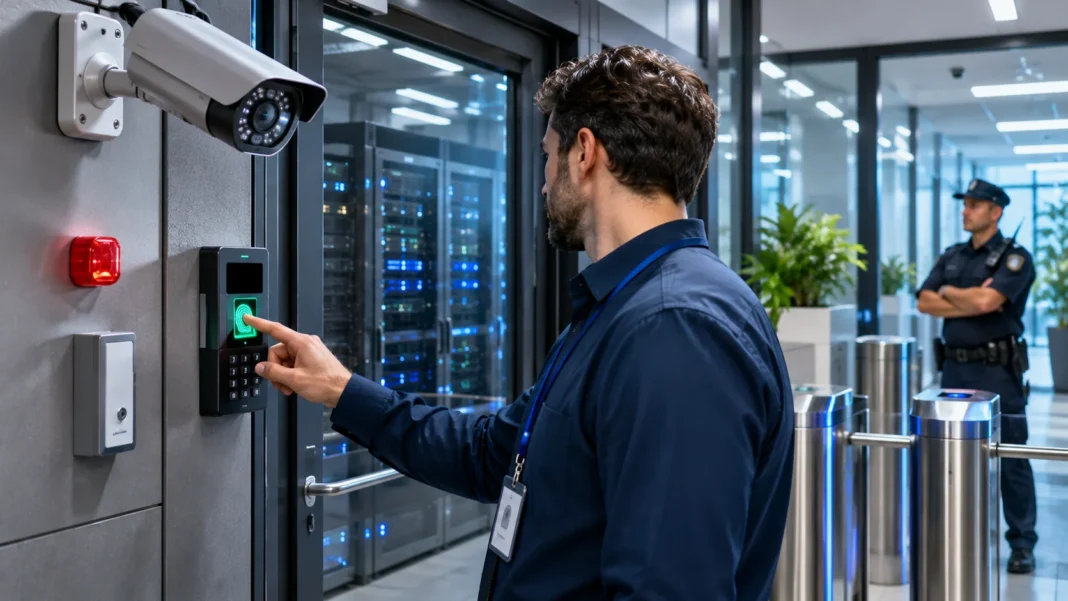
Cybersecurity is often associated with passwords, antivirus software, firewalls, and protection against online attacks. However, digital security also depends on protecting the physical locations where computers, servers, and sensitive information are stored. If someone gains unauthorized access to an office or server room, they may bypass certain digital defenses and compromise important business resources.
Understanding what is an example of physical security in cybersecurity helps explain how organizations protect their technology infrastructure. Physical security includes measures such as locked server rooms, surveillance cameras, access control systems, security guards, and environmental monitoring. These safeguards work alongside digital security tools to prevent unauthorized access, equipment theft, physical damage, and interruptions to essential services.
What Is Physical Security in Cybersecurity?
Physical security in cybersecurity refers to measures that protect computers, networks, servers, and other technology assets from unauthorized physical access or damage. Unlike digital security controls, these measures focus on buildings, equipment, and physical environments. They help prevent people from reaching sensitive systems without permission. Effective physical protection is an important part of overall information security.
Physical security includes several types of protective measures, such as locks, identification badges, surveillance systems, and secure storage. Organizations use these controls to restrict access to sensitive locations and monitor activities around valuable equipment. Environmental protections also help reduce damage from fire, water, and temperature problems. Together, these safeguards protect the infrastructure supporting digital operations.
For example, a company may use strong passwords and encryption to protect its customer database. However, someone who physically accesses an unsecured computer might still create serious security problems. Locking offices, controlling visitor access, and protecting server equipment add important layers of defense. Cybersecurity becomes more effective when physical and digital protections work together.
What Is an Example of Physical Security in Cybersecurity?
One common example of physical security in cybersecurity is a locked server room with controlled access. Organizations store important networking devices, servers, and storage equipment in these areas. Only authorized employees should be permitted to enter. Access may be controlled through identification badges, electronic locks, or biometric verification systems.
Another example is the installation of security cameras around entrances, offices, and data centers. These systems help monitor activity and provide recorded information when investigating security incidents. Cameras can also discourage certain unauthorized activities. However, surveillance should be supported by appropriate monitoring practices, access restrictions, and privacy safeguards.
Physical security also includes visitor identification procedures, security guards, equipment cabinets, and alarm systems. Each measure addresses a different potential threat. For instance, visitor badges help distinguish guests from employees, while alarms can alert staff to unauthorized entry. Combining several protective controls creates a more reliable approach than depending on a single security measure.
Access Control Systems for Physical Security
Physical access control systems determine who can enter specific buildings, rooms, or restricted areas. These systems are particularly important for locations containing confidential information or valuable technology equipment. Organizations may use electronic badges, smart cards, access codes, or biometric identification. Access permissions are usually assigned according to job responsibilities.
For example, employees working in customer support may require access to general office areas but not the main data center. Network administrators may need additional permissions to enter restricted equipment rooms. Access control systems help enforce these differences. This approach follows the principle of least privilege, which limits access to what individuals require.
Modern access control systems can also record entry attempts and maintain access logs. Security teams may review these records when investigating unusual activity. Permissions should be updated when employees change roles or leave the organization. Regular access reviews help prevent outdated credentials from creating unnecessary physical security risks.
Surveillance Cameras and CCTV Monitoring
Closed-circuit television, commonly called CCTV, is another important example of physical security in cybersecurity. Cameras help organizations observe entrances, corridors, equipment rooms, and other sensitive locations. Recorded footage can support investigations after suspected security incidents. Surveillance may also discourage unauthorized entry when combined with other protective controls.
Security cameras are particularly useful in environments where valuable technology assets are stored. Data centers, telecommunications facilities, and large offices often use surveillance as part of their broader security arrangements. Cameras may monitor activity near access points or restricted equipment areas. Their effectiveness depends on placement, recording quality, and appropriate oversight.
CCTV systems should not be considered complete security solutions on their own. Cameras may record an incident without preventing it from occurring. Organizations need reliable monitoring, secure footage storage, and clear response procedures. Employee privacy, applicable laws, and reasonable surveillance boundaries must also be considered when implementing these systems.
Security Guards and Visitor Management
Security guards provide a human element to physical cybersecurity protection. They may monitor entrances, verify identification, respond to alarms, and assist during security incidents. Their presence can help enforce access procedures and discourage unauthorized activities. Guards are especially valuable in facilities with high visitor traffic or sensitive operations.
Visitor management systems complement security personnel by recording who enters a building and why. Guests may be required to register, provide identification, and receive temporary access badges. Organizations can also establish rules for visitors entering restricted technology areas. These procedures help prevent uncontrolled movement through sensitive locations.
Employees should understand when visitors require escorts and which areas remain restricted. Temporary badges should expire or be collected after a visit. Security staff need clear instructions for responding to suspicious behavior or unauthorized access attempts. Consistent visitor management supports accountability while helping maintain a secure working environment.
Locked Server Rooms and Secure Equipment Cabinets
Server rooms contain essential technology equipment, including servers, routers, switches, and storage devices. Unauthorized physical access can create risks involving data exposure, equipment theft, and service disruption. Keeping these rooms locked is therefore an important cybersecurity measure. Access should be limited to employees with a legitimate operational need.
Organizations may strengthen protection through electronic door locks, access logging, and monitored entry points. Sensitive equipment can also be stored inside lockable server racks or cabinets. These additional barriers help restrict access even within authorized facilities. Physical protection should be designed around the sensitivity and importance of the systems involved.
Good server room security also requires attention to maintenance and emergency access. Authorized technicians may need controlled entry for repairs, inspections, and equipment replacement. Access arrangements should support necessary operations without exposing systems unnecessarily. Regular inspections help confirm that doors, locks, and equipment enclosures remain secure and functional.
Biometric Security Systems in Cybersecurity
Biometric security systems use measurable physical characteristics to verify a person’s identity. Common examples include fingerprint recognition, facial recognition, and iris scanning. These technologies may be used to control entry into restricted buildings or equipment rooms. They provide an alternative to relying entirely on traditional keys or access cards.
For example, a data center might require authorized employees to verify their identity through a fingerprint reader before entering a protected area. Some organizations combine biometric verification with another factor, such as an access badge. This approach can provide additional assurance that the person entering is authorized. However, no biometric system is completely error-free.
Biometric information requires careful protection because physical characteristics cannot be changed as easily as passwords. Organizations should consider privacy requirements, secure data handling, accuracy, and accessibility when selecting these systems. Alternative access methods may also be necessary. Effective biometric security depends on responsible implementation rather than the technology alone.
Alarm Systems and Intrusion Detection
Physical intrusion detection systems help identify possible unauthorized entry into buildings or restricted areas. They may include door sensors, motion detectors, glass-break detectors, and security alarms. These devices monitor physical conditions and generate alerts when specific events occur. Their purpose is to help security teams recognize and respond to potential threats.
For example, an alarm may activate when a protected server room door opens outside authorized operating hours. A security team can investigate the event and determine whether an actual incident occurred. Some systems connect with cameras and access control records. This integration provides additional context for evaluating suspicious activity.
Alarm systems must be configured and maintained carefully to remain effective. Frequent false alerts can reduce confidence and make important events harder to identify. Organizations should regularly test sensors and review response procedures. A reliable detection system combines appropriate technology with trained personnel and clear incident management processes.
Physical Security for Computers and Workstations
Physical cybersecurity protection is not limited to data centers or specialized facilities. Office computers, laptops, and workstations may also contain sensitive information or provide access to important systems. Unauthorized use of these devices can create security risks. Simple workplace safeguards help reduce exposure to physical threats.
Employees should lock their computer screens when leaving desks unattended. Organizations may also use cable locks, secure drawers, and controlled storage areas for portable devices. Laptops should not be left unattended in public or easily accessible locations. These measures support digital protections such as passwords, device encryption, and automatic screen locking.
Shared workspaces require particular attention because multiple people may use the same physical environment. Confidential documents should be stored securely, and removable storage devices should be handled according to company policies. Workstation placement can also help reduce unauthorized viewing of sensitive information. Small security habits contribute to stronger organizational protection.
Environmental Security and Data Center Protection
Physical security also includes protecting technology equipment from environmental hazards. Excessive heat, water leaks, smoke, and power failures can damage servers or interrupt business operations. These problems may occur without any malicious activity. Environmental safeguards help organizations maintain reliable and secure technology infrastructure.
Data centers often use temperature monitoring, cooling systems, smoke detection, and appropriate fire protection equipment. Water detection sensors may also be installed near areas vulnerable to leaks. These systems help identify conditions that could damage important hardware. The exact requirements depend on facility design and operational needs.
Backup power systems provide another form of physical infrastructure protection. Uninterruptible power supplies can help equipment operate briefly during power disturbances or support controlled shutdowns. Larger facilities may use generators for longer interruptions. Environmental protection supports cybersecurity by reducing the risk of data loss, equipment failure, and service disruption.
Why Physical Security Is Important in Cybersecurity
Physical security is important because digital systems depend on real equipment and infrastructure. Even strong software protections cannot prevent every threat involving direct physical access. Theft, damage, unauthorized equipment connections, and facility disruptions can compromise important operations. Physical safeguards reduce opportunities for these incidents.
Organizations also have responsibilities involving sensitive customer information, confidential business records, and operational systems. A stolen laptop or unsecured server may expose information even when other cybersecurity measures exist. Encryption and authentication help reduce these risks, but physical protections provide additional defense. Multiple security layers are generally more effective than a single control.
Physical security can also support business continuity by protecting technology resources from avoidable disruptions. Controlled facilities, environmental monitoring, and incident response procedures help organizations maintain essential services. These measures are particularly important for businesses relying heavily on digital infrastructure. Strong physical protection contributes to overall operational resilience and information security.
Common Physical Security Threats to Cybersecurity
Physical security threats include unauthorized entry, equipment theft, vandalism, and accidental damage. They may arise from external visitors, insiders, or weaknesses in building security procedures. Environmental hazards also create risks for technology operations. Understanding these categories helps organizations develop appropriate protective measures.
One example is an unattended laptop containing confidential business information. Another involves an unauthorized person gaining access to a restricted office or equipment area. Lost access cards and improperly secured doors may also create vulnerabilities. Organizations need procedures that address both deliberate misconduct and everyday mistakes.
Natural events and infrastructure failures can create additional physical risks. Flooding, fires, extreme temperatures, and electrical problems may interrupt systems or damage hardware. Physical security planning should therefore extend beyond preventing unauthorized entry. A comprehensive approach considers human threats, equipment protection, and environmental resilience.
How to Improve Physical Security in an Organization
Improving physical security begins with identifying important assets and the locations where they are stored. Organizations should assess which facilities, devices, and information resources require additional protection. A physical security assessment can reveal gaps in access control, monitoring, and equipment storage. The findings help establish appropriate priorities.
Next, organizations can introduce controls based on risk and operational requirements. Restricted areas may need stronger locks, access logging, and surveillance, while general offices require simpler safeguards. Employees should receive clear guidance about visitor procedures, device handling, and reporting suspicious activity. Security measures should remain practical for daily operations.
Physical security also requires ongoing maintenance and review. Organizations should test alarms, inspect locks, update access permissions, and evaluate incidents or near misses. Changes in staffing, equipment, and facility layouts may introduce new risks. Regular improvement helps security measures remain effective as business needs evolve.
Conclusion
Physical security in cybersecurity protects the buildings, equipment, and environments that support digital systems. Examples include locked server rooms, electronic access controls, CCTV cameras, security guards, and intrusion alarms. These measures help prevent unauthorized entry, physical damage, and technology-related disruptions.
A strong security strategy combines physical safeguards with digital protections such as encryption, authentication, and network monitoring. Each layer addresses different threats, creating a more comprehensive defense. Organizations should also consider environmental risks, employee awareness, and appropriate incident response procedures.
Understanding physical security examples helps businesses recognize that cybersecurity extends beyond software and online threats. Protecting computers, servers, and restricted locations is essential for maintaining reliable operations. By using suitable controls and reviewing them regularly, organizations can reduce physical vulnerabilities and strengthen their overall security posture.
Frequently Asked Questions
What is an example of physical security in cybersecurity?
A locked server room with electronic access control is a common example. It restricts entry to authorized personnel and helps protect servers, networking equipment, and sensitive information from unauthorized physical access.
What are the main types of physical security controls?
Physical security controls commonly include preventive measures such as locks, detective measures such as surveillance cameras, and corrective or response measures such as incident procedures and equipment recovery arrangements.
Why is physical security necessary for cybersecurity?
Physical security protects the equipment and facilities supporting digital services. It helps prevent theft, unauthorized access, physical damage, and environmental disruptions that could compromise information or interrupt business operations.
Is CCTV considered physical security in cybersecurity?
Yes, CCTV is a physical security control used to monitor facilities and record activity. It supports incident investigation and detection but should be combined with access restrictions and appropriate response procedures.
What is the difference between physical security and cybersecurity?
Physical security protects tangible assets and facilities, while cybersecurity focuses on protecting digital information, systems, and networks. The two overlap because physical access can create risks for digital resources.

