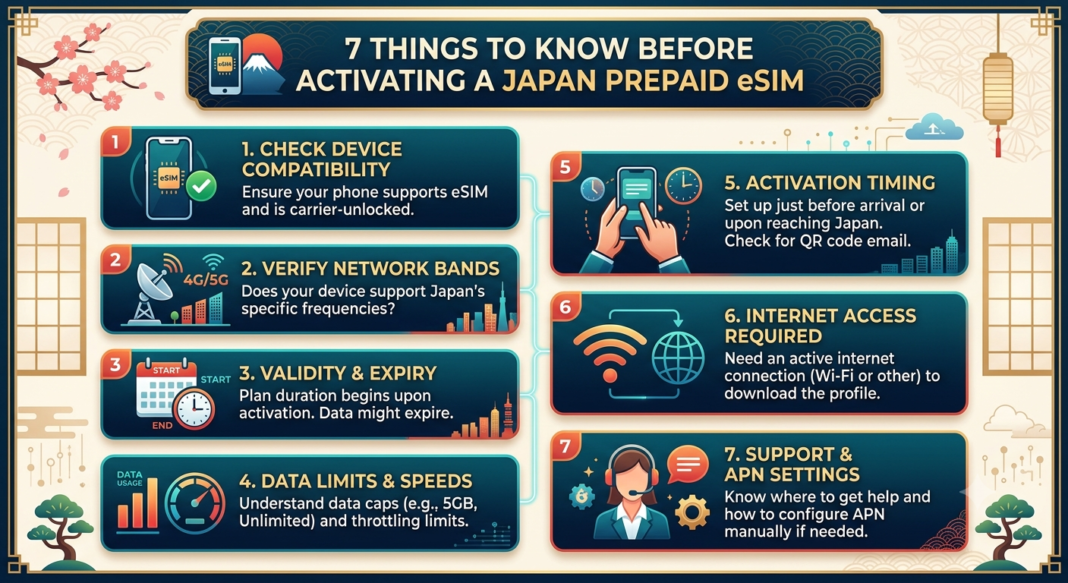
The moment you step off the plane in Japan, everything moves quickly. Signs are clear, systems are efficient, yet your phone setup can still slow you down. According to the International Air Transport Association, major airports handle millions of passengers each year, which explains why even small delays during setup feel overwhelming.
That pressure makes preparation more valuable than most expect. Small details around activation, timing, and usage can shape your entire experience. This guide focuses on the less obvious points travelers notice only after arrival. If you plan to use a prepaid Japan eSIM, these insights will help you avoid confusion and stay in control from the start.
1. Understand Your Data Usage Before Activation
Data usage starts the moment your connection becomes active, not when you begin browsing. Many travelers assume usage begins only when they open apps, though background processes already consume data.
Apps refresh location, sync emails, and update content automatically. This happens quickly in busy areas like Tokyo or Osaka. Without awareness, a portion of your data may be used early. Checking usage within the first hour helps you understand how your device behaves and prevents unexpected consumption.
2. Activation Does Not Always Mean Immediate Internet
Many travelers assume that scanning a QR code means instant connectivity. In reality, activation and usable data are not always in the same moment. Some networks take a few minutes to fully register your device. During this time, signal bars may appear, yet data may not work right away. This delay can feel confusing, especially at airports like Narita International Airport or Kansai International Airport. Waiting briefly or restarting your phone usually resolves the issue.
3. Airport Environment Can Affect First Connection
Airports in Japan are efficient, though they are also crowded digital environments. Thousands of devices connect to networks at the same time, which can affect initial speed and responsiveness.
Even with a prepaid Japan eSIM, your first connection may feel slower than expected. This is common in arrival zones across Tokyo and Osaka. Once you move toward less crowded areas, performance usually improves.
4. Your Phone May Prioritize the Wrong Network
After activation, your phone may connect to the first available network instead of the strongest one. This can affect speed and consistency without a clear indication.
This issue becomes more noticeable when moving between regions like the Kanto Region and the Kansai Region. Manually selecting a preferred network can improve performance. This small adjustment is rarely discussed, yet it can make a noticeable difference.
5. Data Plans May Throttle Before You Notice
Speed limits do not always appear clearly in plan descriptions. Some prepaid options reduce speed gradually after a certain threshold instead of stopping data completely. This can feel like weak coverage in places such as Kyoto or Hiroshima. In reality, your plan has shifted to a lower speed tier. Recognizing this pattern helps you manage expectations and avoid unnecessary concern about network quality.
6. Train Travel Affects Connection Patterns More Than Expected
Travel across Japan usually includes high-speed trains. These journeys introduce connection patterns that many first-time users do not anticipate.
What Happens During Movement
Your phone switches between towers more frequently due to speed. This can create short pauses in data flow.
Where Do You Notice It Most?
Routes between Tokyo and Osaka or through the Tohoku Region show these patterns clearly.
Why It Matters
These shifts are normal, though they can feel like instability. Understanding this helps you stay calm and adjust usage.
7. Time of Day Influences Data Performance
Network performance changes throughout the day. Peak hours in busy regions can affect speed, even in well-developed areas. Morning and evening rush hours in cities like Yokohama and Nagoya may slow your connection slightly. Midday or late-night usage often feels smoother. Planning heavy tasks during quieter hours improves your overall experience.
Small Habits Make a Big Difference After Activation
Simple habits can improve your experience more than most settings or features. These actions help you stay prepared and reduce small issues that build over time.
- Restart your device after activation to refresh network settings
- Check your data usage within the first few hours
- Keep essential information saved offline for quick access
- Avoid testing heavy apps immediately after setup
These habits create a smoother start. They also help your connection settle properly before you rely on it fully.
Travel across Japan becomes easier when you understand what happens after activation, not just during it. Subtle details like data behavior, regional differences, and timing shape your experience more than expected. A prepaid Japan eSIM gives you flexibility, though awareness of these less obvious factors makes the real difference. With a bit of preparation, you can stay connected and move through your trip with greater ease and confidence.

