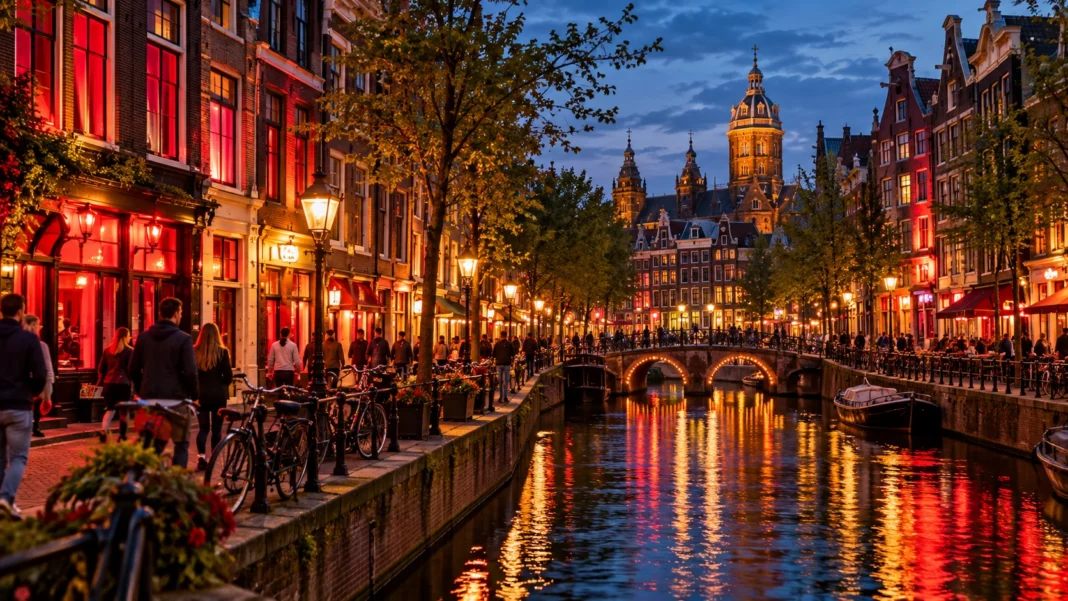
Amsterdam is one of Europe’s most fascinating travel destinations, known for its beautiful canals, historic buildings, world-class museums, and vibrant neighborhoods. Among its most recognizable areas is the Red Light District Amsterdam, a historic neighborhood that attracts visitors curious about the city’s culture, architecture, and unusual history. Beyond its international reputation, the district offers numerous sightseeing opportunities and interesting places to explore.
Known locally as De Wallen, Amsterdam’s Red Light District is one of the oldest parts of the city. Its narrow streets, centuries-old buildings, picturesque canals, and cultural landmarks reveal an important part of Amsterdam’s development. Visitors can discover historic churches, traditional Dutch architecture, museums, and lively public spaces throughout the surrounding neighborhood.
In this guide, we will explore the history of Amsterdam’s Red Light District, the best cultural attractions, and practical travel tips for visiting responsibly. You will also learn about local regulations, transportation, and the best time to explore this fascinating part of the Dutch capital.
What Is the Red Light District in Amsterdam?
Amsterdam’s Red Light District, commonly called De Wallen, is a historic neighborhood located in the city’s central district. It is widely known for its regulated adult industry, but the area also contains important cultural and architectural landmarks. Its network of narrow streets and canals reflects Amsterdam’s medieval origins and long trading history.
The district developed near Amsterdam’s old harbor, where merchants, sailors, and travelers gathered as the city expanded. Over time, it became associated with different forms of commerce, entertainment, and residential life. Today, the neighborhood remains an active urban community rather than simply a destination created for tourists.
Visitors exploring De Wallen can discover centuries-old churches, traditional canal houses, small shops, museums, and restaurants. The combination of historic architecture and modern city life makes the neighborhood distinctive. Understanding its cultural significance helps travelers appreciate the area beyond the reputation that made it internationally famous.
Where Is Amsterdam’s Red Light District Located?
The Red Light District is located in central Amsterdam, within walking distance of Amsterdam Centraal railway station. Its historic streets extend around canals such as Oudezijds Voorburgwal and Oudezijds Achterburgwal. This convenient location makes it accessible to visitors exploring the city’s older neighborhoods and major tourist attractions.
The area is situated near several well-known destinations, including Dam Square, Nieuwmarkt, and Amsterdam’s Chinatown. Travelers can move between these locations on foot while appreciating the historic architecture. Because the neighborhood has narrow streets and numerous pedestrian areas, walking is often the most practical way to explore.
Visitors arriving by public transportation can use Amsterdam Centraal as a convenient starting point. From there, many attractions in the historic center are reachable within a relatively short walk. Comfortable shoes and a reliable city map can help travelers navigate the neighborhood’s winding streets and interconnected canals.
Explore Oude Kerk: Amsterdam’s Oldest Building
Oude Kerk, meaning Old Church, is one of the most significant historical attractions in Amsterdam’s Red Light District. Dating back to the thirteenth century, it is widely recognized as the city’s oldest surviving building. Its impressive Gothic architecture, tall windows, and historic interior provide a fascinating contrast with the busy streets surrounding it.
The church has played an important role in Amsterdam’s religious and cultural history for centuries. Visitors can appreciate its architectural features and learn about the city’s development through the building’s preserved elements. Oude Kerk also hosts contemporary art exhibitions, connecting its historical setting with modern artistic expression.
The surrounding Oudekerksplein provides beautiful views of the building and nearby historic streets. Travelers interested in architecture and photography can appreciate the area during daylight hours. Checking current exhibition schedules and admission arrangements before visiting can help ensure enough time to explore this important landmark.
Visit Museum Ons’ Lieve Heer op Solder
Museum Ons’ Lieve Heer op Solder, also known as Our Lord in the Attic, is one of Amsterdam’s most unusual historic museums. Located inside a seventeenth-century canal house, the museum contains a remarkably preserved church hidden within the upper floors. It offers insight into Amsterdam’s religious history and changing social conditions.
The attic church was established during a period when public Catholic worship faced restrictions in Amsterdam. Visitors can explore historic living spaces, narrow staircases, and carefully preserved architectural details. The museum explains how religious communities adapted to the political and cultural circumstances of their time.
This attraction is especially rewarding for travelers interested in history, architecture, and cultural heritage. The historic building contains steep staircases, so accessibility should be considered before planning a visit. Allowing enough time to explore the exhibits provides a deeper understanding of Amsterdam’s religious traditions and historic residential architecture.
Walk Along the Historic Canals of De Wallen
One of the most enjoyable things to do in Amsterdam’s Red Light District is appreciate its historic canal scenery. The neighborhood features narrow waterways bordered by traditional Dutch buildings, old bridges, and beautiful architectural details. These canals form part of the city center’s distinctive landscape and provide opportunities for sightseeing.
Oudezijds Voorburgwal and Oudezijds Achterburgwal are among the important waterways running through the neighborhood. Their surroundings feature historic structures, small businesses, and examples of traditional Amsterdam architecture. Visitors can observe how the canals continue to shape transportation, urban design, and everyday city life.
Walking along publicly accessible canal paths is an excellent way to appreciate the neighborhood’s atmosphere. Photography of buildings and waterways can be enjoyable, but visitors must respect people’s privacy and avoid photographing adult workers or their workplaces. Staying aware of cyclists and pedestrians also helps make exploration safer.
Discover Nieuwmarkt Square and the Waag
Nieuwmarkt is a historic public square located near Amsterdam’s Red Light District. It provides a lively setting surrounded by restaurants, traditional buildings, and interesting architectural landmarks. The square is particularly appealing to travelers who enjoy exploring local neighborhoods and experiencing Amsterdam’s everyday urban atmosphere.
One of its most recognizable landmarks is De Waag, a historic building that originally formed part of Amsterdam’s medieval defensive system. Over the centuries, the structure has served different civic and commercial purposes. Its castle-like appearance creates a striking architectural feature in the center of Nieuwmarkt.
Visitors can appreciate the surrounding buildings, relax in the square, and discover nearby streets filled with local businesses. Markets and community activities may take place depending on the day and season. Combining Nieuwmarkt with a walk through De Wallen provides an enjoyable introduction to Amsterdam’s historic center.
Explore Amsterdam’s Chinatown
Amsterdam’s Chinatown is located close to the Red Light District and offers another interesting cultural experience. Centered around Zeedijk and nearby streets, the neighborhood reflects the city’s multicultural history. Visitors can discover Asian restaurants, traditional shops, and distinctive architectural features within a compact urban setting.
One of the area’s most recognizable landmarks is the Fo Guang Shan He Hua Temple, a Buddhist temple located on Zeedijk. Its decorative architecture provides an interesting contrast with the surrounding Dutch buildings. The temple represents an important cultural and religious presence within Amsterdam’s diverse community.
Walking through Chinatown provides opportunities to appreciate the city’s international character and explore different culinary traditions. Visitors should remember that local residents, businesses, and religious institutions deserve respectful behavior. Including this neighborhood in a daytime itinerary creates a broader cultural experience beyond the familiar landmarks of De Wallen.
Visit Local Museums, Art Spaces, and Book Markets
Amsterdam’s historic center contains several smaller cultural attractions that deserve attention alongside the city’s famous museums. Visitors interested in literature, archaeology, and contemporary art can discover institutions within or near De Wallen. These destinations provide opportunities to learn about different periods of history and artistic expression.
The Oudemanhuispoort Book Market is a distinctive covered market known for its secondhand books, prints, and other paper collectibles. Nearby cultural attractions include art spaces and historic venues that occasionally host exhibitions or performances. Exploring these locations can reveal a quieter and more creative side of central Amsterdam.
Museum visits and cultural experiences are particularly useful when rainy weather makes longer outdoor walks less comfortable. Travelers should check opening schedules because small galleries and markets may operate on limited days. Combining one or two cultural stops with historic sightseeing creates a varied and rewarding itinerary.
Experience the Architecture and Historic Streets
De Wallen is one of Amsterdam’s oldest urban areas, making it an interesting destination for travelers who appreciate traditional European architecture. Narrow brick buildings, historic facades, and carefully designed canal bridges contribute to its distinctive appearance. Many streets preserve visual reminders of the city’s medieval development and commercial history.
Traditional Dutch canal houses are particularly recognizable because of their narrow frontages, tall windows, and decorative rooflines. These architectural features reflect Amsterdam’s historical building patterns and urban development. Some buildings have changed purpose many times while retaining important elements of their original design.
Walking through the neighborhood during daylight provides opportunities to appreciate these architectural details without the busiest evening crowds. Travelers can observe how historic structures coexist with modern homes, businesses, and cultural institutions. Respecting entrances, avoiding blocked sidewalks, and observing local rules helps preserve a comfortable environment for residents.
What Is the Best Time to Visit Amsterdam’s Red Light District?
The best time to explore the Red Light District depends on whether you prefer quieter sightseeing or a livelier urban atmosphere. Daytime is generally more suitable for visitors interested in historic buildings, museums, and canal photography. The streets are often easier to navigate before the busiest evening periods.
Late morning and early afternoon can provide comfortable opportunities for exploring Oude Kerk, nearby cultural attractions, and public squares. Museums and shops typically operate according to their individual schedules, so checking opening times is useful. Weekdays may also be preferable for travelers hoping to avoid the largest visitor crowds.
Amsterdam’s seasonal weather affects the sightseeing experience throughout the year. Spring and early autumn often offer pleasant conditions for walking, while summer brings longer daylight hours and higher visitor demand. Winter can be colder and wetter, although the neighborhood’s historic streets remain interesting for sightseeing.
Local Rules and Visitor Etiquette in De Wallen
Respectful behavior is essential when visiting Amsterdam’s Red Light District because it is also a residential neighborhood and workplace for local people. Visitors should avoid excessive noise, blocking entrances, leaving litter, or treating residents as tourist attractions. Following these basic expectations helps maintain a respectful environment throughout the area.
Photography requires particular consideration because workers and residents have a right to privacy. Visitors should not photograph people working in the adult industry or their workplaces. Amsterdam also enforces restrictions on nuisance behavior, including public alcohol consumption in designated central areas, so travelers should pay attention to local signs.
Guided tours are subject to specific municipal restrictions, including rules intended to protect residents and workers from overcrowding and intrusive tourism. Visitors should not assume that every advertised group activity is permitted. Checking current municipal guidance before traveling helps ensure that sightseeing plans respect the neighborhood and its regulations.
Is Amsterdam’s Red Light District Safe for Tourists?
Amsterdam’s Red Light District is a busy central neighborhood visited by many people throughout the year. Like other popular urban tourism areas, it requires normal precautions concerning personal belongings, crowds, and unfamiliar surroundings. Safety conditions can vary depending on the street, time of day, and local circumstances.
Pickpocketing and other opportunistic theft can occur in crowded tourist areas, making awareness important. Travelers should secure valuables, remain attentive to their surroundings, and avoid unnecessary distractions while walking. Using established public transportation and staying on familiar routes can also help visitors navigate the city more confidently.
Daytime sightseeing is generally a more comfortable choice for visitors who want to focus on historical attractions and cultural experiences. Families should consider that some parts of the neighborhood contain adult-oriented businesses and displays. Choosing suitable streets and attractions allows travelers to appreciate the area’s history without entering adult venues.
How to Get to Amsterdam’s Red Light District
Amsterdam’s public transportation network makes the historic center relatively easy to reach from different parts of the city. Amsterdam Centraal railway station is one of the most convenient arrival points for visitors. Many important attractions in De Wallen are located within walking distance of the station.
Travelers staying elsewhere in Amsterdam can use trams, metro services, or other public transportation options to reach the city center. The most practical route depends on the starting location and current service arrangements. Because historic streets can be narrow and crowded, walking is often more convenient than driving through the neighborhood.
Visitors arriving from Amsterdam Airport Schiphol can travel toward the city center using established rail connections. Once near Amsterdam Centraal, the historic district is relatively accessible on foot. Checking transportation schedules and planning a simple walking route helps make the journey easier for first-time visitors.
Nearby Attractions Worth Visiting in Central Amsterdam
Amsterdam’s Red Light District is surrounded by several important attractions that can be included in a larger sightseeing itinerary. Dam Square, the Royal Palace, and other historic landmarks are located within the central city area. Their proximity makes it possible to explore different aspects of Amsterdam’s history without extensive transportation.
Travelers interested in cultural heritage can visit nearby museums and historic buildings or explore the city’s famous shopping streets. Canal-side neighborhoods offer additional opportunities for photography and architectural sightseeing. These attractions provide a balanced experience that highlights Amsterdam’s history, commerce, culture, and urban design.
Visitors with additional time can explore the wider city, including Museumplein, the Jordaan neighborhood, and major cultural institutions. Planning attractions by neighborhood can reduce unnecessary travel time and make sightseeing more enjoyable. A combination of famous landmarks and smaller historic streets offers a memorable introduction to Amsterdam.
Important Travel Tips for Visiting De Wallen
Planning a visit to De Wallen begins with understanding that the neighborhood is more than a tourist attraction. Residents, business owners, and workers use its streets every day. Traveling respectfully means keeping noise reasonable, respecting privacy, and avoiding behavior that disrupts people’s homes or workplaces.
Comfortable walking shoes are useful because the historic center contains cobbled surfaces, narrow streets, and numerous bridges. Amsterdam’s weather can change quickly, so carrying a light waterproof jacket may be helpful. Visitors should also remain aware of bicycles and use marked crossings where available.
Organizing a daytime itinerary around museums, churches, canals, and historic squares can provide a rewarding sightseeing experience. Checking admission requirements and operating hours beforehand helps avoid unnecessary delays. By combining cultural exploration with responsible travel habits, visitors can appreciate one of Amsterdam’s most historically significant neighborhoods.
Conclusion
Amsterdam’s Red Light District is one of the city’s most recognizable neighborhoods, but its cultural value extends far beyond its international reputation. Historic churches, beautiful canals, traditional architecture, and fascinating museums reveal centuries of local history. Exploring these attractions provides an opportunity to understand the development of Amsterdam’s oldest urban areas.
Visitors can discover landmarks such as Oude Kerk, Museum Ons’ Lieve Heer op Solder, and nearby Nieuwmarkt while appreciating the surrounding historic streets. Chinatown, local book markets, and art spaces also offer interesting cultural experiences. A thoughtfully planned visit can highlight the neighborhood’s architectural beauty and diverse heritage.
Before exploring De Wallen, review local rules, respect people’s privacy, and choose attractions suited to your interests. Daytime sightseeing is particularly convenient for travelers focused on history and culture. With responsible planning, a visit to Amsterdam’s historic center can become an informative and memorable part of a Netherlands vacation.
Frequently Asked Questions
Where is the Red Light District in Amsterdam?
Amsterdam’s Red Light District, known as De Wallen, is located in the historic city center near Amsterdam Centraal station. It includes streets around Oudezijds Voorburgwal, Oudezijds Achterburgwal, and the Oude Kerk.
Is Amsterdam’s Red Light District worth visiting?
Yes, the neighborhood offers historic architecture, scenic canals, museums, and cultural landmarks. Visitors interested in Amsterdam’s history can explore Oude Kerk, nearby public squares, and other attractions without entering adult-oriented businesses.
What is the best time to visit Amsterdam’s Red Light District?
Late morning and early afternoon are generally suitable for exploring museums, historic churches, and canals. Daytime visits can also provide a more comfortable sightseeing experience than the busiest evening periods.
Can you take pictures in Amsterdam’s Red Light District?
Visitors can photograph public architecture and canal scenery while respecting privacy and local rules. Photographing people working in the adult industry or their workplaces is inappropriate and should be avoided.
How much time do you need to explore De Wallen?
Approximately two to three hours can provide enough time for a relaxed walk and several historic sights. Allow additional time if you plan to visit museums, attend exhibitions, or explore nearby neighborhoods.

