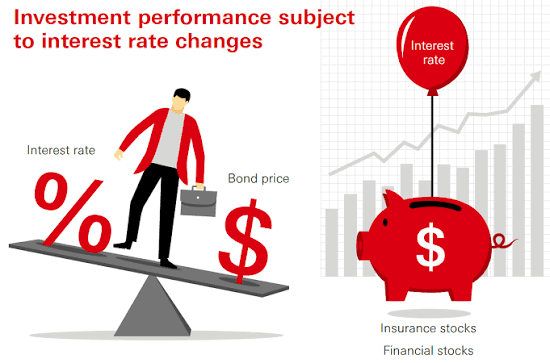
Understanding Interest Rates
Interest rates are a critical component of the financial system, representing the cost of borrowing money or the return on savings and investments. They play a vital role in the economy by influencing consumer and business spending, as well as overall economic growth. Interest rates can be categorized into nominal and real rates. The nominal interest rate is the stated rate without adjusting for inflation, while the real interest rate accounts for inflation, reflecting the true cost of borrowing or the real yield on savings. Understanding the difference between these two rates is essential for making informed investment decisions.
Interest rates are primarily determined by the dynamics of supply and demand in the money market. Central banks, such as the Federal Reserve in the United States, have a significant impact on interest rates through their monetary policy tools. They can adjust rates to either stimulate or cool down the economy. For instance, during periods of economic downturn, central banks may lower the interest rates to encourage borrowing and spending, which, in turn, can foster economic growth. Conversely, to combat inflation, they may raise rates, leading to reduced borrowing and spending.
Inflation is another crucial factor influencing interest rates. As inflation rises, lenders demand higher interest rates to compensate for the reduced purchasing power of future payments. Thus, there is an inverse relationship between interest rates and inflation. Investors should be aware of changing interest rate environments, as they can significantly affect the performance of different asset classes. Understanding how interest rates are determined, and their relationship with inflation and central bank policies provides essential insights for making sound investment choices.
The Mechanism of Interest Rate Changes
Interest rates are subject to constant fluctuations influenced by a myriad of factors encompassing economic indicators, fiscal policies, and global events. One of the core mechanisms by which interest rates change is through monetary policy decisions made by central banks. These institutions, tasked with regulating the economy, set the benchmark interest rates which subsequently influence lending rates across financial markets.
Economic indicators such as inflation, employment rates, and GDP growth play a significant role in shaping monetary policy. For instance, when inflation rises, central banks often respond by increasing interest rates to curtail spending and borrowing, thereby stabilizing prices. Conversely, during periods of economic stagnation or decline, central banks may reduce interest rates to encourage borrowing and investment, propelling economic activity.
Fiscal policies also have a profound impact on interest rate changes. Government spending and tax policies can alter the economic landscape, prompting adjustments in interest rates. For example, increased government expenditure can lead to higher demand, potentially resulting in inflationary pressures that require a response in the form of raised interest rates.
Global events, such as geopolitical tensions, financial crises, and changes in foreign markets, further influence interest rates. A crisis in one part of the world may lead to global financial instability, prompting central banks to adjust their rates to safeguard their economies. Additionally, trends in international trade and investment flows can affect domestic interest rates as capital moves in response to relative returns.
In summary, the dynamic nature of interest rates is reflective of a complex interplay between economic indicators, fiscal policies, and global events. Understanding these mechanisms equips investors with the knowledge to navigate changing interest rates and their broader implications on investments.
Impact of Rising Interest Rates on Investments
Rising interest rates can significantly influence various investment landscapes, affecting asset classes such as stocks, bonds, and real estate. When interest rates increase, the cost of borrowing also rises, leading to implications for both corporate profit margins and consumer spending patterns.
In the stock market, higher interest rates can exert pressure on companies that rely on debt for expansion and operations. Increased borrowing costs may shrink profit margins as firms face higher expenses for servicing existing debts or financing new projects. Furthermore, investor sentiment might shift toward more conservative investments, with equities potentially losing attractiveness compared to fixed-income assets, like bonds, which typically offer more stable returns in a higher interest rate environment.
Bonds themselves are directly impacted by rising interest rates. As rates increase, the prices of existing bonds generally fall, because new bonds are issued at higher yields that are more appealing to investors. This inverse relationship can lead to significant losses for those holding long-term bonds unless they are able to hold their investments until maturity. Investors often rebalance their portfolios to adjust for risk, which could result in a flight from bonds with longer durations and a preference for shorter-term securities.
Real estate investments are also affected as higher interest rates can reduce housing demand due to increased mortgage costs for homebuyers. Consequently, real estate developers might delay or scale back new projects, directly impacting supply in the market. The affordability of housing diminishes, which can further curtail consumer spending. A slowdown in the real estate market also affects related industries, leading to broader economic implications.
Impact of Falling Interest Rates on Investments
Falling interest rates can have a significant impact on investments, acting as a catalyst for increased economic activity. When central banks lower interest rates, borrowing becomes more affordable for both consumers and businesses. This decrease in borrowing costs often results in higher levels of consumer spending and business investment, which can ultimately stimulate economic growth. Consumers may take advantage of lower rates to finance major purchases, such as homes and cars, thereby enhancing demand in the housing market and automotive industries.
For businesses, the availability of inexpensive loans can support capital investments in new projects, expansion activities, and ultimately, lead to job creation. As companies borrow at lower rates, they are more likely to pursue growth opportunities that would have been deemed too risky during periods of higher interest rates. This increase in corporate investment can also signal confidence in the economy, further encouraging spending and hiring.
Furthermore, falling interest rates make equities relatively more attractive than fixed-income investments. As yields on bonds decline, investors often shift their focus towards stocks in search of higher returns. This transition can lead to increased demand for equities, pushing stock prices upward. Companies that demonstrate strong fundamentals and growth potential may see their valuations rise significantly in this low-rate environment.
Error identifying the optimal investment strategy can result in adverse consequences. Hence, investors must carefully analyze market conditions and their financial goals before making substantial decisions. The interplay between interest rates and investment behavior is complex, but understanding how falling rates influence market dynamics can better inform investment strategies.
The Relationship Between Interest Rates and Stock Market Performance
The interaction between interest rates and stock market performance is a pivotal aspect of financial markets. Interest rates, set primarily by central banks, dictate the cost of borrowing and the return on savings. As these rates fluctuate, they can have a significant impact on investor sentiment and stock price movements.
When interest rates rise, the immediate effect is often a decline in stock prices. Higher rates tend to increase the cost of capital for businesses; thus, when borrowing becomes more expensive, companies may reduce investment spending. This can lead to lower earnings forecasts, which negatively impacts stock valuations. Historical trends have demonstrated this relationship; during periods of rising interest rates, stock markets typically experience volatility and downward pressure.
Conversely, when interest rates are lowered, the cost of borrowing decreases, and consumers are encouraged to take loans for spending, thereby stimulating economic activity. This often leads to an increase in corporate profits, as companies can invest more and consumers can spend more. Consequently, lower interest rates generally contribute to a bullish stock market environment, as investors often respond positively to such conditions. Economic growth, driven by easier access to credit, tends to boost investor confidence and propel stock prices upward.
Market reactions to interest rate changes are not always immediate or predictable. Factors such as inflation expectations, overall economic stability, and geopolitical events can also influence investor behavior. For instance, a sudden increase in interest rates may lead to short-term turmoil in the stock market, even if the long-term impact might be mitigated by economic growth projections. In assessing the relationship between interest rates and stock market performance, it is critical for investors to consider both historical trends and current economic indicators to make informed decisions.
Bonds and Interest Rates: A Complex Relationship
Bonds, as fixed income securities, play a significant role in investment portfolios. Their relationship with interest rates is intricate and impacts both pricing and investor decisions. When interest rates rise, existing bonds typically decrease in value. This is primarily because newer bonds are issued at the higher prevailing rates, making older bonds with lower rates less attractive. Consequently, investors may adjust their portfolios to avoid potential losses from declining bond prices.
Duration risk is another critical aspect of bond investments in relation to interest rates. Duration measures a bond’s sensitivity to changes in interest rates, indicating how much a bond’s price is expected to fluctuate with a 1% change in interest rates. Bonds with longer durations are generally more susceptible to interest rate changes; thus, they can pose higher risks for investors anticipating rate hikes. On the contrary, bonds with shorter durations tend to be less volatile, making them more appealing during periods of rising rates.
The yield curve also provides valuable insights into how interest rates influence bond investments. Typically, the yield curve illustrates the relationship between interest rates and the maturity of debt. A normal yield curve indicates that long-term rates are higher than short-term rates, reflecting the additional risks and uncertainties associated with longer maturities. However, an inverted yield curve, where short-term rates exceed long-term ones, often signals economic downturns, leading investors to reassess their bond holdings. Understanding these dynamics allows investors to navigate the complexities of bond investments effectively, thereby making informed decisions based on varying interest rate environments.
Real Estate Investments in Changing Interest Rate Environments
The dynamics of real estate investments are intricately linked to fluctuations in interest rates, which profoundly influence both mortgage rates and housing demand. Typically, when interest rates rise, the cost of borrowing increases for potential homebuyers. Higher mortgage rates can deter prospective buyers, leading to reduced housing demand. Consequently, real estate investors may encounter a slowdown in sales, impacting property valuations and ultimately limiting their return on investment.
In a higher interest rate environment, investors must adapt their strategies to navigate a more challenging market. One common approach is to focus on rental properties. As purchasing a home becomes less affordable for many, rental demand often increases, driving rental prices up and leading to better cash flow for landlords. This shift necessitates thorough market research to identify areas with strong rental demand and favorable tenant demographics, ensuring steady occupancy rates.
Moreover, rising interest rates may compel investors to reassess their financing options. Fixed-rate mortgages offer stability against future rate hikes, making them a more attractive option during periods of increasing rates. Additionally, investors might explore refinancing existing properties to lock in lower rates or consider alternative financing methods that may be less sensitive to interest rate fluctuations.
Conversely, a declining interest rate environment usually results in lower mortgage rates, stimulating housing demand as buying becomes more affordable. In this scenario, investors may benefit from quick property acquisitions, enhanced cash flow, and increased property values, maximizing their investment potential. They should, however, remain vigilant about potential overextension as increased competition can lead to inflated market prices, threatening long-term profitability.
In conclusion, understanding the implications of changing interest rates on real estate investments is crucial. By adjusting strategies and remaining adaptable to market conditions, investors can effectively harness the shifting landscape to achieve their financial goals.
Strategies for Investing in a Variable Interest Rate Climate
Investing in a landscape defined by fluctuating interest rates necessitates a nuanced approach. As rates change, both fixed-income and equity investments may react differently, influencing overall portfolio performance. To navigate this environment effectively, investors should adopt several strategies tailored to hedge against potential risks while optimizing returns.
Diversification stands out as a core principle in managing investment risk in varying interest rate climates. By spreading investments across different asset classes—such as stocks, bonds, real estate, and commodities—investors mitigate the impact of rising or falling interest rates on a single asset category. This approach allows portfolios to remain resilient even when certain sectors are adversely affected by rate changes.
Asset allocation is another critical strategy. Investors should regularly reassess their asset mix based on the current economic outlook and interest rate projections. During periods of increasing interest rates, it may be wise to allocate a larger portion of the portfolio to short-duration bonds, which generally exhibit less price volatility compared to long-duration bonds. Conversely, in a declining interest rate environment, long-duration bonds might be more advantageous due to their increased sensitivity to interest rate changes, potentially offering higher returns.
Hedging against interest rate risk can also provide a significant layer of protection. Investors can explore options such as interest rate swaps or futures contracts to offset potential losses from rising rates. Furthermore, utilizing assets that historically perform well in high-interest environments—such as certain equities or tangible assets like real estate—can enhance portfolio performance.
As economic conditions evolve, continuous adjustment of investment strategies will be essential for aligning with interest rate movements. Staying informed about economic indicators and central bank policies enables investors to make timely decisions, ensuring their portfolios are well-positioned in an unpredictable market.
Conclusion: Staying Informed and Adaptive
In summary, the relationship between interest rates and investments is both significant and complex. As we discussed, rising interest rates can lead to increased borrowing costs, which may negatively impact corporate profits and, in turn, stock market performance. Conversely, lower interest rates typically encourage borrowing and spending, stimulating economic growth and potentially boosting stock prices. Understanding these dynamics is essential for investors looking to navigate the financial landscape.
Given the volatile nature of interest rates, it is crucial for investors to remain informed about current economic trends and monetary policies. Regularly consulting reputable financial news sources, government reports, and insights from economic analysts can provide valuable context and help investors anticipate market shifts resulting from changes in interest rates. Furthermore, investors should consider utilizing financial tools and resources that can assist in evaluating the potential impact of rate changes on their portfolios.
Adaptability is another key aspect of successful investing in the context of fluctuating interest rates. Investors should be prepared to adjust their strategies based on market conditions. For instance, during periods of rising rates, diversifying into assets that tend to perform well in such environments—like certain bonds or real estate—can mitigate potential losses in more vulnerable sectors. Conversely, in environments with lower rates, growth-oriented investments might yield higher returns.
In closing, maintaining an adaptive mindset coupled with ongoing education about interest rate trends will significantly enhance an investor’s ability to make informed decisions. Embracing these principles not only aids in navigating the complexities of the financial world but also positions investors to optimize their portfolios and capitalize on emerging opportunities.

