Introduction to Fault Tolerance
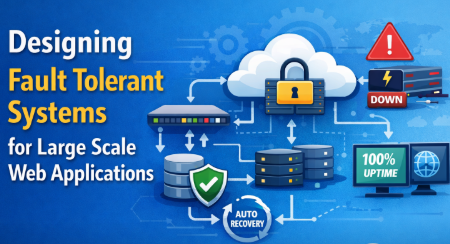
Fault tolerance is a critical design principle for ensuring the reliability and availability of web applications, particularly in large scale environments. At its core, fault tolerance is the ability of a system to continue functioning correctly even in the event of a failure of some of its components. This capability is especially important for web applications, where downtime can lead to significant financial losses and damage to reputation.
In a fault-tolerant system, mechanisms are put in place to detect failures and provide redundancy, thereby minimizing the impact of these failures on the overall system. High availability and resilient performance are paramount, particularly as web applications face increasing complexities and reliance on interconnected services. By handling faults effectively, these systems can maintain operational continuity even during unforeseen events.
Various industries have implemented fault-tolerant systems to ensure seamless performance. For example, in the banking sector, transaction processing systems are designed to be fault tolerant, allowing them to process transactions without interruption, even in the face of hardware or network failures. Similarly, in telecommunications, voice and data communication systems incorporate fault tolerance to guarantee service delivery despite faults that may occur within the network infrastructure.
The significance of incorporating fault tolerance in web applications cannot be overstated. By designing systems to be resilient, organizations can uphold consumer trust, optimize user experience, and secure their operational frameworks against potential failures. The sheer scale at which modern web applications operate necessitates a strong emphasis on fault-tolerant design principles. As demands continue to evolve, the implementation of such systems will remain a top priority for developers and architects who seek to improve service reliability and ensure sustainable performance.
Characteristics of Fault Tolerant Systems
Fault tolerant systems are essential for large-scale web applications, as they ensure uninterrupted service even when components fail. These systems incorporate several key characteristics that collectively enhance their robustness and reliability. One fundamental characteristic is redundancy. By duplicating critical components, such as servers or databases, fault tolerant systems can switch to a secondary component if the primary fails, minimizing downtime and preserving user accessibility. This redundancy is often implemented through clustering techniques, where multiple nodes work together to support the application.
Another significant characteristic of fault tolerant systems is error detection. These systems are designed to identify issues before they escalate into significant problems. They rely on various monitoring tools and techniques to continuously track the health of components. When an anomaly is detected, alerts are triggered, enabling immediate corrective actions to commence, effectively preserving the integrity of the system.
Additionally, failover mechanisms play a crucial role in maintaining functionality during a fault. When a component fails, these systems automatically reroute operations to backup components, ensuring continuity of service without requiring manual intervention. This seamless transition is vital for maintaining user trust and satisfaction.
Moreover, fault tolerant systems must also maintain consistency during failures. This characteristic is often achieved through techniques such as distributed consensus algorithms or data replication strategies. By ensuring that all parts of the system have access to the same data state, these mechanisms uphold the integrity and reliability of information, which is pivotal for web applications that handle sensitive user data.
These characteristics—redundancy, error detection, failover mechanisms, and consistency during failures—are integral to building fault tolerant systems. Together, they support the overall robustness of web applications, enabling them to withstand and recover from unexpected issues effectively.
Common Failure Types in Large Scale Applications
In large scale web applications, various types of failures may occur, impacting system performance and user experience. Understanding these common failure types is essential for designing fault tolerant systems.
Firstly, hardware failures can occur at any time due to issues such as power outages, hard drive malfunctions, or defective memory modules. For instance, consider a major online retail platform that experiences a sudden server crash during peak shopping season. This unexpected hardware failure can lead to significant downtime, resulting in revenue loss and customer dissatisfaction. Implementing redundant systems and failover mechanisms can help mitigate the impact of such failures.
Secondly, software bugs represent another critical point of failure. These bugs may stem from coding errors, unanticipated interactions within the codebase, or even updates that introduce new issues. For example, a social media application might face performance degradation due to a bug in the new feature. This scenario can compromise user trust and require immediate resolution to restore functionality. Rigorous testing and code reviews are vital practices to minimize the occurrence of software-related failures.
Additionally, network issues can disrupt web applications significantly, especially those reliant on real-time data processing. Network latency, packet loss, or even faulty configurations can impede application communication. A notable example includes a financial services platform suffering from connection problems during high-volume trading hours, leading to delayed transactions and financial losses. Employing tools that monitor network health can help preemptively address potential issues.
Finally, human errors remain a prevalent failure type in operating large scale systems. These errors might involve incorrect configurations, accidental deletions, or failure to follow deployment procedures. For instance, a database administrator might mistakenly delete crucial data, resulting in immediate access issues for users. Creating robust protocols, regular training, and automated recovery processes can significantly reduce the prevalence of human-induced failures.
Architectural Strategies for Fault Tolerance
Designing fault-tolerant systems requires careful consideration of various architectural strategies. One prevalent approach is the adoption of a microservices architecture. This design breaks down applications into smaller, independent services that can operate autonomously. By isolating functionalities, microservices allow for better scalability and resilience. If one service fails, it does not necessarily impact the entire application, thus ensuring continuity. Companies such as Netflix and Amazon have successfully implemented microservices, resulting in efficient fault tolerance and the ability to scale seamlessly under high traffic.
Another effective strategy is event-driven architecture (EDA). This approach revolves around the generation, detection, and reaction to events within the system. By utilizing asynchronous communication, components can operate independently, which enhances fault tolerance. In EDA, when one component experiences issues, the others can continue functioning, ensuring that the system remains operational. An exemplary case is LinkedIn, which employs an event-driven model to handle massive amounts of data efficiently while maintaining high availability.
Load balancing is another crucial architectural strategy for achieving fault tolerance in large-scale applications. By distributing incoming traffic across multiple servers, load balancing can prevent any single server from becoming a bottleneck. This distribution minimizes the risk of server overload and enhances system reliability. Cloud providers like AWS and Azure offer robust load balancing solutions that automatically reroute traffic in the event of server failure, ensuring minimal disruption to service.
Incorporating these architectural strategies into web application design not only improves fault tolerance but also enhances overall system performance and user satisfaction. Adopting microservices, event-driven models, and load balancing can create a robust framework that effectively manages failures, mitigates risks, and ultimately supports the needs of large-scale applications.
Implementing Redundancy in Systems
Redundancy plays a critical role in designing fault-tolerant systems for large-scale web applications. By incorporating various forms of redundancy, organizations can significantly enhance system reliability while minimizing downtime. Three primary types of redundancy should be considered: data redundancy, functional redundancy, and geographical redundancy.
Data redundancy involves maintaining copies of critical data across multiple locations or storage systems. This ensures that if one data source becomes unavailable due to failure, another can seamlessly take its place, preserving data integrity and availability. Best practices include utilizing replication techniques, like master-slave configurations or multi-region databases, to maintain consistency across nodes. Additionally, regularly testing backup systems ensures that data recovery processes are efficient and reliable.
Functional redundancy refers to the strategy of deploying multiple instances of the same application or service. For instance, load balancers can distribute requests across several servers, ensuring that performance remains steady even during high traffic periods. To effectively implement functional redundancy, it is advisable to design microservices architecture where individual components can independently scale and operate without affecting the overall application. This decoupling not only improves fault tolerance but allows for easier maintenance and updates.
Geographical redundancy expands on the previous strategies by positioning redundant systems across different physical locations. This protects applications from regional outages caused by natural disasters or infrastructure issues. Utilizing cloud computing services that offer multiple geographic zones can provide the necessary flexibility and resilience. When implementing geographical redundancy, organizations should also consider data sovereignty and latency issues that can arise from data being stored in various locations.
Incorporating these redundancy types into the design of a web application enhances uptime, minimizes the risk associated with single points of failure, and ensures a more robust overall system. Careful planning and execution of these practices are paramount to achieving a fault-tolerant environment that supports both current and future demands.
Error Detection and Recovery Techniques
In the realm of large-scale web applications, ensuring a seamless user experience is of paramount importance, necessitating the implementation of robust error detection and recovery techniques. These techniques play a vital role in identifying issues as they arise and facilitating prompt recovery, thus minimizing downtime and potential impact on users.
One prevalent method for error detection is the use of checksums. Checksums allow systems to verify the integrity of data by generating a unique hash value based on the content. By comparing this hash against the original data, any discrepancies can be quickly identified, enabling timely intervention to address the error. This technique is particularly effective in environments where data transmission errors are common.
Additionally, comprehensive monitoring systems are essential for the ongoing assessment of application performance. Such systems actively track various metrics, detecting anomalies that could indicate underlying issues. Alerts generated by these monitoring solutions empower teams to resolve problems before they escalate, thereby enhancing the overall reliability of the application.
Another critical aspect of error management is logging failures. By systematically documenting errors as they occur, developers can gain insights into persistent issues, allowing for a deeper understanding of problem patterns and root causes. This information can be instrumental in refining the application’s architecture and improving future error handling procedures.
Automated recovery processes are equally crucial for maintaining system availability. Techniques such as failover systems can redirect traffic to backup resources, ensuring that user requests are satisfied even in the event of a failure. The implementation of automation not only reduces recovery time but also lowers the dependency on manual intervention, which could lead to delays.
The significance of rapid recovery in fault-tolerant systems cannot be overstated. Minimizing downtime not only aids in preserving user trust but also enhances operational efficiency. By integrating various error detection and recovery techniques, organizations can build resilient web applications that stand up to operational challenges, securing both data integrity and user satisfaction.
Testing Fault Tolerance in Web Applications
Testing fault tolerance in web applications is essential to ensure systems can withstand and recover from unexpected failures. Several techniques can be employed to assess the resilience of a web application, which include chaos testing, load testing, and failure injection. Each method brings unique benefits to the assessment process.
Chaos testing involves deliberately introducing failures into a system to observe how it behaves under stress. This technique helps identify potential weaknesses and can simulate real-world scenarios where components might fail. For example, tools like Chaos Monkey can randomly terminate instances within a cloud application to ensure the system can handle unexpected disruptions. The primary goal is to validate the integrity and availability of the application even under adverse conditions.
Load testing is another critical aspect of testing fault tolerance. This method simulates user traffic and helps organizations evaluate how their web applications behave under varying loads. By understanding how an application scales and where it might fail, engineers can identify bottlenecks and apply the necessary optimizations. Tools such as Apache JMeter and Gatling are quite effective in conducting load tests, allowing for comprehensive reports on performance and stability.
Failure injection is closely related to chaos testing, serving a similar purpose by purposefully inserting faults into an application environment. This technique tests how well the system can handle failures in real-time, such as simulating network disconnections or service outages. Various frameworks exist to facilitate this type of testing, including Gremlin and Toxiproxy, which provide controlled environments for testing fault responses.
In conclusion, implementing these testing methodologies effectively underscores the importance of ensuring web applications are fault-tolerant. By utilizing chaos testing, load testing, and failure injection, developers can equip their systems to handle unexpected failures, ultimately enhancing the overall reliability of web applications.
Case Studies: Successful Fault Tolerant Systems
Fault tolerant systems play a critical role in ensuring the reliability and availability of large-scale web applications. Examining real-world implementations provides valuable insights that can aid organizations in developing their fault tolerance strategies. This section explores three notable case studies, highlighting the unique challenges encountered, the solutions devised, and the outcomes attained.
The first case study features a leading online retail platform that experienced significant traffic spikes during major sales events. Faced with system failures due to server overloads, the company implemented a microservices architecture. By decoupling applications into independent services, they enabled isolated failures without affecting the entire system. Additionally, they utilized load balancers and auto-scaling mechanisms to manage the increased traffic effectively. As a result, the platform maintained high availability during peak periods, leading to a substantial increase in sales and customer satisfaction.
Next, we look at a global social media network grappling with data integrity issues due to frequent server outages. To combat this, they integrated a distributed database system that replicates data across multiple nodes. This approach ensured that even if one server faced downtime, the data remained accessible from another location. Implementing automatic failover procedures further improved resilience. Ultimately, this transition not only enhanced reliability but also bolstered user trust, as the platform could consistently provide correct and timely information.
The third case study revolves around a financial services firm that needed to ensure transaction reliability amidst high security and performance demands. They adopted a behavior-driven development approach to build and test fault-tolerant features, including transactional guarantees and real-time monitoring systems. This proactive stance minimized errors, ensuring that all transactions processed accurately, even during unexpected outages. This shift to a fault-tolerant approach significantly decreased system downtimes and regulatory noncompliance risks.
Through these examples, it becomes evident that implementing robust fault tolerance mechanisms is essential for enhancing the resilience of large-scale web applications, facilitating continuous operations, and ultimately driving sustained success.
Future Trends in Fault Tolerant System Design
As we look towards the future of fault tolerant system design, several emerging trends are set to redefine how we approach reliability in large-scale web applications. One of the most noteworthy developments is the increasing integration of artificial intelligence (AI) in fault detection mechanisms. AI algorithms can analyze vast amounts of operational data to predict potential failures before they occur, thereby enhancing the system’s ability to maintain uninterrupted service. Machine learning models are now able to identify patterns and anomalies that might otherwise go unnoticed, allowing for proactive measures to be taken against system failures.
Another significant trend is the adoption of serverless architectures, which remove the traditional constraints of server management. In a serverless environment, developers can focus on writing code without worrying about the underlying infrastructure. This model inherently supports fault tolerance, as it automatically scales resources based on demand and maintains multiple redundant instances. Serverless computing platforms are designed to gracefully handle failures, automatically rerouting user requests to functioning components. This not only improves system resilience but also optimizes resource utilization.
Advancements in cloud computing also play a pivotal role in enhancing fault tolerant systems. With the widespread availability of multi-cloud solutions, businesses can ensure that their applications are distributed across several cloud providers, mitigating the risk of single points of failure. Additionally, innovative cloud services now include built-in redundancy features and geographical distribution, enabling seamless failover mechanisms during outages. This strategic implementation of cloud technologies supports continuous operation and enhances the overall reliability of web applications.
As these trends evolve, they signal a future where fault tolerance is an inherent aspect of system design. By embracing AI, serverless architectures, and modern cloud computing solutions, developers will be better equipped to build resilient web applications that can withstand unforeseen challenges.

