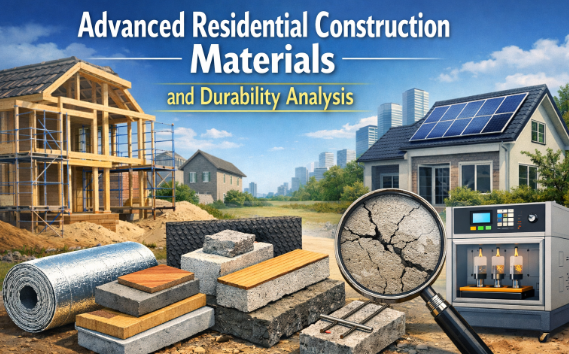
Introduction to Advanced Construction Materials
In the ever-evolving landscape of residential construction, the emergence of advanced construction materials plays a pivotal role in enhancing both the durability and sustainability of buildings. Traditionally, construction relied heavily on conventional materials like wood, concrete, and bricks. However, recent years have seen a significant shift towards materials that not only meet aesthetic and functional requirements but also address the growing concerns related to environmental impact and resource scarcity.
This evolution of construction materials can be attributed to several factors, including technological advancements, increased demand for energy-efficient solutions, and the urgency to mitigate climate change. Materials such as engineered wood products, recycled metals, and innovative concrete types have gained traction, offering superior performance attributes compared to their traditional counterparts. For instance, engineered wood is often more stable, providing better resistance to environmental factors while minimizing waste by utilizing smaller, underused timber pieces.
Moreover, the adoption of advanced construction materials is largely driven by the desire for buildings that can withstand more adverse conditions, such as extreme weather phenomena and seismic activity. The integration of smart materials, which can respond dynamically to changes in environmental conditions, further enhances the resilience of residential structures. This increasing focus on durability safeguards investments in property while promoting enhanced safety for occupants.
In essence, the rising interest in advanced construction materials signifies a broader shift toward more sustainable building practices. As the construction industry continues to innovate, this focus will likely lead to further enhancements in material technology, enabling the development of homes that are not only durable and efficient but also responsive to the needs of future generations. Understanding these materials is crucial for stakeholders in the residential construction domain, as they pave the way for the next generation of building practices.
Types of Advanced Construction Materials
In the realm of residential construction, the application of advanced materials is becoming increasingly prevalent. One of the most significant advancements is high-strength concrete, which exhibits remarkable compressive strength, enabling builders to create structures that are not only robust but also more aesthetically pleasing. This material can withstand extreme weather conditions, making it an ideal choice for foundations and supporting walls.
Another notable advancement is engineered wood products, which include laminated veneer lumber and cross-laminated timber. These materials surpass traditional wood in terms of load-bearing capacity and durability. Engineered wood products allow for longer spans and can be produced with less environmental impact, as they utilize smaller, fast-growing trees and minimize waste.
Additionally, prefabricated elements, such as modular homes or panelized systems, are revolutionizing construction practices. This method not only reduces the time required for construction but also enhances quality control, as components are manufactured in controlled environments. Prefabrication leads to less waste and improves efficiency on-site, benefiting both builders and the environment.
Lastly, the shift towards sustainable materials cannot go unnoticed. These materials, including recycled steel and bamboo, are gaining popularity in residential construction due to their ecological benefits. They contribute to sustainability goals while often offering comparable performance to traditional construction materials. Using such materials helps reduce the carbon footprint of new homes and promotes a more environmentally responsible approach to construction.
In conclusion, the variety of advanced construction materials available today, including high-strength concrete, engineered wood products, prefabricated elements, and sustainable materials, play a crucial role in enhancing the durability and resilience of residential structures. Each type has its unique properties and applications, making them valuable assets in modern construction practices.
The Significance of Durability in Construction Materials
Durability plays a critical role in the selection and performance of construction materials in both residential and commercial projects. It determines how well a material can withstand the forces of nature and the passage of time, thereby influencing the overall lifecycle of buildings. By investing in durable materials, builders can ensure that structures remain safe, functional, and visually appealing for many years, thereby reducing the need for frequent repairs or replacements.
The lifecycle of a building is significantly extended when durable materials are employed. For example, materials that resist corrosion, wear, and weathering typically allow a building to require less maintenance throughout its usage. Maintenance costs are a crucial consideration in construction, as they can surpass initial material costs over time. Durable materials, such as high-performance concrete or treated wood, manage the impact of environmental stressors more effectively, minimizing degradation and preserving structural integrity.
Furthermore, the focus on durability has direct implications for sustainability in construction. Sustainable building practices advocate for materials that not only perform efficiently but also reduce waste through their longevity. This perspective encourages the utilization of innovative materials engineered for enhanced durability, thereby lessening the need for resource-intensive replacements and contributing to a more sustainable built environment. Additionally, understanding the relationship between durability and material science provides insights into how specific material properties influence performance over time against various environmental agencies.
In summary, durability is an essential attribute that not only affects the lifecycle of buildings but also impacts maintenance costs and sustainability. Prioritizing the selection of durable materials leads to long-term benefits for both builders and occupants, ultimately supporting the quest for eco-friendly construction practices and resilient architectural designs.
Durability Testing Methods
Durability testing of construction materials is critical for assessing their performance under varying environmental conditions. Different methods are employed to evaluate the durability and longevity of these materials, which can help in making informed decisions about their use in residential construction.
One widely recognized method is the accelerated aging test, which simulates long-term exposure to harsh conditions in a shorter time frame. This method can include exposure to UV light, moisture, and temperature fluctuations. It helps in evaluating how materials will degrade over time, ensuring that they meet the required performance standards.
Another popular approach is the mechanical testing, which assesses the physical properties of materials such as compressive strength, tensile strength, and elasticity. These tests are essential in determining how well a material can withstand the stresses it will encounter throughout its lifespan. Standards set by organizations such as ASTM International provide the necessary guidelines for conducting these tests systematically.
Moreover, chemical durability testing looks at how well materials resist chemical degradation. This is particularly important for materials exposed to harsh chemicals or environmental pollutants. By evaluating their resistance to reactions such as corrosion or leaching, manufacturers can provide assurance regarding the material’s longevity in residential applications.
Finally, field testing complements laboratory methods by assessing materials in real-world conditions. This approach offers insights into the material’s performance over time in specific environmental settings, making it invaluable for validating laboratory findings.
In summary, various durability testing methods, including accelerated aging, mechanical assessments, chemical resistance evaluations, and field testing, are crucial in ensuring that construction materials can endure the challenges of residential applications, thus meeting performance expectations effectively.
Innovations in Material Technology
The construction industry has witnessed significant advancements in material technology, focusing on enhancing the durability and performance of residential structures. This section discusses several innovative materials that are transforming construction practices and ensuring longevity in built environments.
One of the most remarkable developments is self-healing concrete, a groundbreaking material that incorporates special agents capable of repairing cracks automatically. This innovation significantly enhances the lifespan of concrete structures, minimizing the need for maintenance and repairs. Self-healing concrete employs various techniques, such as the encapsulation of healing agents within the material and the use of bacteria that precipitate calcium carbonate when exposed to air and moisture. As a result, structures built with this technology can maintain their integrity even when faced with environmental stressors.
Advanced insulation materials represent another significant innovation in the construction sector. Traditional insulation options often fall short in energy efficiency and environmental sustainability. However, new materials such as vacuum insulation panels and aerogel demonstrate superior thermal performance, effectively reducing energy consumption in residential buildings. These modern insulative solutions provide exceptional thermal resistance, contributing to climate control and leading to lower energy bills for homeowners.
Moreover, biocomposite materials have emerged as an eco-friendly alternative, blending natural fibers with bio-based resins to create sturdy and sustainable building products. These materials not only reduce reliance on nonrenewable resources but also enhance structural performance while minimizing environmental impact. Biocomposite options are increasingly being used in various aspects of construction, from structural elements to decorative finishes.
By integrating these innovative materials into construction practices, the industry is not only enhancing the durability of residential buildings but also promoting sustainability and energy efficiency, paving the way for future advancements in material technology.
Sustainability and Environmental Considerations
In the ever-evolving field of residential construction, the integration of advanced materials has proven to be a significant contributor towards sustainability. Utilizing eco-friendly materials not only minimizes the construction industry’s carbon footprint but also enhances the overall durability and longevity of structures. Innovations such as recycled steel, bamboo, and reclaimed wood illustrate how modern practices can lead to both aesthetic and functional benefits while adhering to sustainable principles.
One primary approach to achieving sustainability in residential construction is the emphasis on reducing waste throughout the building process. Practices such as modular construction and the use of prefabricated components allow for more efficient resource utilization, significantly cutting down on material waste. These techniques often result in a more streamlined construction process, allowing for quicker project completion while simultaneously lessening the environmental impact associated with traditional building methods.
Additionally, life-cycle analysis stands as a crucial tool in selecting durable materials for residential projects. This comprehensive assessment looks at the environmental impact associated with all stages of a material’s life, from extraction to disposal. By considering factors such as energy consumption, emissions, and potential for recycling, builders can make informed decisions that not only enhance the sustainability of their projects but also contribute to broader environmental goals.
As the demand for sustainable construction practices grows, the role of advanced materials in promoting environmental responsibility will become increasingly vital. These innovations foster a commitment to both the present and future, ensuring that residential buildings are not only functional and visually pleasing but also environmentally conscious. The ongoing integration of sustainability into residential construction represents a progressive shift towards achieving a balance between human needs and environmental stewardship.
Case Studies of Successful Applications
In examining the advancements in residential construction, several case studies exemplify the effective application of innovative materials that enhance durability and sustainability. One remarkable project, located in the coastal region of Florida, utilized reinforced concrete and weather-resistant siding. This combination not only provided structural integrity against high winds but also ensured a long lifespan due to the materials’ resistance to moisture and UV degradation. The durability analysis conducted post-project revealed that these materials significantly reduced maintenance costs over time, showcasing their efficacy in harsh environments.
Another exemplary case study can be derived from a residential project in a mountainous area of Colorado. Here, designers opted for fiber-reinforced polymer (FRP) composites for the framing. The lightweight yet high-strength properties of FRP contributed to a substantial reduction in overall construction time while maintaining resilience against snow loads. Post-occupancy evaluations indicated that homes constructed with FRP exhibited lower thermal conductivity, enhancing energy efficiency. Notably, the durability tests indicated minimal wear and tear, confirming FRP as a sustainable choice for such climates.
Additionally, a project in an urban setting in California adopted cross-laminated timber (CLT) as its primary building material. This choice not only embraced sustainability through the use of renewable resources but also provided excellent seismic performance due to timber’s natural flexibility. Analysis showed that structures built with CLT maintained their integrity after seismic events, emphasizing the material’s performance under stress. The lessons derived from these case studies highlight a critical paradigm shift in residential construction, where strategic material selection leads to enhanced durability, sustainability, and overall project success.
Challenges in Implementing Advanced Materials
The integration of advanced materials into residential construction presents several challenges that industry stakeholders must navigate. One of the most significant hurdles is the cost associated with these innovative materials. Advanced options, such as bio-based composites or high-performance polymers, often come with a premium price tag compared to traditional materials like wood or concrete. Although these advanced materials can provide enhanced durability and sustainability, the upfront investment can deter contractors and homeowners from embracing them fully. Cost considerations also extend to the potential need for specialized tools or equipment for installation, which can further impact the overall project budget.
Another challenge pertains to the availability of advanced materials in the market. While some materials have gained traction, others may not yet be widely accessible, leading to longer lead times and potential supply chain complications. Manufacturers might face difficulties in scaling production, and as a result, builders and developers could encounter delays in construction schedules. In areas where these advanced materials are less popular, sourcing them can be especially problematic, reducing the feasibility of their use in residential projects.
Lastly, industry acceptance plays a critical role in the adoption of advanced materials. The building sector often has a conservative approach to innovation, prioritizing tried-and-tested materials. Resistance to change can stem from lack of familiarity or perceived risks associated with newer options. Educational initiatives and evidence-based case studies showcasing the benefits of advanced materials may be necessary to encourage wider acceptance within the industry. Building codes and regulations can also impact the usage of these materials, as they may not yet be included in existing guidelines, creating obstacles for builders wishing to implement innovations in their projects.
Future Trends in Construction Materials and Durability
The landscape of residential construction is evolving rapidly, driven by innovations in construction materials and durability analysis. As the demand for sustainable, resilient, and efficient housing increases, several key trends are emerging in the field. One of the most significant trends is the growing focus on sustainability, which is prompting the development of materials that reduce environmental impact. Bio-based materials, such as mycelium and hempcrete, are gaining traction as alternatives to traditional concrete and wood, offering exceptional durability while minimizing carbon footprints.
Additionally, advancements in nanotechnology are paving the way for new materials with enhanced properties. These materials not only promise increased longevity but also improved resistance to adverse weather conditions. For instance, nanostructured coatings can protect surfaces from water and UV damage, thereby extending the lifespan of residential structures. Such innovations could significantly reduce maintenance costs, transforming the economics of homeownership.
Regulatory frameworks are also expected to evolve in response to these advancements. As governments worldwide prioritize eco-friendly building practices, new standards may emerge to guide the use of advanced materials in residential construction. Compliance with these regulations will likely influence material selection, pushing builders towards more innovative and environmentally sound options.
Moreover, digital technologies, such as Building Information Modeling (BIM) and artificial intelligence, are set to enhance the application and integration of advanced materials. These technologies facilitate better planning and execution, ensuring that projects incorporate the most suitable materials based on performance and sustainability criteria.
In conclusion, the future of residential construction materials is poised for remarkable transformations. Ongoing research in materials science, coupled with evolving regulations and digital innovations, will significantly influence durability and sustainability in building practices. Emphasizing these trends will be crucial for industry stakeholders aiming to adapt to the changing landscape and meet the demands of a more environmentally conscious society.

