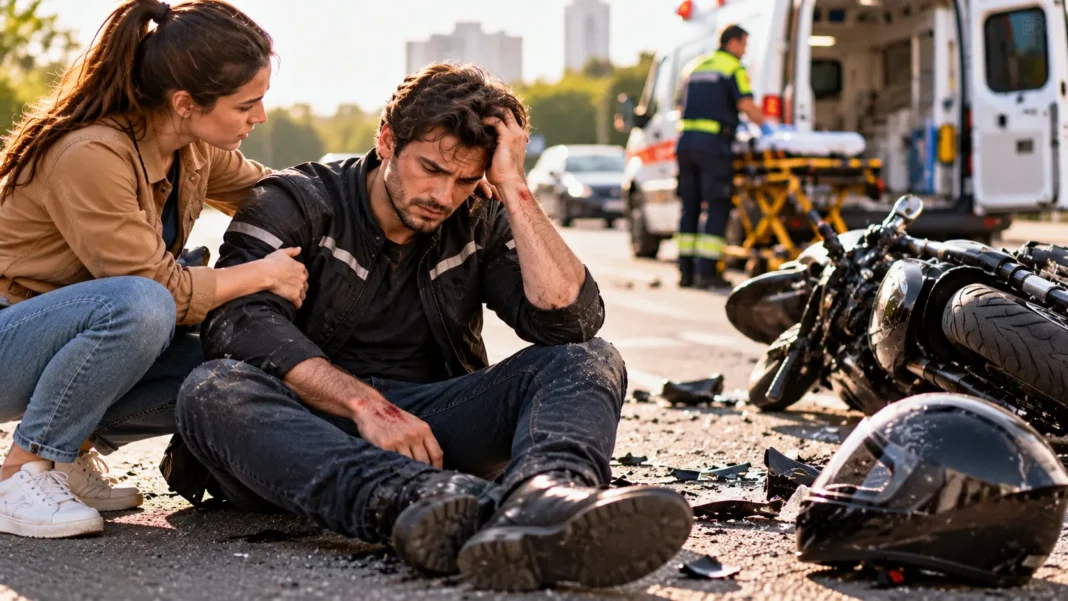
A motorcycle accident can happen unexpectedly, leaving riders confused, frightened, and unsure about what to do next. Whether the collision involves another vehicle, dangerous road conditions, or an unexpected obstacle, the moments following a crash are important for personal safety and recovery. Knowing the right steps can help protect your health, preserve useful information, and make the insurance process easier to manage.
Understanding what to do after a motorcycle accident involves more than checking the damage to your bike. Seeking medical attention, reporting the incident, collecting relevant evidence, and notifying your insurance provider are all important considerations. Even when injuries seem minor, professional medical evaluation may be necessary because some symptoms appear later.
Motorcycle accident victims may also face questions about medical expenses, motorcycle repairs, insurance coverage, and legal responsibilities. Taking a careful, organized approach can reduce confusion during an already stressful situation. This guide explains the essential steps after a motorcycle crash, common mistakes to avoid, and ways to protect your well-being and legal interests.
1. Check Yourself and Others for Injuries
The first priority after a motorcycle accident is determining whether anyone needs immediate medical assistance. If you are conscious and able to assess your surroundings, check for pain, dizziness, difficulty breathing, or other concerning symptoms. Avoid making sudden movements if you suspect a serious injury.
Motorcycle collisions can involve substantial physical forces, even at relatively low speeds. Riders have less structural protection than occupants of enclosed vehicles, making medical assessment especially important. A person may initially feel alert because of adrenaline but later notice symptoms requiring professional evaluation.
If another person is involved, check whether they are responsive without putting yourself in danger. Call emergency services immediately if anyone appears seriously injured or unable to move safely. Do not attempt to move someone with a possible neck or spinal injury unless an immediate threat makes movement unavoidable and emergency responders advise otherwise.
2. Move to a Safe Location if Possible
After assessing immediate injuries, consider the surrounding traffic and road conditions. A crash scene may create additional danger when other vehicles are approaching, visibility is poor, or debris is scattered across the road. Staying aware of these hazards can help prevent another collision.
If you are uninjured and can move safely, get away from active traffic and remain in a protected area. However, do not force yourself to stand or walk if you experience significant pain, weakness, or possible spinal injury. Your physical safety is more important than moving the motorcycle or clearing the roadway.
Leave the motorcycle where it is if moving it could expose you to danger or worsen an injury. Emergency personnel or authorized recovery services can help manage damaged vehicles and traffic hazards. Avoid entering busy traffic lanes simply to retrieve equipment or personal belongings.
3. Call Emergency Services and Report the Accident
Contact emergency services when anyone is injured, the crash creates a serious traffic hazard, or urgent assistance is required. Give the dispatcher accurate information about your location, the number of people involved, and any obvious safety concerns. Follow the instructions provided by emergency personnel.
Police reporting requirements vary depending on the jurisdiction, injury severity, and amount of property damage. Some locations require official reports for certain collisions, while others have different procedures for minor incidents. Checking the applicable reporting rules helps ensure that important legal responsibilities are not overlooked.
An official motorcycle accident report may include information about the vehicles, drivers, road conditions, and statements collected at the scene. This document can become relevant during insurance investigations or legal proceedings. Request information about obtaining a copy or report reference number when the responding authority makes it available.
4. Seek Medical Attention After a Motorcycle Crash
Medical evaluation is important after a motorcycle accident, particularly when the rider experiences pain, head impact, dizziness, or difficulty moving. Some injuries are immediately apparent, while others may produce symptoms gradually. A healthcare professional can assess potential injuries and recommend appropriate treatment or further testing.
Head injuries require particular attention because concussion symptoms may not develop immediately. A worsening headache, repeated vomiting, confusion, unusual drowsiness, or weakness can indicate a serious problem requiring emergency medical care. Do not assume that wearing a helmet eliminates the possibility of a concussion.
Follow medical advice carefully and attend recommended follow-up appointments. Keep information about diagnoses, treatment recommendations, prescriptions, and medical expenses organized. These records support continuity of care and may also be relevant if an insurance claim or legal dispute develops.
5. Document the Motorcycle Accident Scene
Accurate accident documentation can help clarify what happened and support later insurance discussions. Once everyone is safe and emergency needs have been addressed, collect information about the scene if you can do so without putting yourself at risk. Photographs and written notes may preserve details that become difficult to remember.
Useful photographs can include vehicle positions, visible damage, traffic signals, road markings, and surrounding conditions. The weather, lighting, nearby intersections, and road surface may also be relevant. Do not interfere with emergency responders or place yourself in active traffic to obtain photographs.
If you cannot document the scene because of injuries or safety concerns, ask a trusted person to assist when appropriate. Record the approximate time, date, and location as soon as reasonably possible. Keeping factual notes rather than making assumptions about responsibility can help maintain an accurate account of the accident.
6. Exchange Information With Other Involved Drivers
When the situation is safe, exchanging relevant information with other drivers can support accident reporting and insurance procedures. Important details may include names, contact information, vehicle registration information, and insurance provider details. The exact information required may differ according to local laws.
Keep conversations calm and focused on necessary facts. Avoid arguments or speculation about the cause of the accident while emotions are high. An accurate investigation may require information that is not immediately visible to the people involved.
If another driver refuses to cooperate or leaves the scene, avoid confrontation or pursuit. Record whatever identifying information you already know and share it with the appropriate authorities. Police and insurance representatives can explain the available procedures for handling incomplete driver information.
7. Collect Witness Information When Available
Independent witnesses may provide useful information about how a motorcycle collision occurred. Someone nearby may have observed traffic signals, vehicle movements, or road conditions before the crash. Their observations can sometimes help clarify details that the involved drivers remember differently.
If witnesses are willing to assist, request their names and contact information so the appropriate authorities or insurers can reach them later. Do not pressure anyone to provide a statement or suggest what they should say. Independent observations are most useful when they reflect what the witness actually saw.
Witness information can be particularly valuable when responsibility for the accident is disputed. However, witness accounts may contain mistakes or incomplete observations. Investigators may need to compare these statements with physical evidence, photographs, and official reports before drawing conclusions.
8. Notify Your Motorcycle Insurance Company
Contact your motorcycle insurance provider promptly after addressing medical and immediate safety needs. Insurance policies often contain reporting requirements and procedures for documenting a collision. Early notification can help clarify what information the insurer needs and whether specific deadlines apply.
Provide accurate details about the accident, including its date, location, involved vehicles, and known damage. If certain facts remain unclear, explain that they have not yet been confirmed. Avoid guessing about injuries, repair costs, or legal responsibility.
Your insurance representative may explain coverage options, deductible amounts, damage assessments, and the next stages of the motorcycle accident claim. Different policies provide different levels of protection, so review your coverage carefully. Keep copies of communications and claim reference numbers for future use.
9. Understand the Motorcycle Accident Insurance Claims Process
The insurance claims process generally begins when the insurer receives notice of a covered incident. A claims representative may review the accident details, examine available evidence, and arrange an assessment of the motorcycle damage. Additional documents may be requested depending on the policy and circumstances.
Motorcycle insurance coverage can include liability protection, collision coverage, medical benefits, and other optional protections, depending on the jurisdiction and policy. Not every type of expense is automatically covered. Coverage limits, deductibles, exclusions, and responsibility for the collision can influence the claim outcome.
Maintain a record of claim-related communications, requested documents, and decisions received from the insurer. If you disagree with an assessment, ask for an explanation and review the available appeal or complaint procedures. Insurance regulations vary by location, so local consumer protection guidance may also be relevant.
10. Keep Records of Medical Bills and Other Expenses
Motorcycle accident recovery may involve medical appointments, transportation costs, prescription expenses, and motorcycle repairs. Keeping organized records can help you understand the financial impact of the incident. It may also make later insurance discussions easier to manage.
Save invoices, receipts, medical summaries, repair estimates, and other documents connected to the accident. If the incident affects your ability to work, keep appropriate records of missed working hours and related financial consequences. These materials may be relevant to an insurance claim or legal assessment.
Avoid assuming that every expense will be reimbursed. The availability of compensation depends on insurance coverage, applicable law, supporting evidence, and the circumstances of the collision. A qualified insurance professional or lawyer can explain which costs may be considered under the relevant rules.
11. Understand Your Legal Rights After a Motorcycle Accident
Motorcycle accident laws determine how responsibility, reporting obligations, and possible compensation are handled. These rules differ significantly between jurisdictions. Understanding the legal framework that applies to your accident can help you avoid misunderstandings about deadlines and available options.
In some circumstances, injured motorcyclists may be able to pursue compensation for medical costs, lost earnings, property damage, or other legally recognized losses. Eligibility depends on factors such as fault, evidence, insurance arrangements, and local law. No particular outcome or payment amount should be assumed.
Seeking advice from a qualified motorcycle accident lawyer may be appropriate when serious injuries, disputed responsibility, or complicated insurance questions are involved. Legal professionals can review the relevant facts and explain applicable procedures. This information can help individuals make informed decisions without relying on assumptions about their rights.
12. When Should You Contact a Motorcycle Accident Lawyer?
Not every motorcycle collision requires legal representation. Some minor property-damage matters can be handled through ordinary insurance procedures. However, accidents involving significant injuries, disputed fault, or difficulties with insurance coverage may benefit from professional legal review.
A motorcycle accident attorney can explain local liability rules, claim deadlines, and the types of evidence that may be relevant. They may also review insurance correspondence and help clarify available legal remedies. Their role depends on the specific circumstances and the services they are authorized to provide.
When considering legal advice, look for a properly licensed professional with relevant experience in personal injury or motorcycle accident matters. Ask questions about fees, communication, and the scope of representation before making a decision. Reliable legal guidance should explain realistic options rather than promise a guaranteed settlement.
13. Avoid Common Mistakes After a Motorcycle Accident
One common mistake is overlooking medical evaluation because injuries initially seem minor. Certain symptoms may become noticeable hours or days after a collision, especially following head impacts. Ignoring changes in health can delay appropriate diagnosis and treatment.
Another mistake is failing to preserve important accident information. Missing photographs, incomplete contact details, and forgotten timelines may complicate later insurance discussions. However, collecting evidence should never take priority over medical attention or personal safety.
Rushing into major decisions without understanding their consequences can also create difficulties. Insurance settlements, repair authorizations, and legal agreements may have important conditions. Review documents carefully and seek qualified advice when necessary, particularly if injuries or liability remain uncertain.
14. What to Do After a Motorcycle Accident With No Visible Injuries
An accident without obvious injuries may still require medical attention, especially if the rider struck their head or experienced a forceful impact. Adrenaline and stress can make discomfort less noticeable immediately after a collision. Monitoring symptoms and obtaining appropriate evaluation can help identify potential problems.
Even when everyone appears physically unharmed, relevant reporting and insurance responsibilities may remain. Local rules determine when collisions must be reported and which information should be exchanged. Keeping basic accident records can help clarify what happened if questions arise later.
Avoid riding a motorcycle that may have hidden mechanical damage. Problems involving the steering, brakes, tires, suspension, or frame can affect road safety. A qualified motorcycle technician should inspect a damaged bike before it is returned to service.
15. What Happens if the Motorcycle Accident Wasn’t Your Fault?
Responsibility for a motorcycle accident is generally assessed using evidence and applicable traffic laws. Investigators or insurers may consider driver behavior, road conditions, traffic controls, and vehicle movements. An initial personal impression does not necessarily establish legal fault.
If another party is found responsible, the injured person may have options for pursuing compensation under applicable law and insurance arrangements. However, claim procedures and available damages vary between jurisdictions. Some systems also consider shared responsibility when multiple parties contributed to a collision.
Preserving accurate evidence and following appropriate reporting procedures can help support a fair assessment. When responsibility is disputed, qualified legal guidance may be useful. The objective should be to understand the available remedies rather than assume the outcome before the evidence has been reviewed.
16. How Long Does a Motorcycle Accident Insurance Claim Take?
The time required to resolve a motorcycle accident claim varies considerably. Minor property-damage claims may be handled relatively quickly, while incidents involving injuries, liability disputes, or extensive repairs can take longer. Insurance procedures also differ among companies and jurisdictions.
Several factors can affect the timeline, including the availability of accident reports, medical records, repair estimates, and witness information. Insurers may need additional time to investigate disputed events or evaluate the full extent of covered losses. Unexpected delays do not necessarily indicate that a claim has been rejected.
Keeping documents organized and responding accurately to reasonable information requests can make communication more efficient. Ask your insurer about the expected stages of the claims process and any relevant reporting deadlines. Avoid relying on a guaranteed completion date because individual circumstances can change.
17. How to Handle Motorcycle Repairs After an Accident
Motorcycle repairs should be considered only after immediate medical and safety concerns have been addressed. Visible damage may not reveal every mechanical problem caused by a collision. Components affecting braking, steering, suspension, and structural stability may require professional inspection.
Contact your insurance provider to understand any inspection or repair authorization requirements under your policy. Some insurers request estimates or photographs before certain repairs begin. If the motorcycle cannot be operated safely, use an appropriate professional recovery service rather than attempting to ride it.
Keep copies of repair estimates, invoices, inspection reports, and communications with the repair facility. These records may be important during the insurance claims process. A qualified motorcycle technician can advise whether the vehicle can be repaired safely and what work is necessary.
18. Emotional Recovery After a Motorcycle Accident
A motorcycle collision can affect emotional well-being as well as physical health. Some people experience fear, anxiety, difficulty concentrating, or discomfort when thinking about traveling on the road again. These reactions can vary according to the severity of the accident and personal circumstances.
Support from trusted family members, friends, and healthcare professionals can make recovery easier. Talking about concerns and maintaining manageable daily routines may help individuals feel more supported. Emotional recovery does not follow the same timeline for everyone.
If distress continues, disrupts sleep, or interferes with everyday activities, consider speaking with a qualified mental health professional. Appropriate support can help address ongoing anxiety and accident-related stress. Seeking guidance is a constructive part of recovery and does not need to wait until difficulties become severe.
19. Returning to Normal Activities After a Motorcycle Accident
Returning to ordinary activities should depend on medical advice and the nature of any injuries. Some people recover relatively quickly, while others require rehabilitation, follow-up treatment, or additional rest. Attempting demanding activities too soon may interfere with recovery.
Healthcare professionals can provide guidance about returning to work, school, physical exercise, and driving or riding. Following these recommendations is particularly important after a head injury or concussion. Symptoms such as dizziness, difficulty concentrating, or impaired movement can make certain activities unsafe.
A gradual return to normal routines may help individuals regain confidence without unnecessary pressure. Family support and workplace or school accommodations may also be helpful during recovery. Prioritizing health and following professional guidance can support a safer transition back to everyday responsibilities.
20. How to Reduce the Risk of Future Motorcycle Accidents
Motorcycle safety begins with appropriate training, awareness, and compliance with traffic laws. Riders should use properly fitted, certified helmets and suitable protective clothing. Following applicable licensing requirements and obtaining supervised, age-appropriate training are also important.
Road conditions, visibility, weather, and surrounding traffic can influence collision risk. Motorcyclists and other road users share responsibility for paying attention and respecting traffic regulations. Defensive awareness and predictable road behavior can contribute to safer travel.
Motorcycle maintenance is another important part of road safety. Qualified professionals can inspect brakes, tires, lights, and other essential components to identify potential problems. Combining appropriate protective equipment, responsible road behavior, and regular maintenance helps reduce avoidable risks, although no precaution eliminates every possibility of an accident.
Conclusion
Knowing what to do after a motorcycle accident can help individuals respond more effectively during a stressful situation. Immediate priorities include checking for injuries, contacting emergency services when needed, and moving away from danger only when it is safe. Medical assessment is especially important because some injuries may not produce immediate symptoms.
After immediate safety concerns have been addressed, documenting the collision, reporting it where required, and contacting the insurance provider are important next steps. Organized medical records, accident photographs, and repair estimates may support later claims. Legal guidance can also be useful when injuries, responsibility, or insurance matters become complicated.
Motorcycle accident recovery involves protecting physical health, emotional well-being, and financial interests. Following medical recommendations, understanding local reporting rules, and making informed insurance decisions can reduce unnecessary difficulties. A careful response helps individuals focus on recovery while addressing the practical consequences of the accident.
Frequently Asked Questions
What is the first thing to do after a motorcycle accident?
Check for injuries and immediate hazards, then contact emergency services if anyone needs help. Avoid unnecessary movement when serious injuries are suspected, and prioritize safety before documenting the collision.
Should I go to the hospital after a minor motorcycle accident?
Medical evaluation is advisable after a significant impact, especially if you struck your head or notice pain, dizziness, or other symptoms. Some injuries may not become apparent immediately.
Do I need to report a motorcycle accident to the police?
Reporting requirements vary by jurisdiction and accident severity. Collisions involving injuries or significant damage often require official reporting. Check local laws and follow instructions from the appropriate authorities.
How soon should I contact my motorcycle insurance company?
Contact your insurer as soon as reasonably possible after addressing urgent medical and safety concerns. Insurance policies may contain specific reporting deadlines, documentation requirements, and claim procedures.
Can I claim compensation after a motorcycle accident?
Compensation may be available depending on fault, injuries, insurance coverage, and applicable law. A qualified legal professional can explain potential claims, evidence requirements, and deadlines based on the circumstances.

