During the process of a trial, there are numerous things happening. You have arrest information, case details, depositions, and witness testimonies.
This can make it hard to determine which criminal records you can view and which ones you can’t. In this guide, our focus is on depositions and whether or not they’re public records.
So, are depositions public records? The short answer is no, but it often depends on the case and the situation. Fortunately, we cover everything you need to know in this guide, so read on to learn more below.
What is a Deposition?
First and foremost, depositions are not like other court records, legal documents, or criminal records. Let’s get that out of the way. This is because they’re not recorded during the trial or court process. Instead, they’re handled outside of court.
While depositions may not happen in court, they’re considered sworn testimony. What’s more, these are recorded and given under oath, so they have the same weight as testimony in the courtroom.
Furthermore, a subpoena for a deposition requires you to appear, so they’re much different than some other court orders and rules. Ultimately, the purpose of a deposition is to source information for the discovery process of a court before the trial.
While this is what most depositions tend to include, there is some variation, and there are unique situations. Make sure you keep this in mind if you plan on learning more about them or if you want to find information about one.
Are Depositions Public Record?
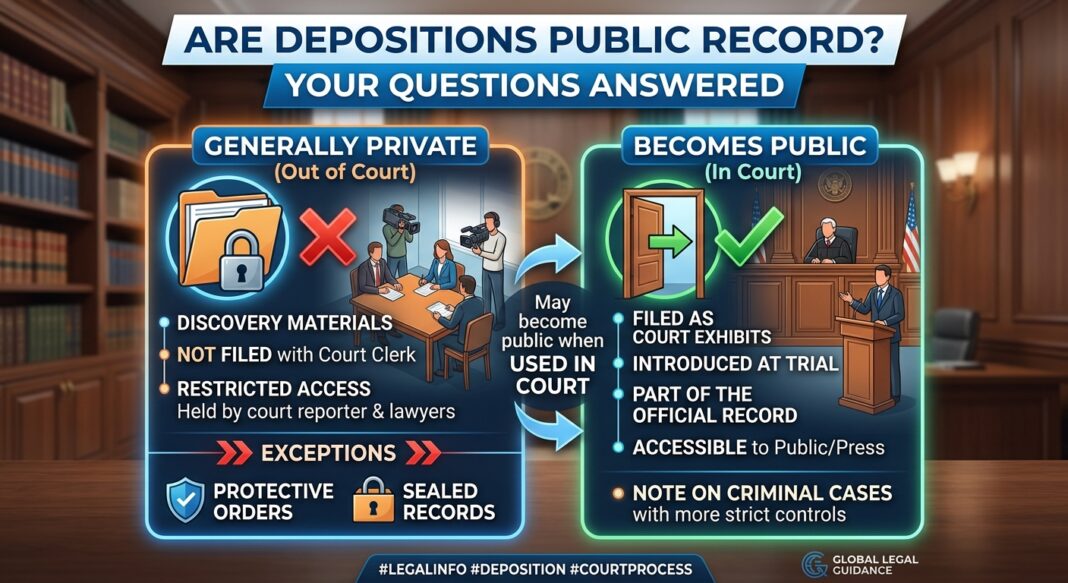
No, depositions are not automatically part of public records. While court records are always available to the public (unless they’re sealed), depositions are not. This is because depositions occur prior to the trial process.
For this reason, information about a deposition is usually only shared between the attorneys, judge, and recorder. That said, information about a deposition may be available to the public.
Ultimately, it depends on the case and the deposition. For example, if the legal teams share information from a deposition during a trial, some of that information may be available to the public, as information from trials always gets filed.
How to Find Information About Depositions
If you want to find information about a deposition, you have a few options. You can use court search tools, search engines, or public record search tools. Learn more about each option below.
CheckPeople
Due to the nature of depositions not always being public records, it may help to leverage a tool like CheckPeople’s public record search first. It’s a third-party database search tool that combs through billions of public records to find a match. Once a match is found, the full report contains all available public records associated with someone.
For this reason, it’s a good way to determine if someone went through the court process. You may also be able to see if there was a deposition in that court case. From there, CheckPeople may have those public records, or you can do a deeper dive via court search tools.
Court Search Systems
Another way to find information about depositions is to leverage a court search system. After all, why not go straight to the source? Once you know there is a relevant case, you can choose the appropriate court and search for any records of a deposition. If it’s public, the court will have it.
Now, if you don’t know where a trial was held, you can use a search engine or CheckPeople to try and figure that out.
Search Engines
Last but not least, you can always try a search engine. If you want to find information about a notable case, for example, search engines will help you in the quickest way. This is because you’ll be able to find tons of news articles, websites, and documents associated with the case online.
The only drawback is that this doesn’t work well for less well-known cases. Still, you can always try your luck with the advanced search functions that Bing, Google, and other search engines offer.
Are Depositions Public Records? The Answer
So, are depositions public records? At the end of the discussion, no, depositions are not automatically public records. The keyword there is automatically, because deposition information may become public if the information is used during the trial process.
Due to the nature of depositions, we always recommend starting your search with CheckPeople and other similar tools. Then, you can do a deeper dive with court search systems.

