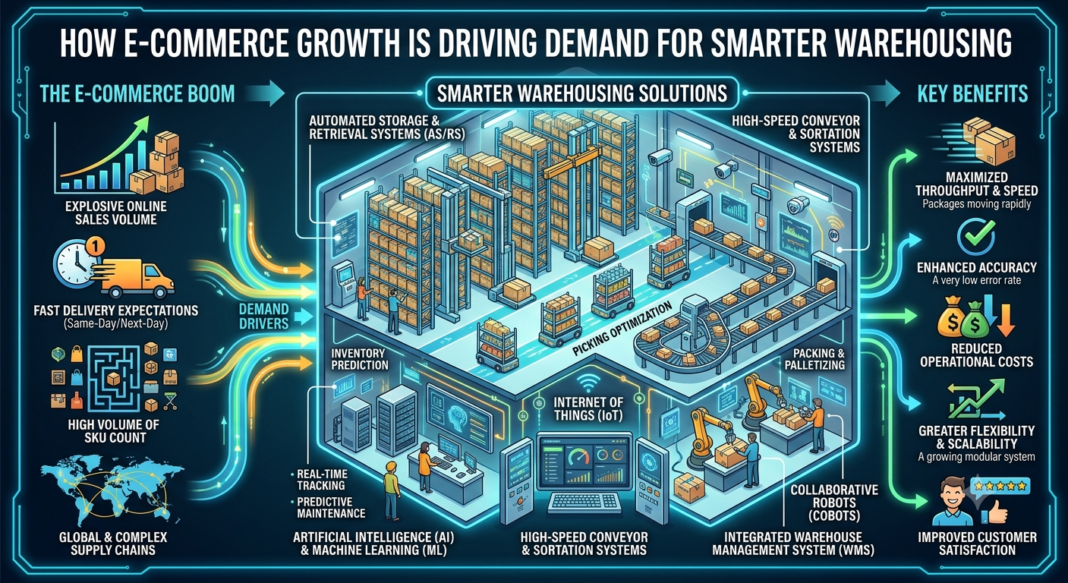
E-commerce has transformed the way businesses manage inventory. Customers expect faster deliveries, accurate order fulfillment, and real-time stock availability, placing greater pressure on warehouse operations than ever before. As online sales continue to grow, businesses are recognizing that traditional inventory processes are no longer sufficient to meet rising demand.
Automated warehouse management software provides the visibility and control needed to manage inventory efficiently while supporting higher order volumes. Businesses investing in warehouse management solutions can streamline inventory movement, improve order accuracy, and build warehouse operations that are ready for continued growth.
E-Commerce Has Changed Warehouse Operations
The rapid expansion of online shopping has significantly increased the number of products moving through warehouses each day. Instead of preparing occasional bulk shipments, many facilities now process hundreds or thousands of individual customer orders within tight delivery windows.
This shift requires warehouses to maintain accurate inventory records while ensuring products are stored, picked, packed, and dispatched as efficiently as possible.
Without structured warehouse processes, growing order volumes can quickly overwhelm operations, leading to delays, inventory discrepancies, and dissatisfied customers.
A warehouse that supports ecommerce growth depends on speed, visibility, and inventory accuracy at every stage of the fulfillment process.
Why Manual Inventory Processes Create Challenges
Many businesses still rely on spreadsheets, paper records, or disconnected systems to manage warehouse inventory. While these methods may work at smaller scales, they become increasingly difficult to maintain as order volumes increase.
Common operational challenges include:
| Warehouse Challenge | Business Impact |
| Manual inventory updates | Inaccurate stock records |
| Poor storage organization | Slower picking times |
| Limited inventory visibility | Delayed purchasing decisions |
| Picking errors | Incorrect customer orders |
| Inefficient stock movement | Reduced warehouse productivity |
Inventory inaccuracies affect not only warehouse efficiency but also customer satisfaction. Selling products that are no longer available or delaying shipments due to misplaced stock can damage customer trust and increase operating costs.
How Warehouse Management Software Improves Inventory Control
Warehouse Management Software provides a centralized system for managing inventory throughout its entire lifecycle.
From receiving inbound stock to storing products, processing orders, and dispatching shipments, every inventory movement can be recorded in real time. This creates greater visibility while reducing the need for manual data entry.
Core capabilities often include:
- Real-time inventory tracking
- Barcode scanning
- Warehouse location management
- Stock movement history
- Inventory reporting
- Cycle counting support
- Order fulfillment monitoring
By maintaining accurate inventory records, businesses can reduce stock discrepancies and improve confidence in inventory availability.
Better Warehouse Organization Supports Faster Fulfillment
Efficient warehouse organization is essential for meeting modern delivery expectations.
Clearly identified storage locations, standardized workflows, and optimized picking routes help employees locate products more quickly while reducing unnecessary movement throughout the warehouse.
This improved organization delivers several operational benefits:
- Faster order picking
- Improved inventory accuracy
- Reduced fulfillment times
- Better use of warehouse space
- Lower labor costs
- Fewer shipping errors
As ecommerce businesses grow, these efficiencies become increasingly important for maintaining profitability and customer satisfaction.
Accurate inventory data allows warehouses to move products efficiently without compromising speed or accuracy.
Visibility Helps Businesses Scale with Confidence
Growth creates complexity. New product lines, seasonal demand, and increasing customer orders all place additional pressure on warehouse operations.
Warehouse Management Software provides managers with real-time operational insights that support better decision-making.
Reporting dashboards can help businesses monitor:
- Inventory levels
- Fast-moving products
- Slow-moving stock
- Storage utilization
- Order fulfillment performance
- Inventory turnover
These insights allow businesses to optimize purchasing decisions, reduce excess inventory, and improve overall warehouse performance.
Rather than relying on estimates or outdated reports, managers can make informed decisions using accurate operational data.
Choosing a Warehouse Solution for Long-Term Growth
Businesses preparing for continued ecommerce growth should evaluate Warehouse Management Software that can scale alongside changing operational requirements.
Key features to consider include:
| Feature | Business Benefit |
| Barcode scanning | Faster inventory updates |
| Real-time stock visibility | Improved inventory accuracy |
| Warehouse location tracking | Quicker product retrieval |
| Inventory reporting | Better operational planning |
| User permissions | Stronger inventory control |
| Scalable workflows | Supports business growth |
Selecting a flexible warehouse solution helps businesses maintain efficient operations while adapting to higher inventory volumes and expanding customer demand.
Final Thoughts
E-commerce growth has fundamentally changed warehouse operations. Businesses are expected to process more orders, maintain accurate inventory, and fulfill customer expectations for fast delivery, all while controlling operational costs.
Warehouse Management Software provides the tools needed to improve inventory visibility, organize warehouse workflows, and support efficient order fulfillment. By replacing manual inventory processes with structured digital systems, businesses can build smarter warehouses that are prepared for continued growth.
For organizations looking to remain competitive in an increasingly demanding marketplace, investing in better warehouse management is an investment in operational efficiency, inventory accuracy, and long-term business success.

