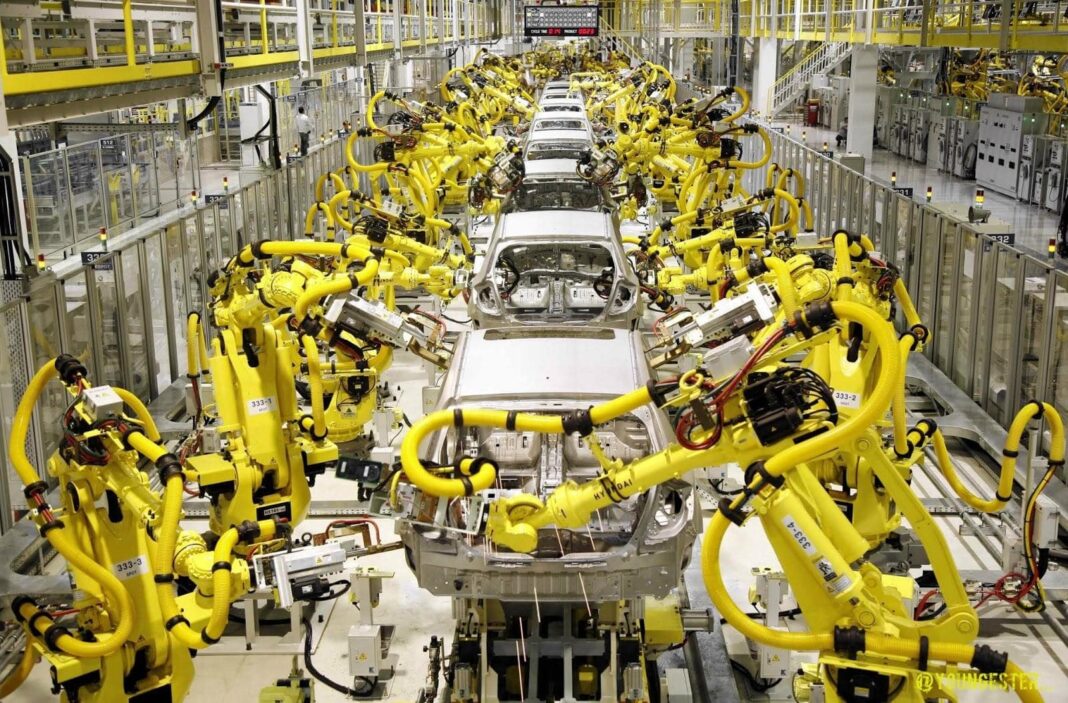
Introduction
The integration of robotics into manufacturing has dramatically reshaped the industry landscape over the past few decades. Initially emerging in the mid-20th century, the concept of robots in manufacturing was primarily centered around automating specific tasks to enhance efficiency and accuracy. The first industrial robot, Unimate, was introduced in 1961 and utilized for handling hot metal in a General Motors plant. This groundbreaking innovation laid the foundation for the burgeoning field of automation.
Since then, robotics technology has evolved significantly, with advancements in computer science, artificial intelligence, and machine learning playing pivotal roles. Today’s robots are not just limited to repetitive tasks; they are equipped with sophisticated sensors and software that enable them to learn, adapt, and perform complex operations. This evolution has led to the introduction of collaborative robots or cobots, which work alongside human workers to improve productivity and workplace safety.
The current state of the robotics industry in manufacturing is characterized by increased flexibility and scalability. Manufacturers are now deploying robotic systems that can be reprogrammed for different tasks with minimal downtime. This adaptability is crucial in a global market that demands rapid response and customization. Moreover, the implementation of robotics has contributed to reduced labor costs, enhanced product quality, and a more streamlined production process.
In summary, robotics in manufacturing represents a convergence of technology and operational needs, evolving from simple mechanical devices to sophisticated automated systems that enhance productivity and innovation. Understanding this progression is essential for grasping the transformative impact of robotics in today’s manufacturing environments.
The Benefits of Robotics in Manufacturing
Robotics has become an integral part of modern manufacturing, introducing a multitude of benefits that significantly enhance operational capacity. One of the primary advantages is increased efficiency and productivity. Robots can work around the clock, performing monotonous tasks at a much faster rate than human workers. For instance, a study conducted by the International Federation of Robotics (IFR) highlighted that factories utilizing robotics can achieve up to 85% efficiency in production processes.
In addition to efficiency, robotics also enhances precision and quality in manufacturing. With the implementation of robotic arms in assembly lines, organizations are able to consistently perform intricate operations that require high precision. According to research, robotic systems can reduce manufacturing defects by as much as 40%, leading to improved product quality and customer satisfaction.
Furthermore, the incorporation of robotics leads to reduced labor costs. By automating repetitive tasks, businesses are able to lower their labor expenses significantly. For example, companies like Tesla have reported saving millions annually by deploying robots in their manufacturing processes, allowing them to allocate resources more effectively.
Improved workplace safety is another critical benefit of utilizing robotics in manufacturing environments. Robots can operate in hazardous situations, reducing the risk of workplace accidents for human employees. In fact, the Occupational Safety and Health Administration (OSHA) has reported a drop in workplace injuries in sectors where robotics are integrated due to their ability to take on dangerous tasks.
Lastly, robotics can function in environments that are not conducive to human work, such as extreme temperatures or toxic atmospheres. This capability broadens the range of industries that can benefit from automation, extending even into sectors such as mining and chemical production.
Overall, the advantages of robotics in manufacturing are substantial, contributing not only to cost savings but also to enhanced performance and safety within the industry.
Types of Robotics Used in Manufacturing
In the realm of manufacturing, a diverse array of robotics technologies plays a crucial role in enhancing productivity and efficiency. This section elucidates the four principal types of robots commonly utilized in the manufacturing sector, namely industrial robots, collaborative robots (cobots), mobile robots, and autonomous robots.
Industrial robots are perhaps the most recognized category within manufacturing environments. Typically characterized by their high precision and repeatability, these robots are employed for heavy-duty tasks including assembly, welding, and painting. They are designed to operate in controlled spaces, often within fixed structures. Their remarkable speed and capacity for handling heavy loads not only optimize production lines but also ensure consistency in product quality.
Collaborative robots, or cobots, represent the next evolution in robotics for manufacturing. Unlike their industrial counterparts, cobots are intended to work alongside human workers, facilitating a more integrated approach to production. These robots are equipped with advanced sensors and controls, allowing them to detect human presence and adjust their actions accordingly. This promotes a safer work environment and enables seamless collaboration on tasks that require human dexterity combined with robotic strength.
Mobile robots have gained popularity in manufacturing settings, especially in logistics and warehousing. These robots can navigate autonomously through manufacturing plants, transporting materials and products from one station to another. Their ability to operate in dynamic environments while avoiding obstacles streamlines the logistics process and reduces the need for manual labor in material handling.
Lastly, autonomous robots represent a broader category that encompasses various robotic systems capable of operating independently based on pre-defined goals or data inputs. This type of robot incorporates advanced algorithms and AI, allowing it to adapt to changing conditions in real-time. Autonomous robots are increasingly being integrated into manufacturing processes to enhance productivity and reduce operational costs.
Automation vs. Robotics: Understanding the Difference
In the contemporary landscape of manufacturing, the terms “automation” and “robotics” are frequently utilized interchangeably, yet they embody distinct concepts that are crucial to comprehend for a clearer perspective on how industry operations evolve. Automation represents the broader discipline of utilizing technology to perform processes with minimal human intervention. This can encompass a variety of technologies, from simple mechanical devices to complex software systems, which execute tasks ranging from the basic assembly of components to comprehensive supply chain management.
On the other hand, robotics pertains specifically to the field of engineering that focuses on the design and implementation of robots—machines that can be programmed to carry out specific tasks autonomously or semi-autonomously. These programmable devices are equipped with sensors and actuators, allowing them to respond to changing conditions in their environment, thus enabling a significant degree of flexibility and precision in manufacturing processes.
A fundamental difference between the two is that while all robots can be considered a form of automation, not all automation includes robotics. For instance, an automated conveyor belt that transports goods across a factory floor without human input is an example of automation but does not involve robotics. Conversely, a robotic arm performing intricate welding tasks, as a part of a larger automated production line, is an illustration of robotics at work.
The essence of understanding this distinction lies in recognizing how each contributes to the efficiency and efficacy of manufacturing. Automation emphasizes the reduction of human effort across various tasks, streamlining processes. Meanwhile, robotics introduces a layer of adaptability and capability in performing complex operations, thereby transforming traditional manufacturing into smart manufacturing.
Case Studies: Robotics in Action
The integration of robotics within the manufacturing sector has yielded significant advancements, and various organizations have championed these changes to enhance their operational effectiveness. Below are several illustrative case studies that underscore the transformative impacts of robotics in manufacturing.
One notable example is the implementation of automated robotics at a leading automotive manufacturer. Faced with challenges of production delays and inconsistent quality in paint applications, the company introduced robotic paint sprayers. These robots not only eliminated human error but also enhanced the speed of the painting process, resulting in a 20% increase in production capacity and a 15% decrease in material wastage. This transition has provided the manufacturer with the agility to respond to market demands more effectively.
Another significant case is that of a global electronics firm which struggled with labor-intensive assembly processes. The organization deployed collaborative robots, or cobots, designed to work alongside human operators. These robots took over repetitive tasks like screwing and part insertion, thereby optimizing the workflow. The result was a remarkable 30% improvement in assembly times and a 25% reduction in labor costs. Staff were liberated to focus on complex problem-solving and quality control tasks, enhancing overall productivity.
Lastly, a food processing company embraced robotics to tackle the challenges of hygiene and consistency in packaging. The implementation of robotic packaging systems enabled precise measurement and reduced processing times. Consequently, the company recorded a 40% increase in output and a significant reduction in product spoilage rates, illustrating how robotics can transform operational standards in sectors with stringent quality requirements.
These case studies exemplify how robotics can address specific manufacturing challenges, enhance efficiency, and contribute to sustainable growth in the sector. As more companies adopt advanced robotic solutions, we can anticipate even broader implications for productivity and operational excellence across various industries.
Challenges Facing Robotics Integration
The integration of robotics into manufacturing processes presents several challenges that companies must navigate to fully benefit from this transformative technology. One of the most significant barriers is the high initial cost associated with purchasing and implementing robotic systems. While robotics promise efficiency and enhanced productivity, the upfront investment can be prohibitive, particularly for small and medium enterprises. Companies often find themselves weighing this cost against the anticipated return on investment, possibly delaying their decision to adopt robotics.
Furthermore, introducing robotics into the workplace requires a shift in the workforce’s skill set. Employees may need retraining to work alongside robots effectively. This retraining process can be time-consuming and costly, adding another layer of complexity to the integration process. Companies must ensure that their employees are well-equipped to adapt to new technologies, which necessitates a strategic investment in training programs.
Another critical concern is the potential for job displacement. The fear that robots will replace human workers continues to be a significant factor in opposition to robotic integration. Organizations must address such concerns through transparent communication and by outlining how robotics can augment rather than replace human roles. This will help in fostering a cooperative atmosphere where employees are more open to the implementation of automation.
Additionally, technological limitations pose challenges, as not all manufacturing environments are suitable for robotics. Factors like existing machinery compatibility and workflow processes can hinder smoother integration. To mitigate these hurdles, companies must conduct thorough assessments of their specific needs and explore customized solutions that align robotics with their operational requirements. By addressing these challenges head-on, organizations can foster the successful integration of robotics into their manufacturing systems.
Future Trends in Robotics for Manufacturing
The landscape of manufacturing is witnessing transformative changes through the integration of advanced robotics. As industries continue to evolve, several key trends are emerging that promise to redefine how manufacturing processes are conducted. One of the most significant advancements is the integration of artificial intelligence (AI) into robotics. By incorporating AI, robots can learn from their environments, adapt to new situations, and make real-time decisions. This shift not only enhances productivity but also minimizes the likelihood of errors in manufacturing processes.
Alongside AI, machine learning is proving to be a valuable asset in the robotics sector. With the capability to analyze large datasets, machine learning enables robots to refine their operations continually. This fosters an environment of constant improvement and innovation, resulting in increased efficiency and reduced operational costs. Manufacturers are now capable of predicting maintenance needs and adapting workflows based on performance data, further enhancing longevity and reliability.
Another emerging trend is the advancement in human-robot collaboration. As automation becomes more prevalent, ensuring seamless teamwork between humans and robots is crucial. Collaborative robots, or cobots, are designed to work alongside human operators, allowing for a blend of efficiency and human ingenuity. These robots are often equipped with safety features that enable them to function alongside workers without imposing significant risks, thereby empowering employees to focus on more complex tasks that require creativity and critical thinking.
Moreover, the rise of smart factories represents a fundamental shift in the manufacturing paradigm. These facilities leverage Internet of Things (IoT) technology to connect machines, systems, and processes, creating a synchronized environment that optimizes production. In smart factories, data flows seamlessly, enabling real-time decision-making and enhancing adaptability to changing market demands.
In summary, the future of robotics in manufacturing is bright, characterized by continuous advancements in AI, machine learning, human-robot collaboration, and the development of smart factories. As these trends take hold, they will undoubtedly reshape the manufacturing landscape, presenting new opportunities and challenges for industry players.
Impact on Workforce and Employment
The integration of robotics into manufacturing processes has fundamentally reshaped the workforce landscape. Traditionally, manufacturing jobs have involved manual labor and repetitive tasks. However, as automation technologies advance, many of these roles are undergoing significant transformation. Robotics is not merely a replacement for human labor; rather, it serves to augment human capabilities, allowing workers to engage in more complex and fulfilling tasks. This shift signifies a movement away from monotonous jobs towards roles that require critical thinking, problem-solving, and advanced technical skills.
With the rise of robotics, new job opportunities in fields such as robotics engineering, technical support for automation systems, and data analysis are emerging. Skilled professionals are required to design, maintain, and improve robotic systems. This evolution creates a demand for a workforce adept at both technological proficiency and adaptability. Employers are increasingly seeking individuals who possess not only expertise in engineering disciplines but also the ability to collaborate with intelligent machines. As a result, the educational landscape is also beginning to adapt to these new needs by incorporating robotics and automation training into curricula.
However, the transition to a robotics-centric manufacturing environment necessitates a focus on reskilling and upskilling existing employees. Organizations must invest in workforce development programs that enable current employees to enhance their skills and remain relevant in the changing job market. This shift is critical to mitigating the potential negative impacts of automation-induced job displacement. By prioritizing training in complementary skill sets, businesses can foster an environment where human workers can coexist and excel alongside robotic technologies. Ultimately, the successful integration of robotics into manufacturing hinges on a workforce that is not only prepared to embrace these changes but is also valued as an integral component of the production process.
Conclusion: Embracing Robotics in Manufacturing
The advent of robotics in the manufacturing sector signals a pivotal shift towards enhanced productivity and efficiency. Throughout this discussion, we have explored how robotics and automation technologies are reshaping traditional manufacturing processes. By integrating robotic solutions, industries are experiencing significant improvements in operational efficiency, reduced labor costs, and increased safety for workers.
However, the transition to a robotic-enhanced workforce is not devoid of challenges. Concerns regarding job displacement and the need for workforce re-skilling are valid and warrant careful consideration. Yet, with proper planning, these challenges can be addressed effectively. It is crucial for manufacturers to invest in training programs, ensuring that employees are equipped with the skills necessary to thrive in an increasingly automated environment.
The transformative potential of robotics extends beyond mere efficiency; it also fosters innovation and flexibility within manufacturing systems. Robotics allows for precision and consistency in production processes, leading to higher quality products and the ability to rapidly adjust to market demands. Manufacturers that embrace these advanced technologies will not only enhance their operational capabilities but also position themselves competitively in a fast-evolving market landscape.
As the manufacturing industry continues to innovate, staying informed about advancements in robotics will be essential for businesses looking to capitalize on these developments. By understanding the implications of robotics and actively exploring ways to integrate these technologies, organizations can reap the benefits of a more efficient, productive, and safer manufacturing environment.

