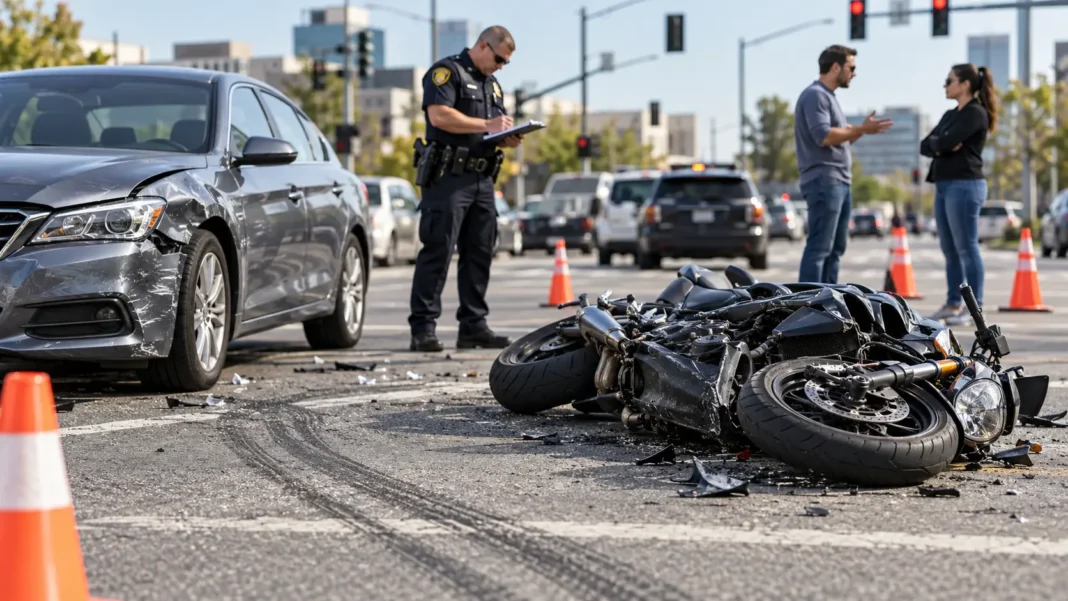
Motorcycle accidents can create complicated legal and financial questions, especially when the people involved disagree about what caused the collision. Determining motorcycle accident fault is an important part of understanding responsibility, insurance claims, and potential compensation. Unlike assumptions based on vehicle size or accident severity, fault generally depends on the actions of everyone involved and the evidence surrounding the incident.
Motorcyclists share public roads with passenger vehicles, trucks, and other road users, making awareness and compliance with traffic regulations essential. Accidents can occur because of unsafe turns, distracted driving, failure to yield, speeding, or hazardous road conditions. In some situations, more than one person contributes to the collision, making responsibility more difficult to establish.
Understanding how fault is determined can help injured riders, drivers, and families make informed decisions after a crash. Police reports, witness statements, photographs, traffic laws, and insurance investigations may all influence the outcome. This guide explains the common causes of motorcycle accidents, how liability is evaluated, and what factors affect insurance claims and legal responsibility.
What Does Fault Mean in a Motorcycle Accident?
Fault in a motorcycle accident refers to legal responsibility for causing or contributing to a collision. In many personal injury cases, determining fault involves examining whether someone failed to exercise reasonable care while using the road. This legal concept is often described as negligence and can influence financial responsibility for accident-related losses.
Drivers and motorcyclists generally have a duty to follow applicable traffic laws and operate their vehicles responsibly. When someone fails to meet that duty and causes harm, they may be considered negligent. However, violating a traffic rule does not automatically resolve every question about legal responsibility, particularly when multiple factors contributed to the collision.
The final determination of fault depends on the evidence, applicable laws, and circumstances of the accident. Insurance companies may reach their own preliminary conclusions, while disputed claims can involve attorneys, negotiations, or court proceedings. Because legal standards vary by jurisdiction, responsibility should not be assumed without examining the relevant facts.
How Is Fault Determined in a Motorcycle Accident?
Determining motorcycle accident fault usually begins with reconstructing what happened before, during, and immediately after the collision. Investigators may examine vehicle positions, traffic signals, road markings, weather conditions, and the direction each vehicle was traveling. These details help establish whether either road user failed to follow traffic regulations or act reasonably.
Police reports, photographs, witness accounts, and available video recordings can provide important information about the sequence of events. Insurance adjusters may also examine vehicle damage and compare statements from the people involved. When circumstances are disputed, accident reconstruction specialists may analyze physical evidence to provide a clearer explanation of how the collision occurred.
Fault is not determined solely by which vehicle suffered greater damage or which person experienced more serious injuries. Legal responsibility generally requires evaluating the conduct that caused the accident. In some cases, both parties may share responsibility, while other incidents involve defective equipment, unsafe road maintenance, or additional contributing factors.
Common Causes of Motorcycle Accidents
Motorcycle accidents occur for many reasons, including driver inattention, unsafe lane changes, failure to yield, and excessive speed. Passenger vehicle drivers may overlook motorcycles because their smaller appearance makes them less noticeable in traffic. Motorcyclists may also encounter difficulties when other vehicles unexpectedly enter their path or change direction.
Intersections are particularly important locations when examining motorcycle accident causes. A driver turning across the path of an approaching motorcycle may fail to recognize its presence or correctly judge its distance. These situations can create serious conflicts when the turning vehicle enters a lane already occupied by another road user.
Road conditions and mechanical issues can also contribute to motorcycle crashes. Loose gravel, damaged pavement, standing water, and poorly maintained surfaces may create hazards, while defective vehicle components can affect safe operation. Establishing whether these factors contributed to an accident requires examining the available evidence rather than assuming one driver was necessarily responsible.
Who Is at Fault in a Left-Turn Motorcycle Accident?
Left-turn motorcycle accidents often occur when a driver turns across the path of an approaching motorcycle. In many jurisdictions, drivers making left turns must yield to oncoming traffic when required by traffic rules. Failure to yield can therefore become an important factor when determining responsibility for the resulting collision.
Research on motorcycle crashes has identified vehicles turning left in front of approaching motorcycles as a significant crash pattern. However, the turning driver is not automatically responsible in every situation. Investigators may also examine traffic signals, vehicle speed, visibility, and whether another road user violated an applicable traffic regulation.
For example, a collision may involve a driver making an unsafe turn while an approaching motorcycle is traveling through an intersection. The investigation would consider whether the driver should have yielded and whether the motorcyclist’s conduct contributed to the crash. The final fault determination depends on the complete circumstances and applicable legal standards.
Who Is Responsible for a Rear-End Motorcycle Accident?
Rear-end motorcycle accidents occur when one vehicle strikes another from behind. These collisions may happen because of distracted driving, following too closely, sudden traffic changes, or delayed reactions. When a passenger vehicle strikes a motorcycle from behind, investigators often examine whether the following driver maintained a reasonable distance.
Drivers generally have a responsibility to maintain control and allow enough space to respond to foreseeable traffic conditions. However, rear-end collisions do not always establish automatic fault. Sudden unsafe maneuvers, unexpected roadway hazards, or other unusual circumstances may affect how responsibility is evaluated under local law.
Evidence such as traffic camera footage, witness statements, vehicle positioning, and road conditions can help explain the incident. The location and pattern of vehicle damage may also provide useful information. Insurance companies and legal professionals consider these factors when determining whether one or more parties contributed to the rear-end accident.
How Lane Changes Affect Motorcycle Accident Liability
Unsafe lane changes are another common source of disputes involving motorcycles and passenger vehicles. A collision may occur when a driver moves into an occupied lane without properly checking surrounding traffic. Failure to signal, inadequate observation, or misjudging the position of a motorcycle can become relevant factors in determining fault.
Motorcycles can be less noticeable than larger vehicles, particularly when drivers rely on mirrors without checking adjacent areas. However, motorcyclists must also follow applicable lane-use rules and operate responsibly. Investigators may examine whether either person changed lanes unexpectedly, ignored traffic markings, or failed to respond appropriately to surrounding conditions.
Lane splitting and lane filtering can create additional legal questions because their treatment differs between jurisdictions. An activity permitted under one state’s rules may be restricted elsewhere. Consequently, fault in these situations depends on the applicable regulations and the specific behavior of the road users involved.
Can Both Drivers Share Fault in a Motorcycle Accident?
Yes, more than one person can contribute to a motorcycle accident. For example, one driver may fail to yield while another road user is traveling at an unsafe speed. When both actions contribute to the collision, legal responsibility may be divided according to the rules governing negligence in the relevant jurisdiction.
Many jurisdictions use comparative negligence principles, which consider the degree to which each party contributed to an accident. Under some systems, compensation may be reduced according to the injured person’s percentage of responsibility. Other jurisdictions impose restrictions when the injured party’s share of fault reaches a particular threshold.
Some places follow different legal approaches, including forms of contributory negligence that can significantly affect recovery. Because these rules vary, the same facts may produce different legal outcomes depending on where the collision occurred. Understanding the local framework is important before making assumptions about shared responsibility or compensation eligibility.
What Evidence Helps Prove Motorcycle Accident Fault?
Evidence plays a central role in determining who caused or contributed to a motorcycle collision. Photographs of the scene, visible vehicle damage, roadway markings, and traffic signals may help explain what happened. When it is safe and appropriate, documenting relevant conditions can preserve information that may otherwise disappear after the vehicles are removed.
Witness statements can also provide valuable perspectives, particularly when the people involved offer conflicting explanations. Independent witnesses may have observed traffic movements, signal changes, or actions immediately before the collision. Available dashcam footage, traffic cameras, and other lawful recordings may provide additional information about the sequence of events.
Medical records, repair estimates, and official documentation can help establish the consequences of an accident, although they may not independently prove fault. In disputed cases, qualified professionals may examine technical evidence or reconstruct the collision. Preserving accurate information and avoiding speculation can help support a fairer evaluation of responsibility.
Does a Police Report Determine Who Is at Fault?
A police report is an important document that may summarize the circumstances of a motorcycle accident. It can include information about the people involved, witness statements, vehicle positions, weather conditions, and apparent traffic violations. Officers may also record observations or preliminary conclusions based on evidence available at the scene.
However, a police report does not necessarily provide the final legal determination of fault in a civil insurance or personal injury dispute. Insurance companies may conduct separate investigations, and courts can consider additional evidence. The legal weight of an officer’s observations, statements, or conclusions varies according to local rules.
Accident reports remain useful because they create an official record and can identify evidence requiring further review. If the report contains factual inaccuracies, the available correction process may depend on the police department’s policies. Individuals involved in a collision should distinguish documented observations from assumptions that have not been independently verified.
How Insurance Companies Determine Motorcycle Accident Fault
Insurance companies evaluate motorcycle accident claims by reviewing available evidence and applying relevant policy provisions and legal rules. Adjusters may examine police reports, photographs, witness statements, and descriptions of the collision. Their investigation aims to determine liability, available coverage, and the extent of losses associated with the claim.
The insurance process can become complicated when drivers provide different explanations or when several factors contributed to the accident. Adjusters may request additional documents or review evidence from independent sources. The outcome can also depend on policy terms, coverage limits, and whether the jurisdiction uses fault-based or no-fault insurance provisions.
An insurer’s initial liability decision is not necessarily the final resolution of a disputed claim. Additional evidence, internal review procedures, negotiations, or legal proceedings may change the outcome. Understanding the claims process and maintaining accurate documentation can help individuals navigate disagreements about accident responsibility.
Can a Motorcyclist Be at Fault for an Accident?
Motorcyclists can be legally responsible for collisions when their conduct contributes to an accident. Examples may include disregarding traffic signals, making unsafe maneuvers, or failing to follow applicable road rules. Responsibility depends on whether the behavior was negligent and whether it caused or contributed to the resulting harm.
The fact that motorcycles are smaller and more vulnerable than passenger vehicles does not automatically determine which road user is responsible. Similarly, assumptions about motorcyclists being reckless should not influence fault without supporting evidence. Each accident requires an individual assessment of actions, conditions, and applicable legal duties.
Even when a motorcyclist contributes to an accident, another driver may also share responsibility. Comparative negligence rules can affect how legal liability and potential compensation are evaluated. A fair investigation considers the conduct of all involved parties instead of assigning blame based solely on vehicle type.
How Fault Affects Motorcycle Accident Compensation
Motorcycle accident compensation may include certain financial losses and other legally recognized damages when another party is responsible for an injury. Depending on the jurisdiction and circumstances, recoverable losses may involve medical expenses, lost income, property damage, and other consequences. Eligibility depends on applicable laws, insurance coverage, and supporting evidence.
Fault can significantly influence the amount of compensation available. In jurisdictions using comparative negligence, an injured person’s recovery may be reduced based on their assigned percentage of responsibility. Other legal systems apply different rules that may restrict or prevent recovery under particular circumstances.
Compensation is not guaranteed simply because an accident occurred or an injury was reported. Claims generally require establishing relevant legal responsibility, causation, and documented losses. Insurance policy limits, available evidence, legal deadlines, and the jurisdiction’s rules all influence how a case may be resolved.
What to Do After a Motorcycle Accident
After a motorcycle accident, the immediate priority is personal safety and obtaining appropriate medical assistance. Move away from traffic only when it is safe to do so, and follow emergency personnel’s instructions. Injuries may not always be immediately apparent, making timely medical evaluation important when someone has experienced a collision.
Reporting the accident to the appropriate authorities may be required depending on local law and the seriousness of the incident. When safe, relevant information such as vehicle details, witness contacts, and photographs can help document what happened. Individuals should avoid interfering with emergency responders or placing themselves in danger while collecting evidence.
Insurance policies commonly contain notification requirements, so reviewing the applicable terms is important. Keep copies of medical documents, repair records, and relevant communications for future reference. When fault is disputed or substantial losses are involved, consulting a qualified legal professional may help clarify rights and responsibilities.
Common Mistakes When Determining Motorcycle Accident Fault
One common mistake is assuming that the driver of the larger vehicle is automatically responsible for a motorcycle accident. Although passenger vehicle drivers must exercise reasonable care, liability depends on specific actions and legal obligations. Vehicle size alone does not establish negligence or determine the outcome of an insurance claim.
Another mistake is relying entirely on personal recollection without reviewing available evidence. People involved in stressful events may remember details differently, and initial impressions can be incomplete. Photographs, independent witnesses, official records, and relevant video footage may provide information that helps establish a more accurate account.
Ignoring local traffic and negligence laws can also lead to incorrect assumptions. Rules concerning lane use, shared responsibility, insurance coverage, and claim deadlines vary between jurisdictions. Understanding these differences is important because an explanation that applies in one state may not accurately describe the law somewhere else.
How a Motorcycle Accident Lawyer Can Help
A motorcycle accident lawyer may help individuals understand liability questions and legal procedures following a collision. Their work can include reviewing documents, examining evidence, communicating with insurance companies, and explaining potential legal claims. The assistance required depends on the severity of the accident and the complexity of the dispute.
Legal professionals can also explain how state-specific negligence rules affect a particular case. For example, comparative fault provisions and insurance requirements may influence compensation eligibility. An attorney may help identify relevant deadlines and determine whether additional investigation or professional evidence is necessary.
Not every motorcycle accident requires formal legal proceedings, and some claims may be resolved through ordinary insurance processes. However, disputed responsibility, serious injuries, or complicated coverage issues can make professional advice valuable. Choosing a properly qualified local lawyer helps ensure guidance reflects the laws governing the accident.
Conclusion
Understanding motorcycle accident fault requires examining the actions of everyone involved rather than relying on assumptions about motorcyclists or passenger vehicle drivers. Traffic violations, unsafe turns, distracted driving, road conditions, and other circumstances may contribute to collisions. Evidence and applicable negligence laws play important roles in establishing legal responsibility.
Police reports, witness accounts, photographs, insurance investigations, and professional assessments can help clarify what happened. In some cases, one person may be primarily responsible, while other accidents involve shared fault. The legal consequences depend on the jurisdiction’s negligence rules, insurance provisions, and the evidence supporting each party’s position.
After a motorcycle accident, safety, medical care, and accurate documentation should remain immediate priorities. Understanding the claims process and seeking appropriate professional guidance can help individuals make informed decisions. Because every collision involves different facts, a careful case-specific evaluation is the most reliable way to determine responsibility and potential legal remedies.
Frequently Asked Questions
Who is usually at fault in a motorcycle accident?
Fault depends on which road user acted negligently and contributed to the collision. Drivers making unsafe turns or failing to yield may be responsible, but every accident requires an individual assessment of evidence.
Is a car driver always responsible for hitting a motorcycle?
No, a car driver is not automatically responsible simply because a motorcycle was involved. Investigators examine traffic rules, driver behavior, road conditions, and available evidence to determine responsibility.
Can both the motorcyclist and car driver be at fault?
Yes, both parties may share responsibility when their actions contribute to the collision. Comparative negligence laws may reduce compensation according to the injured person’s assigned share of fault.
Does a police report prove fault in a motorcycle accident?
A police report provides useful documentation and may include an officer’s observations. However, it does not necessarily determine final civil liability, which can depend on additional evidence and applicable law.
How long do I have to file a motorcycle accident claim?
Filing deadlines vary by state, claim type, and applicable insurance requirements. Some deadlines are relatively short, so reviewing local laws and seeking qualified legal guidance promptly can help protect important rights.

