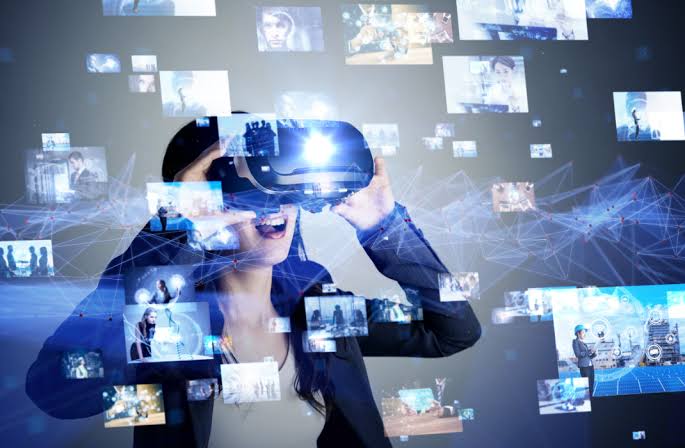
Introduction to Augmented Reality
Augmented Reality (AR) refers to an interactive experience where real-world environments are enhanced with digital content. Unlike Virtual Reality (VR), which immerses users in a completely simulated environment, AR overlays digital elements—such as images, sounds, or information—onto the physical world. This fusion of reality and the digital realm provides a unique user experience that has gained significant traction across various industries.
The technological advancements that have facilitated the rise of AR applications include improved computing power, sophisticated camera technologies, and high-quality graphics capabilities. Furthermore, the proliferation of smartphones and tablets equipped with advanced sensors and displays has enabled more users to access augmented reality features easily. This convergence of technologies has not only made the development of AR applications more feasible but also led to their increased adoption in everyday life.
A historical perspective reveals that the concept of augmented reality is not entirely new. The term was coined in the early 1990s, but the roots of AR can be traced back to the 1960s. The invention of the first head-mounted display, known as the Sword of Damocles, laid the groundwork for mixed reality experiences. Over the years, AR technology evolved through various stages, with notable developments occurring in the 2000s when mobile devices began to incorporate AR capabilities, enabling developers to create applications like Pokémon GO and IKEA Place.
Today, augmented reality continues to advance rapidly, becoming ever more relevant in sectors such as education, healthcare, retail, and entertainment. As industries explore new ways to leverage AR technologies, the lines between the physical and digital worlds continue to blur, promising an exciting future filled with possibilities for innovation and engagement.
Key Technologies Behind Augmented Reality
Augmented reality (AR) has emerged as a transformative technology, with its applications increasingly permeating various industries. The effectiveness and sophistication of AR are largely attributed to several underlying technologies that work in concert to create immersive experiences. Among these, computer vision stands out as a critical component. This technology enables devices to interpret and understand the visual environment. By analyzing images captured through cameras, computer vision allows AR applications to recognize objects, track movements, and produce interactive 3D overlaid content that responds dynamically to user interactions.
Another fundamental technology is simultaneous localization and mapping, commonly known as SLAM. SLAM technologies facilitate the real-time mapping of an environment while simultaneously tracking the position of the device within it. This radical advancement allows AR applications to function seamlessly in diverse settings, from crowded rooms to wide-open outdoor spaces. By continuously updating the environment’s digital map, SLAM reduces latency and enhances the user’s experience by providing consistent context for the augmented overlays.
Depth tracking is another essential aspect of augmented reality. This technology measures the distance from the camera to various points within the environment, enabling the accurate placement of virtual objects in relation to real-world elements. Depth tracking enhances interactivity by ensuring that digital items appear as if they belong in the physical space. Additionally, the incorporation of advanced sensors, such as accelerometers, gyroscopes, and GPS, further enriches the AR experience by enabling precise navigation and interaction. These sensors allow AR applications to provide contextual information tailored to the user’s location and movements.
Collectively, these technologies not only enhance the functionality of augmented reality applications but also drive innovation across multiple fields, including education, gaming, healthcare, and retail, paving the way for more intuitive and engaging interactions between the digital and physical worlds.
Current Trends in Augmented Reality Applications
Augmented Reality (AR) technology has witnessed significant advancements across various industries, leading to the emergence of innovative applications that enhance user experience and engagement. In the gaming sector, AR applications such as Pokémon GO have demonstrated the potential for geo-location based interactions, combining real-world environments with interactive gameplay. This trend has influenced other game developers to incorporate AR functionalities, resulting in a new wave of gaming experiences that encourage users to explore their surroundings while playing.
In the education sector, AR applications are transforming traditional learning methods by providing immersive experiences. For instance, applications like Merge Cube enable students to visualize complex concepts by interacting with 3D models through their mobile devices. This hands-on approach not only enhances comprehension but also increases student motivation. The integration of AR in educational curriculums offers educators a dynamic tool to facilitate engagement, making lessons more interactive and enjoyable for students.
Retail has also embraced AR technology, with applications that allow customers to visualize products in their own space before making a purchase. Brands such as IKEA and Sephora have developed AR tools that enable users to see how furniture would look in their homes or how makeup products will appear on their skin. These applications create a personalized shopping experience, bridging the gap between online and offline retail, and significantly decreasing return rates for stores.
In the healthcare industry, augmented reality is enhancing training and patient care. AR applications are being utilized in surgical simulations and medical education, providing professionals with realistic training scenarios that improve their skills. Moreover, AR can assist in patient consultations by overlaying important information, such as diagnostic data, during examinations.
Overall, the current trends in augmented reality applications illustrate its capability to enrich user experiences across gaming, education, retail, and healthcare. As technology continues to evolve, the potential for AR applications is vast, promising further integration into daily life.
The Impact of Augmented Reality on Businesses
Augmented Reality (AR) technology has rapidly transformed the way businesses operate, enhancing their efficiency and engagement strategies. By overlaying digital information onto the physical world, AR allows companies to create immersive experiences that bridge the gap between the virtual and real environments. In recent years, numerous industries have begun to harness this technology to improve operations, marketing strategies, and customer interactions.
One significant area where businesses are leveraging AR is in training and development. For example, companies like Boeing have implemented AR systems to help technicians assemble complex wiring in airplanes. This not only reduces assembly time but also minimizes errors, as workers can visualize components in 3D before physically interacting with them. This application of AR showcases its power in enhancing operational efficiency while ensuring precision in tasks that require meticulous attention to detail.
Moreover, the retail industry has witnessed a surge in AR applications aimed at improving customer experiences. For instance, IKEA’s AR app allows customers to visualize how furniture items would look within their own homes. By pointing their mobile device at a designated area, customers can see life-sized 3D models of furniture items, helping them make more informed purchasing decisions. This type of AR integration not only enhances customer satisfaction but also boosts sales conversions, illustrating the considerable impact that AR can have on marketing strategies.
Additionally, AR is finding its place in customer service. Companies like Sephora have developed AR virtual try-on features that enable customers to see how makeup products would appear on their skin without any physical application. This not only enhances the shopping experience but also reduces return rates, as customers have a clearer understanding of their purchases before completing a transaction.
As businesses continue to explore the benefits of augmented reality, its adoption is set to grow. Case studies highlight the tangible advantages AR brings, making it an invaluable tool for companies looking to innovate and improve various facets of their business models.
Challenges Facing Augmented Reality Adoption
Despite the promising potential of augmented reality (AR) applications, their widespread adoption is significantly hampered by several challenges that need to be addressed. One of the foremost obstacles is related to technology limitations. Current AR systems often depend on sophisticated hardware, including high-resolution displays and advanced sensors, which can be prohibitively expensive for both developers and consumers. Additionally, the existing technology must be refined to ensure seamless integration of virtual elements into the real world, which remains a continual challenge for developers.
User privacy concerns also pose a significant barrier to the acceptance of AR applications. Many AR systems require access to sensitive data, such as location and personal preferences, leading to apprehension among users regarding data misuse or unauthorized surveillance. As AR applications operate in real-world environments and often involve real-time data collection, ensuring user privacy and data security is paramount to gain public trust and encourage adoption.
High development costs constitute another substantial challenge in the proliferation of AR technology. Developing AR applications typically requires a multidisciplinary approach involving software engineering, graphic design, and interactive media, which can result in a higher overall investment. For many startups and smaller businesses, these costs can be daunting, leading to hesitancy in venturing into the AR space.
Moreover, potential risks associated with AR technology must not be overlooked. Issues such as digital addiction, the impact of blurred lines between digital and physical reality, and the potential for misinformation can create unforeseen consequences. Therefore, it is essential for stakeholders in the AR industry to address these challenges proactively, fostering an ecosystem that prioritizes safety, user privacy, and technological innovation.
The Future of Augmented Reality Applications
The landscape of augmented reality (AR) applications is poised for significant transformation as we move into the next decade. The anticipated evolution is driven by rapid technological advancements, diverging market trends, and inevitable societal impacts. One of the most notable advances in AR technology is the anticipated improvement in hardware capabilities. Devices such as smart glasses, smartphones, and headsets are expected to become increasingly capable, boasting enhanced display quality, longer battery life, and improved processing power. Such enhancements will facilitate richer, more immersive experiences that blur the lines between the digital and physical realms.
In terms of market trends, the AR industry is projected to witness substantial growth, fueled by rising investments and widespread adoption across various sectors. Businesses are integrating augmented reality applications into training, marketing, and product visualization, optimizing their operations and engaging consumers in innovative ways. Additionally, the gaming and entertainment sectors are expected to drive demand, with consumers increasingly seeking interactive, AR-enabled experiences. As a result, the global augmented reality market is estimated to expand rapidly, attracting more startups and established companies alike.
Moreover, the societal impacts of augmented reality will be profound. As AR applications permeate daily life, their potential to enhance education, healthcare, and communication becomes clear. For instance, augmented reality can facilitate remote diagnostics in healthcare, enabling medical professionals to visualize complex procedures in real-time. In education, AR can enhance learning experiences by providing interactive simulations and visualizations that foster deeper understanding. Such implications compel us to both embrace and scrutinize the ethical considerations surrounding privacy, security, and digital well-being in a future increasingly influenced by augmented reality applications.
Augmented Reality vs. Other Technologies
Augmented Reality (AR) has emerged as a transformative technology, distinguishing itself from other cutting-edge innovations such as Virtual Reality (VR), Mixed Reality (MR), and Artificial Intelligence (AI). While VR immerses users into a fully digital environment, isolating them from the real world, AR enhances real-world experiences by overlaying digital information onto the user’s physical environment. This fundamental difference shapes the applications and usability of AR in various sectors.
Unlike VR, which requires specialized equipment like headsets to create immersive experiences, AR typically operates through smartphones or smart glasses, making it more accessible to mainstream users. This accessibility opens doors for diverse applications ranging from gaming and education to retail and healthcare. For instance, AR applications like Pokémon GO or IKEA Place allow users to interact with virtual elements in real-world contexts, providing practical advantages that VR may not achieve.
Mixed Reality (MR), which combines elements of AR and VR, aims to create environments where physical and virtual objects coexist and interact in real time. While MR offers exciting possibilities for applications that require a high level of interaction with combined elements, it generally necessitates more complex setups than AR. This complexity often limits its adoption compared to the relative simplicity of AR.
Artificial Intelligence (AI) complements AR by enhancing its capabilities. AI contributes to data analysis, real-time object recognition, and user interaction improvements within AR applications. This synergy not only strengthens AR’s functionality but also paves the way for more intelligent and responsive applications. By leveraging both AI and AR, developers can create experiences that adapt dynamically to user behaviors, significantly enhancing user engagement.
Overall, AR stands out among emerging technologies due to its unique ability to enrich real-world interactions, accessibility, and compatibility with other innovative technologies. This advantage positions AR favorably for future growth and application across multiple industries.
User Experience in Augmented Reality
As augmented reality (AR) applications gain traction across various industries, the importance of user experience (UX) within these platforms cannot be overstated. A well-designed AR application enhances interaction between users and the digital overlays integrated into their real-world environment. Thus, understanding best practices in UX design becomes crucial for developers aiming to create engaging and intuitive augmented reality experiences.
One fundamental aspect of optimizing UX in AR applications involves usability testing. This process allows developers to assess how real users interact with their application, identifying pain points and difficulty areas. By observing users as they navigate the AR interface, designers can gather valuable insights that guide iterative refinements, ensuring that the final product meets user expectations and needs. Engaging users early in the development process can significantly enhance the quality of the final experience, which in turn encourages user adoption.
Incorporating user feedback is an essential step in advancing the usability of AR applications. Conducting surveys or focus groups provides developers with qualitative data on users’ experiences and preferences. This feedback should be systematically analyzed and incorporated into the application design, creating a dynamic feedback loop that fosters continuous improvement. Another crucial element to consider is the intuitive placement of digital content. Effective AR applications seamlessly integrate virtual elements into the user’s surroundings, ensuring interaction feels natural rather than forced. By employing methods such as context-aware design, developers can enhance the overall user experience.
Ultimately, prioritizing user experience in augmented reality applications not only leads to increased satisfaction and usability but also promotes ongoing user engagement and retention. By adhering to the principles of usability testing and user feedback incorporation while focusing on intuitive design, developers can create AR experiences that resonate with users, propelling the widespread adoption of this transformative technology.
Conclusion and Call to Action
As we have explored throughout this blog post, the rise of augmented reality (AR) applications is transforming various sectors, including education, gaming, healthcare, and retail. This innovative technology enhances the user experience by seamlessly blending the physical and digital worlds, allowing for interactive and immersive interactions that were previously unimaginable. The growing accessibility of AR devices and applications signifies a pivotal moment in how we engage with information and entertainment.
In education, for instance, AR applications have the potential to revolutionize learning by providing interactive simulations and enhancing traditional teaching methods. Similarly, in the retail sector, businesses are leveraging AR to create virtual fitting rooms and immersive shopping experiences that improve customer satisfaction and drive sales. Moreover, in healthcare, augmented reality offers significant advantages in surgical precision and training, ultimately contributing to better patient outcomes.
The increasing popularity of AR technology indicates that it is not merely a passing trend but a fundamental shift in how we interact with our environment. As augmented reality continues to advance, we are likely to witness even more innovative applications across various industries. Therefore, it is essential for individuals and businesses alike to stay informed about these developments and consider how they can utilize AR to enhance their lives or operations.
We encourage our readers to explore and experiment with various augmented reality applications available today. Whether for personal use, educational purposes, or business strategies, AR can serve as a powerful tool that fosters creativity and engagement. By embracing this technology, we can fully grasp its potential benefits and contribute to the ongoing evolution of our increasingly digital world.

 in various industries including education, healthcare, gaming, and retail. This blog explores)