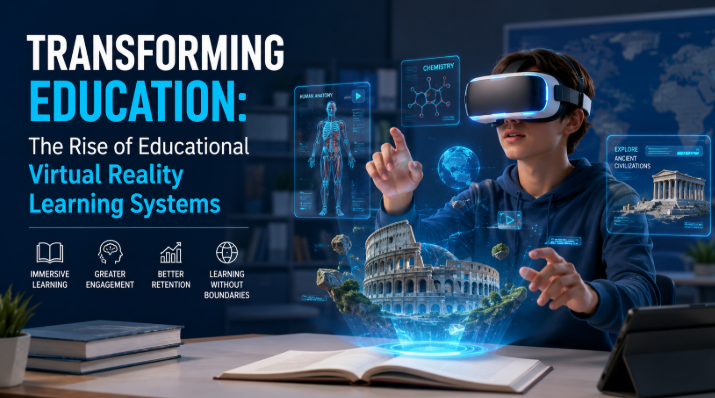
Introduction to Educational Virtual Reality
Educational Virtual Reality (VR) is an innovative technology that immerses learners in synthetic environments where they can interact with 3D models, explore various scenarios, and engage in experiential learning. Unlike traditional learning methods, which often rely heavily on textbooks and lectures, VR offers a more dynamic approach by allowing students to visualize concepts in a three-dimensional space. This technology supports auditory, visual, and kinesthetic learning styles, thus catering to a broader range of educational needs.
The primary purpose of educational VR is to enhance the learning experience by making it more engaging and interactive. Through VR, students can find themselves in historical settings, scientific laboratories, or even outer space, making complex ideas more relatable and comprehensible. Such immersive experiences not only capture students’ attention but also deepen their understanding by bridging the gap between theory and practice.
Moreover, the significance of educational VR in modern education cannot be understated. As educational institutions seek to adapt to the needs of the 21st-century learner, they are increasingly turning to technology that fosters collaboration, critical thinking, and problem-solving abilities. The integration of VR into curricula represents a shift towards experiential learning which has shown to enhance retention rates and engagement levels. Unlike conventional learning environments where students often passively consume information, VR encourages active participation.
In summary, educational VR signifies a revolutionary step in teaching and learning methodologies. By offering immersive and engaging perspectives, it stands apart from traditional methods, highlighting its potential to transform how educators impart knowledge and how students acquire it. As we delve deeper into the specific applications and benefits of this technology, it is clear that educational VR holds considerable promise for the future of education.
The Technology Behind Educational VR
Educational Virtual Reality (VR) learning systems have revolutionized the way knowledge is conveyed and acquired. The technological foundation of these immersive learning environments encompasses a complex interplay of hardware and software components. Central to the user experience are VR headsets, which are designed to transport learners into dynamic educational scenarios. These devices, such as the Oculus Rift, HTC Vive, and PlayStation VR, feature high-resolution displays, motion tracking, and built-in audio, allowing users to engage fully with their surroundings.
In addition to headsets, sensors play a crucial role in enhancing the educational VR experience. Motion sensors capture the user’s movements, translating them into real-time actions within a virtual environment. This not only enriches engagement but also fosters a sense of presence, making the learner feel as though they are genuinely within the content. Furthermore, haptic feedback devices provide tactile sensations, allowing users to interact with virtual elements as if they existed in the physical world. Together, these hardware components contribute significantly to creating immersive educational experiences.
On the software side, educational applications and platforms have been developed to cater specifically to learning needs. Platforms like Google Expeditions and zSpace provide rich content that can encompass a wide array of subjects, such as science, history, and mathematics. These software solutions are designed not only to present information but also to facilitate interactive learning through simulations and guided experiences. Moreover, the integration of Artificial Intelligence within these platforms enables personalized learning paths, adapting to individual learners’ progress and preferences.
The confluence of advanced hardware and sophisticated software ultimately paves the way for transformative educational experiences, making learning more engaging and effective through the power of virtual reality.
Benefits of Interactive VR Learning Systems
Interactive Virtual Reality (VR) learning systems are revolutionizing the educational landscape by offering numerous benefits that enhance the overall learning experience. One of the primary advantages of these systems is the significant increase in student engagement. Traditional methods of instruction often struggle to captivate the attention of learners, particularly in a digital age where students are accustomed to interactive technology. VR immerses learners in a three-dimensional environment, allowing them to participate actively in their education. This immersive nature helps to foster a deeper connection with the subject matter, making learning not only more enjoyable but also more effective.
In addition to improved engagement, VR learning systems have been shown to enhance information retention. Research indicates that when learners experience concepts firsthand through simulation, the information is more likely to be remembered long-term. This is largely due to the multi-sensory approach that VR offers, incorporating visual, auditory, and kinesthetic elements. By appealing to different senses, VR aligns with various learning styles—addressing the needs of visual learners, auditory learners, and those who learn best through physical activity.
Another notable benefit of VR in education is its ability to simulate real-world scenarios in a risk-free environment. Students can practice complex skills, such as surgical procedures or chemical experiments, without the fear of real-world consequences. Such experiences not only build confidence among learners but also allow them to experiment and learn from mistakes in a safe space. Consequently, interactive VR learning systems cater to both individual and group learning experiences, promoting collaboration among students while maintaining personalized educational pathways.
As we continue to explore the integration of technology in education, the advantages of VR learning systems highlight the potential for transformative experiences that cater to diverse learning needs.
Virtual reality (VR) has emerged as a transformative tool in the field of education, offering immersive experiences that enhance learning in various subjects. In science education, for instance, VR enables students to explore complex concepts such as the human body or chemical reactions in an interactive environment. Programs like Google Expeditions allow learners to take virtual field trips inside the human anatomy, providing an engaging way to understand intricate biological processes without needing a physical dissection.
In history education, VR has the unique capability to transport students to historical sites and events, thus making the learning experience far more impactful. For example, solutions such as HistoryMaker VR let students engage with significant historical moments, such as the signing of the Declaration of Independence or ancient Roman architecture. This method not only enhances retention but also fosters a deeper emotional connection to the material, encouraging learners to appreciate the richness of their heritage.
Language learning is another area where VR is making significant strides. Programs like Immersive Labs utilize VR to create realistic social interactions that help students practice conversational skills in a risk-free environment. Through simulation, learners can engage with native speakers and experience various cultural contexts, effectively promoting language acquisition and fluency. Such immersive language experiences are invaluable, as they replicate real-world scenarios where language is used in context.
Overall, the integration of VR technology into educational curricula across diverse fields is paving the way for innovative teaching methods that engage students and enhance their understanding of complex subjects. By harnessing the capabilities of VR, educators can create dynamic learning experiences that cater to various learning styles and foster critical thinking skills.
Case Studies: Successful Implementation of VR Learning
In recent years, numerous educational institutions have embraced educational virtual reality (VR) learning systems, leading to innovative teaching approaches and improved student outcomes. One notable example is the University of Illinois at Urbana-Champaign, which integrated VR into its architectural curriculum. Students utilized VR tools to create immersive, three-dimensional models of their designs, enhancing their spatial awareness and creativity. Following the implementation of VR learning, student engagement significantly increased, with feedback indicating a deeper understanding of architectural concepts.
Another compelling case is the Miami Dade College, which has successfully integrated VR into its nursing program. Utilizing VR simulations, nursing students can practice patient care in realistic scenarios without the associated risks of real-life training. This approach not only boosts students’ confidence but also enhances their decision-making skills in critical situations. Preliminary assessments showed that students who underwent VR training outperformed their peers in traditional settings, showcasing the effectiveness of VR in healthcare education.
Furthermore, the use of VR in K-12 education has been evident in schools like the Newlands Primary School in the UK. The school employed VR technologies to explore complex subjects such as science and history, providing students with engaging experiences like virtual field trips to historical landmarks or the examination of the solar system. Teachers reported enhanced student participation and improved academic performance, as learners became more invested in their studies through immersive experiences.
These case studies highlight the successful application of educational VR learning systems across various educational settings. By offering interactive and experiential learning opportunities, institutions have transformed traditional teaching methodologies, leading to increased student engagement and improved learning outcomes. The ongoing advancements in VR technology pave the way for even more innovative applications in the future, further solidifying its role in education.
Challenges and Limitations of VR in Education
As educational institutions consider adopting virtual reality (VR) as a teaching tool, several challenges and limitations emerge that could hinder successful implementation. One primary concern is the financial cost associated with VR technology. High-quality VR headsets and the necessary software can require significant investment, which may be prohibitive for many schools, particularly those with limited budgets. This financial burden can create inequality in access to advanced educational tools, thereby affecting the quality of education available to students.
Another major challenge lies in teacher training. While educators recognize the potential of VR in enhancing student engagement and learning outcomes, many may lack the skills or confidence to integrate this technology effectively into their lesson plans. Comprehensive training programs must be developed to equip teachers with the expertise needed to utilize VR tools productively. Without adequate preparation, teachers may struggle to facilitate VR learning experiences, which could result in disappointing outcomes and a potential backlash against the technology.
In addition, technological limitations pose a significant barrier to the effective deployment of VR in educational settings. Issues such as hardware compatibility, inadequate internet bandwidth, and the requirement for ongoing technical support can complicate the implementation process. Moreover, the content available for VR applications in education is still evolving, with many subjects lacking comprehensive and high-quality resources that meet diverse curriculum needs. Consequently, these challenges can hinder the widespread acceptance and implementation of VR in educational contexts.
To fully realize the potential of VR in education, stakeholders must address these financial, training, and technological limitations decisively. Only through a collaborative and proactive approach can VR emerge as a transformative tool in classrooms worldwide.
Future Trends in Educational VR
The evolution of educational virtual reality (VR) systems is significantly influenced by advancements in technology, particularly artificial intelligence (AI) and augmented reality (AR). These developments are carving pathways toward a richer, more personalized learning experience for students across diverse age groups and educational contexts.
One of the most promising trends in educational VR is the integration of AI technologies, which enhances the ability of VR systems to adapt in real-time to the learning needs of individual students. For instance, AI can analyze user interactions and learning outcomes, allowing VR platforms to customize content, pacing, and instructional strategies accordingly. This individualized approach is crucial, as it addresses diverse learning styles, potentially resulting in higher engagement and retention rates.
Moreover, the fusion of AR with VR is also gaining traction. By superimposing digital content onto the physical world, AR enriches the educational experience, making complex concepts more tangible. This hybrid approach not only makes learning more interactive but also provides students with the ability to visualize abstract ideas and concepts, effectively bridging the gap between theory and practice.
In addition to these technological advancements, the potential for immersive simulations across various disciplines cannot be overstated. As educational VR systems evolve, they will transcend traditional classroom boundaries, enabling students to engage with historical events, scientific phenomena, or difficult mathematical concepts in a completely immersive environment. Such experiences can foster deeper understanding and cultivate critical thinking skills that are essential in today’s increasingly complex world.
The future of educational virtual reality is indeed bright, as it promises to create a more inclusive and adaptive educational landscape. With the convergence of AI, AR, and immersive simulations, the educational sector is poised for substantial transformation, empowering learners for the challenges of tomorrow.
Best Practices for Integrating VR in Education
As educational institutions look to incorporate virtual reality (VR) into their curricula, it is essential to adopt best practices that facilitate effective integration. One of the primary considerations is the selection of appropriate content. Educators should evaluate the relevance and quality of VR experiences to ensure they align with learning objectives. Utilizing content that promotes active engagement and hands-on experience enhances students’ learning outcomes.
Another crucial aspect of successful VR integration is training staff. Educators must be well-versed in using the technology to maximize its potential in the classroom. Institutions should provide professional development opportunities that focus on not only operating VR equipment but also on pedagogical strategies that leverage VR to support immersive learning. Collaborative workshops can foster an environment where educators share insights and experiment with different VR applications.
Additionally, it is important to ensure equitable access to VR experiences for all students. This involves considering budget constraints, available hardware, and the technological infrastructure of the institution. Schools should explore grants or partnerships with tech companies that specialize in educational VR to facilitate access to required resources. Moreover, developing a comprehensive plan that considers students’ diverse learning needs can help in creating an inclusive VR learning environment.
Moreover, involving students in the selection process of VR content can help enhance engagement and foster ownership of their learning experience. Feedback from learners can guide educators to refine the integration process. Finally, evaluating the impact of VR on student learning and adjusting tactics accordingly is essential for continuous improvement.
Conclusion and Call to Action
The advent of educational virtual reality (VR) learning systems marks a significant shift in pedagogical methods within educational institutions. This innovative approach to learning allows students to immerse themselves in interactive environments that enhance understanding and retention of complex concepts. By simulating real-world scenarios and providing hands-on experiences, VR not only caters to various learning styles but also ignites curiosity and engagement among learners.
As educators acknowledge the profound impact VR can have on the educational landscape, it becomes essential to advocate for its integration into curriculum design. Schools and institutions that embrace these educational virtual reality systems position themselves at the forefront of a modernized education system, equipping students with essential skills for the future. The ability to explore diverse subjects—from anatomy to architectural design—using immersive experiences can foster analytical thinking and creativity, crucial components in today’s fast-evolving world.
Furthermore, available resources such as research studies, case examples, and tools designed for implementing virtual reality in classrooms can guide educators through this transformation. Organizations and platforms that focus on educational technology often provide webinars, training programs, and comprehensive guides on how to effectively incorporate VR into existing curricula. Educators are encouraged to explore these resources and collaborate with technology developers to customize VR experiences that meet the specific needs of their students.
In conclusion, as we witness the rise of educational virtual reality learning systems, it is vital for educators, administrators, and policymakers to consider the positive ramifications of these technologies. By embracing the power of VR, the educational sector can not only adapt to the changing landscape but also empower the next generation of thinkers and innovators.

