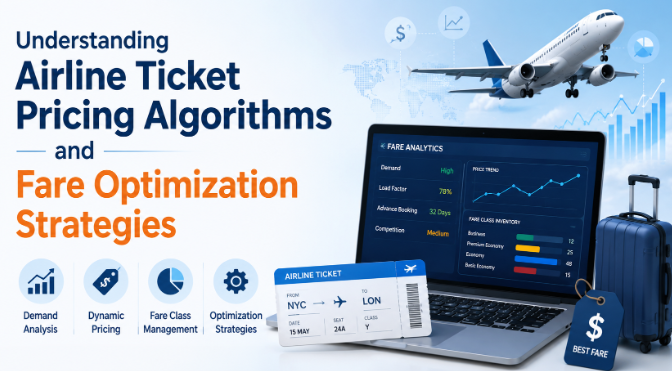
Introduction to Airline Pricing Algorithms
The airline industry operates within a highly dynamic environment where pricing strategies play a pivotal role in their revenue management. Central to this is the implementation of complex airline pricing algorithms, designed to adjust ticket prices based on numerous variables. These algorithms are not merely automated systems; they encompass sophisticated models that factor in historical data, current bookings, demand forecasts, and competitive pricing.
Airlines utilize these pricing algorithms to optimize their yield, which refers to the revenue generated per available seat-mile. By forecasting demand and making real-time adjustments, they can strategically set prices that maximize occupancy while ensuring profitability. This balancing act is crucial, especially in an industry where operational costs are high and profit margins are often narrow.
Moreover, the importance of airline pricing algorithms extends beyond mere ticket sales. These systems help airlines segment their markets effectively, allowing them to cater to different customer needs. For instance, they can offer lower fares to price-sensitive travelers while providing premium pricing for last-minute business travelers. This targeted approach enables airlines to enhance customer satisfaction while optimizing their revenue streams.
As competition within the airline industry intensifies, the reliance on advanced fare optimization strategies becomes ever more critical. Airlines that effectively implement these pricing algorithms are better positioned to respond to fluctuations in demand and competitor pricing. Thus, understanding these pricing mechanisms is essential for grasping how airlines navigate the complexities of pricing in today’s market.
How Algorithms Work in Fare Pricing
The fare pricing algorithms utilized by airlines represent a sophisticated blend of data analysis and machine learning. These algorithms analyze a multitude of factors that affect ticket prices, ensuring that airlines can optimize their pricing strategies effectively. One of the primary data points examined is demand, which fluctuates based on seasonality, regional events, and overall consumer behavior. Higher demand typically results in elevated fare prices, particularly during peak travel seasons.
Seasonality influences fare pricing significantly; for example, flights during holidays or school vacations tend to be pricier due to increased traveler numbers. To navigate these variances, airlines deploy machine learning technologies which can identify patterns in historical data. This process allows algorithms to predict future demand and adjust prices accordingly, potentially generating higher revenues.
Additionally, booking patterns are a critical component of fare pricing algorithms. Airlines track how consumers book tickets, noting whether purchases are made well in advance or closer to the departure date. Understanding these trends assists airlines in implementing dynamic pricing strategies, where prices may vary even within hours based on current purchasing behavior.
Competitor pricing also plays a vital role in fare optimization. Airlines must remain competitive; thus, fare comparison with other carriers enables them to recalibrate their pricing models. Monitoring competitor fares allows airlines to adjust their prices in real-time, ensuring they remain attractive to potential customers while maximizing revenue.
These algorithms amalgamate vast datasets from internal and external sources, including historical sales data, customer preferences, and market trends. The integration of machine learning not only enhances pricing models but also refines them over time, leading to increasingly sophisticated fare pricing algorithms. Ultimately, understanding how these algorithms operate provides valuable insight into the complexities of airfare pricing in today’s volatile market.
Dynamic Pricing Models Explained
Dynamic pricing models are integral to the modern airline ticket pricing landscape. These algorithms use real-time data and predictive analytics to dynamically adjust the prices of tickets based on various influencing factors. At the core of these models is the concept of demand elasticity, which measures how responsive the quantity demanded of a good is to a change in its price. Airlines leverage this data to maximize revenue by adjusting fares in real-time according to current market conditions.
One key factor influencing dynamic pricing is the time left until departure. As the departure date approaches, pricing algorithms assess the remaining inventory and the anticipated demand, leading to price adjustments. This often results in lower prices during early booking phases to stimulate demand, followed by price increases as the flight fills up. Additionally, airlines monitor competitor pricing and overall market trends, enabling them to modify fares accordingly in real-time.
Another significant factor is the customer’s purchasing behavior. The algorithms analyze historical data, such as the average booking lead time, to determine peak purchasing periods. For instance, travelers booking during holidays or peak travel seasons may encounter higher prices due to increased demand. Conversely, algorithms can offer discounted fares during off-peak times to fill seats. The balance between maximizing ticket revenue and maintaining customer satisfaction is crucial, and dynamic pricing models are designed to navigate this landscape effectively.
In essence, dynamic pricing models combine numerous variables, including time to departure, market demand, and individual purchasing behavior, to create a fine-tuned pricing strategy. By utilizing this sophisticated approach, airlines aim to optimize their fare offerings and ensure they capitalize on both high-demand periods and less popular travel times.
Impact of Ancillary Revenues on Ticket Pricing
The airline industry has evolved significantly over the years, with airlines increasingly relying on ancillary revenues as a critical component of their overall pricing strategies. Ancillary revenues encompass the additional fees charged for services beyond the base ticket price, including, but not limited to, baggage fees, seat selection fees, and in-flight services. These fees have transformed how airlines approach ticket pricing and have essential implications for both pricing and profitability.
When establishing ticket prices, airlines must consider the potential for ancillary revenues to supplement their base fares. For instance, if an airline opts to reduce its base fare to remain competitive in a saturated market, it may compensate for this reduction through ancillary charges. This approach allows airlines to attract cost-sensitive travelers while ensuring that they remain profitable. Subsequently, these ancillary charges can have a significant influence on the perceived value of a ticket, impacting consumer purchase decisions. Travelers now often evaluate total costs while booking, factoring in these additional fees. As a result, airlines must skillfully balance base fare reductions with ancillary charges to maintain profitability.
Moreover, the introduction of dynamic pricing algorithms also plays a role in how ancillary revenues affect ticket pricing strategies. By using data analytics, airlines can predict traveler behavior and optimize the timing and pricing of ancillary services. For example, if data indicates a high demand for checked baggage, an airline might raise the associated fees during peak seasons. Likewise, if seat selection options become popular among travelers, airlines may introduce new pricing models or packages that enhance their revenue potential. Overall, the incorporation of ancillary revenues into ticket pricing strategies not only influences how consumers perceive ticket costs but also solidifies airlines’ financial stability in an increasingly competitive environment.
The Role of Market Segmentation in Pricing
Market segmentation plays a pivotal role in the pricing strategies employed by airlines. By categorizing their customer base into distinct segments, airlines are able to tailor their pricing models to meet the specific needs and preferences of different groups. The segmentation can be based on various factors such as demographics, travel purpose, purchasing behavior, and even psychological drivers. This nuanced understanding of customer profiles enables airlines to optimize their fare structures dynamically.
One of the key components in market segmentation is the utilization of customer data. Airlines use advanced data analytics to gather insights on customer preferences and historical purchasing trends. For instance, business travelers typically exhibit a higher willingness to pay for flexibility and convenience, while leisure travelers may prioritize cost-effectiveness. By segmenting their market based on this data, airlines can set varied pricing tiers. These pricing strategies often include discounts for early bookings or higher fares for last-minute purchases, catering to the different needs of each segment.
Psychological factors also significantly influence pricing within segmented markets. For example, perceived value can affect how much a customer is willing to pay. Airlines often employ strategies such as anchoring—a technique where an initial higher price is presented to create a reference point, thus making subsequent prices seem more reasonable. Other techniques include employing psychological pricing, such as setting fares that end in ‘.99’ to create the perception of value. Understanding these psychological dimensions allows airlines to enhance their market segmentation strategies, ultimately leading to increased revenue.
Through effective market segmentation, airlines not only optimize their pricing strategies but also enhance customer satisfaction. When travelers feel that the pricing aligns with their preferences and perceived value, they are more likely to remain loyal to the airline. This approach illustrates that a well-structured market segmentation strategy is essential for successful fare optimization in the competitive airline industry.
Challenges Faced by Airlines in Fare Optimization
Fare optimization is a critical component for airlines seeking to maximize revenue while maintaining competitiveness in a highly dynamic market. However, several challenges hinder effective implementation of these strategies. Technological limitations often arise due to the complexity of data analytics and the need for sophisticated algorithms capable of processing vast amounts of information from numerous factors, including historical data, current demand, and competitive pricing. Many airlines still rely on outdated systems that create barriers to adopting more effective fare optimization techniques.
Moreover, market volatility poses another significant challenge. Fluctuating demand due to economic changes, seasonal travel trends, or unforeseen global events, such as health crises or political instability, can render existing pricing models ineffective. Airlines must continuously adapt their pricing strategies in response to market fluctuations, which can be daunting without robust analytics capabilities.
Regulatory issues also play a pivotal role in shaping fare optimization practices. Airlines must navigate complex regulations regarding pricing transparency, consumer protection, and anti-competitive practices. Compliance with local and international regulations can limit flexibility in pricing strategies, making it challenging for airlines to implement dynamic pricing models that could maximize revenue.
Additionally, consumer perceptions of fairness can complicate fare optimization efforts. As consumers increasingly become aware of pricing algorithms, they may react negatively towards what they perceive to be inconsistencies or unfair price discrimination. This situation necessitates a careful balance between maximizing revenue and maintaining customer trust.
In summary, airlines face a multifaceted array of challenges in fare optimization, combining technological obstacles, market volatility, regulatory complexities, and the critical aspect of consumer perceptions. Addressing these challenges effectively is essential for airlines aiming to optimize their fare strategies in an increasingly competitive landscape.
Case Studies of Successful Fare Optimization
Airline ticket pricing is profoundly influenced by complex algorithms that take into account various factors such as passenger demand, market competition, and historical booking data. A notable case study highlighting successful fare optimization strategies is that of Delta Air Lines. In an effort to enhance its revenue management system, Delta adopted a dynamic pricing model that integrates machine learning. By analyzing vast datasets that include booking patterns, customer behavior, and seasonal trends, Delta was able to adjust prices in real-time. As a result, they reported a revenue increase of approximately 5% in short-haul markets over one year, demonstrating the effectiveness of adaptive pricing to maximize profits.
Another compelling example comes from Southwest Airlines, which implemented an innovative fare optimization strategy focusing on customer segmentation. By leveraging comprehensive analytics to understand customer preferences and travel behaviors, Southwest tailored its fare offerings accordingly. This approach allowed the airline to maintain a competitive edge in the market. The implementation of targeted promotions and fare discounts for particular segments led to measurable success, with a significant uptick in spontaneous bookings and overall passenger satisfaction.
Furthermore, the case of Lufthansa offers crucial lessons on integrating customer feedback into fare optimization processes. By employing a hybrid model that combines traditional pricing strategies with customer insights gathered from surveys and social media, Lufthansa was able to better anticipate customer expectations. This alignment of pricing with customer sentiment resulted in a 10% reduction in the churn rate and increased brand loyalty, showcasing the importance of listening to the consumer in fare management.
Each of these airlines has demonstrated that leveraging technology and data analytics can significantly enhance fare optimization efforts. The underlying methodologies, whether through dynamic pricing, customer segmentation, or integrating customer feedback, provide valuable insights for other carriers seeking to refine their strategies in an ever-competitive environment.
Future Trends in Airline Pricing Strategies
Emerging trends in technology and consumer behavior are set to reshape the landscape of airline pricing strategies in the near future. One significant trend is the integration of blockchain technology into fare optimization processes. Blockchain offers enhanced transparency and security, potentially revolutionizing how airlines manage ticket distribution and revenue management. By leveraging decentralized ledgers, airlines could facilitate real-time pricing adjustments and create trust among consumers through verified pricing structures.
Artificial Intelligence (AI) advancements are also a key driver in optimizing airline pricing strategies. Machine learning algorithms can analyze vast amounts of data, enabling airlines to predict market trends more accurately and set dynamic pricing accordingly. AI can evaluate variables such as demand fluctuations, competitor pricing, and passenger behavior patterns, leading to more informed decision-making. This shift towards data-driven pricing not only enhances profitability but also aims to improve customer experience by offering competitive and fair fare options.
Furthermore, the rise of sustainable pricing models is gaining traction in the airline industry. With increasing consumer awareness around environmental issues, airlines are exploring ways to incorporate sustainability into their pricing strategies. This may include offering fare incentives for passengers who opt for eco-friendlier flight options or developing packages that align with carbon offset initiatives. These sustainable strategies can foster customer loyalty and position airlines as responsible players within the travel industry.
In conclusion, the future of airline pricing strategies will be heavily influenced by technological advancements such as blockchain and AI, paired with an increasing emphasis on sustainability. As these trends evolve, airlines that adapt to these changes will likely enhance their competitiveness and foster stronger relationships with their customers.
Conclusion and Takeaways for Travelers
Understanding airline ticket pricing and fare optimization strategies is essential for travelers seeking to secure the best possible deals. The dynamic nature of airline pricing, influenced by factors such as demand, booking timing, and competitor pricing, requires travelers to adopt informed strategies. One primary takeaway is the importance of flexibility. Traveling during off-peak times and being open to alternative airports can significantly reduce airfare costs.
Another guideline is to utilize fare comparison tools and alerts. These resources notify travelers of fare changes and help them gauge the market. Setting up price alerts can assist in identifying when ticket prices drop, enabling more strategic purchase decisions. Additionally, being aware of the airlines’ price-matching policies may present opportunities to circumvent higher fares.
It is also beneficial for travelers to track historical pricing trends, as this knowledge provides insight into favorable booking periods. Many travel experts recommend booking domestic flights 1-3 months in advance and international flights 2-6 months prior to departure, as these timeframes often yield better fares. In addition, understanding the intricacies of fare classes and restrictions allows travelers to make more educated decisions when selecting their desired itinerary.
Lastly, loyal travelers may benefit from joining airline frequent flyer programs. These programs often provide exclusive offers and rewards that can enhance overall travel experiences while optimizing costs. In conclusion, by implementing these strategies and staying informed about the various dynamics influencing airline pricing, travelers can navigate the complexities of fare optimization more effectively and enjoy savings on their travel expenses.

