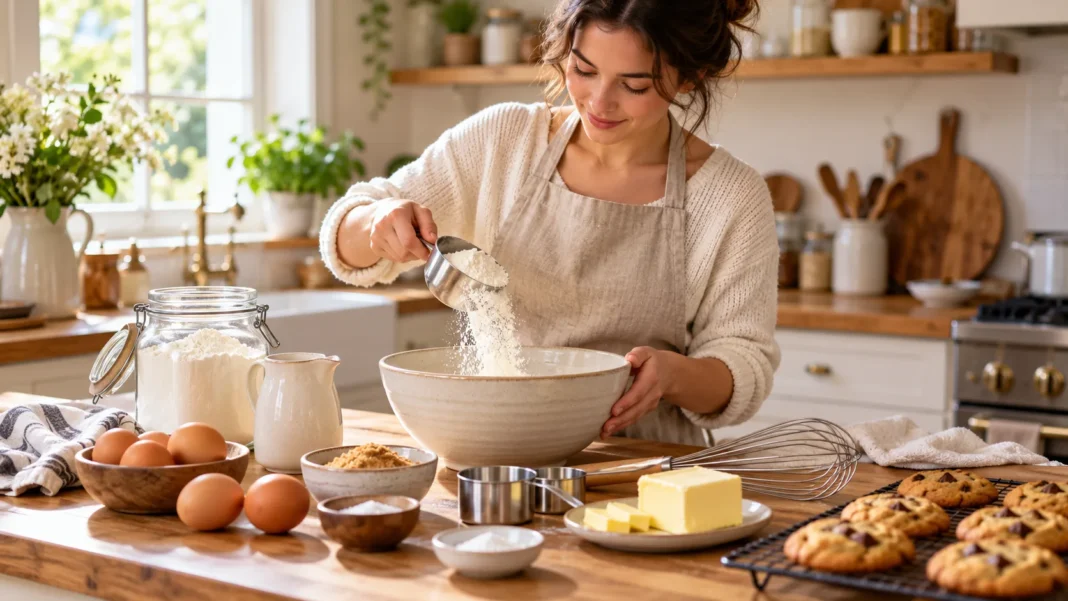
What Are 10 Basic Baking Tips for Beginners?
Baking can feel intimidating when a recipe has unfamiliar terms, exact measurements, and several steps to follow. The good news is that you do not need professional equipment or years of experience to get started. A few reliable habits can help you understand recipes, avoid common mistakes, and build confidence with each batch.
Unlike many savory dishes, baking often depends on specific proportions and reactions between ingredients. Small changes in flour, temperature, or mixing can affect a cake’s texture or a cookie’s spread. Learning the basics helps you understand why a recipe works and how to repeat good results.
These ten beginner baking tips cover preparation, measurements, mixing, oven use, and troubleshooting. Start with simple recipes, follow the instructions carefully, and make notes about what you learn. Baking gets easier when you practice one skill at a time.
1. Read the Entire Recipe Before You Begin
Read the recipe from start to finish before taking out ingredients. This helps you notice how long the dough needs to chill, whether butter must soften, or whether the oven needs preheating. It also helps you avoid discovering halfway through that you are missing an ingredient or piece of equipment.
Pay attention to the recipe’s sequence and wording. “Softened butter,” “melted butter,” and “room-temperature butter” are not always interchangeable, and instructions such as “fold” or “cream” describe different mixing methods. If a term is unfamiliar, look it up before you begin instead of guessing.
Set out the ingredients and tools you will need. This simple preparation, sometimes called mise en place, makes it easier to follow each step without rushing. Keep the recipe visible, and mark steps as you complete them if that helps you stay organized.
2. Measure Ingredients Accurately
Accurate measurements help baked goods turn out consistently. Too much flour can make cookies dry or cakes dense, while too little can affect structure. If a recipe provides weights, a kitchen scale is a reliable way to measure ingredients because it reduces variation between measuring cups.
When using measuring cups for flour, spoon it into the cup and level the top rather than scooping directly from the bag. Scooping can pack in extra flour and change the recipe’s proportions. Use the correct measuring tools for dry and liquid ingredients whenever possible.
Follow the units given in the recipe and avoid switching between metric and cup measurements without checking a reliable conversion. Measuring spoons are useful for small amounts such as baking powder, salt, or vanilla. Careful measuring is especially helpful while you are learning how each ingredient affects the final result.
3. Use Ingredients at the Temperature the Recipe Specifies
Ingredient temperature can affect how well a batter or dough comes together. Softened butter can trap air when creamed with sugar, while cold butter may be needed for flaky pastry. Eggs, milk, and other ingredients may also be specified at room temperature so they combine more evenly.
Plan ahead when a recipe calls for room-temperature ingredients. Take items out of the refrigerator early enough to warm safely, but do not leave perishable foods out for extended periods. If you are short on time, follow food safety guidance and avoid using methods that heat ingredients unevenly.
Do not assume that warmer ingredients are always better. Melted butter behaves differently from softened butter, and warm ingredients can affect yeast or chocolate. Follow the recipe’s description closely, since the temperature is often connected to the texture the baker wants.
4. Prepare Your Pan and Preheat the Oven
Prepare the pan before mixing the batter if the recipe calls for greasing, lining, or flouring it. Baking paper can make cakes and cookies easier to remove, while greasing may be enough for some pans. Use the method specified in the recipe, since different baked goods can stick or brown in different ways.
Preheat the oven fully before putting the food inside. An oven that is still warming may change how quickly a cake rises or how cookies spread. If you bake often, an inexpensive oven thermometer can help you check whether the displayed temperature matches the actual heat inside.
Place the pan where the recipe recommends, usually on a center rack unless otherwise stated. Avoid opening the oven door repeatedly, especially while a cake or bread is rising. A sudden temperature change can affect some delicate bakes, so use the oven light and window to check progress.
5. Choose the Right Mixing Method
Recipes use specific mixing methods because they create different textures. Creaming butter and sugar adds air, while folding gently combines ingredients without knocking out too much air. Stirring, beating, whisking, and kneading each serve a different purpose, so follow the action described.
Overmixing is a common beginner mistake. Once flour is added to cake or muffin batter, excessive mixing can develop gluten and make the result tougher. Mix only until the ingredients are combined unless the recipe instructs you to knead or beat for a specific amount of time.
Use the equipment that suits the recipe. A whisk works well for blending some dry ingredients, while a spatula is useful for folding or scraping the bowl. If the instructions call for an electric mixer, start at a low speed to prevent ingredients from spilling out.
6. Understand What Baking Ingredients Do
Flour provides structure, sugar adds sweetness and can affect browning, and fat contributes flavor and tenderness. Eggs help bind ingredients and can add structure, moisture, or richness. Knowing these basic roles helps explain why a recipe may specify a particular type or amount of ingredient.
Leavening agents, such as baking powder, baking soda, and yeast, help baked goods rise in different ways. They are not always interchangeable, so avoid swapping them unless a tested recipe gives instructions. Check expiration dates, especially for baking powder and yeast, since older products may not work as expected.
Use the type of flour and other ingredients named in the recipe when you are starting out. Bread flour, cake flour, and all-purpose flour have different properties. After you become familiar with a recipe, you can experiment carefully, changing one ingredient at a time and noting the result.
7. Avoid Making Too Many Changes at Once
It is tempting to add extra sugar, replace flour, or change the oven temperature to suit your preferences. However, each ingredient and instruction can affect the others. Making several changes at once makes it difficult to tell why a recipe turned out differently.
Follow a trusted recipe as written for your first attempt. Once you understand the expected texture and flavor, experiment with small adjustments, such as adding a modest amount of a spice or topping. Record what you changed so you can repeat successful variations.
Substitutions deserve particular care. Replacing eggs, dairy, or wheat may change moisture, structure, and baking time, especially in recipes that depend on those ingredients. When you need a dietary substitution, use a recipe developed for that purpose instead of assuming a direct swap will work.
8. Learn to Check for Doneness
Baking times are estimates because ovens, pan materials, and portion sizes vary. Start checking near the earliest time listed in the recipe. A cake may be ready when the center springs back lightly and a tester comes out clean or with a few moist crumbs, depending on the recipe.
Cookies may continue to firm up as they cool, so they can look slightly soft in the center when removed from the oven. Bread may need to sound hollow when tapped or reach a temperature specified by the recipe. Use the cues provided rather than relying only on color or the timer.
Open the oven carefully and use oven mitts to protect your hands. If the bake is not done, return it to the oven and check again after a short interval. Write down how your oven behaves, since learning its timing can help you plan future recipes more accurately.
9. Cool Baked Goods Before Cutting or Decorating
Cooling is part of the baking process, not just a waiting period. Cakes and quick breads need time to set so they are less likely to break when removed from the pan. Cookies often firm up on the baking sheet before they are transferred to a rack.
Follow the cooling instructions in the recipe. Some cakes should rest in the pan briefly, while others need to be turned out onto a rack. Moving a delicate bake too soon can cause it to crumble, and leaving it in a hot pan too long may affect its texture.
Wait until baked goods are cool enough before adding frosting, glaze, or decorations. Heat can melt icing or cause it to slide off. Cooling on a wire rack allows air to circulate, helping the bottom avoid becoming damp from trapped steam.
10. Keep Notes and Practice Simple Recipes
A short baking log helps you learn from every attempt. Note the recipe, oven temperature, pan size, ingredient changes, and anything you would adjust next time. You can also record how long the bake took in your oven and what signs helped you judge doneness.
Start with approachable recipes such as simple cookies, brownies, muffins, or banana bread. These let you practice measuring, mixing, and timing without managing many complex techniques at once. Choose recipes with clear instructions and read reviews for practical tips, while still following the recipe itself.
Do not treat every imperfect bake as a failure. A dry cake, flat cookie, or dense loaf can teach you something about measurement, mixing, or oven temperature. Make one adjustment on your next attempt and keep practicing; repetition is one of the best ways to improve.
Common Baking Mistakes Beginners Should Avoid
Using inaccurate measurements, skipping preheating, and substituting ingredients without guidance can all affect a recipe. Another common problem is rushing through instructions or assuming that two ingredients with similar names behave the same way. Slow down, read carefully, and follow the recipe’s specific directions.
Avoid overmixing batters after adding flour, and resist opening the oven repeatedly to check on the bake. These habits can affect texture and consistency. Use visual or touch cues in addition to timing, and give baked goods enough time to cool before handling them.
If a recipe does not turn out as expected, review what happened rather than immediately changing everything. Check the measurements, ingredient freshness, pan size, oven temperature, and mixing time. Adjust one factor on the next try so you can identify what made the difference.
Conclusion
The best baking tips for beginners start with preparation: read the recipe, measure carefully, use the specified ingredients, and preheat the oven. Mixing gently and checking for doneness help you get more consistent results.
Follow recipes closely while you are learning, then make small changes once you understand the method. Keep notes about your oven, timing, and results so each bake gives you useful experience.
Most of all, be patient with the process. Baking combines practice and careful observation, and mistakes are part of learning. Start with simple recipes, enjoy the results, and build your skills one bake at a time.
FAQs
What is the most important baking tip for beginners?
Read the full recipe before starting and measure ingredients carefully. These steps help you prepare in the right order and avoid common problems with texture, timing, and missing ingredients.
Should ingredients be at room temperature before baking?
Only when the recipe asks for them. Room-temperature ingredients can combine differently from cold ones, but butter, eggs, or milk may need a specific temperature for the recipe to work properly.
Why did my cake turn out dense?
A dense cake can result from too much flour, overmixing, expired leavening, or an incorrect oven temperature. Check your measurements and ingredients, then change one factor on your next attempt.
Can I substitute ingredients in a baking recipe?
Sometimes, but substitutions can affect texture, moisture, and structure. For major dietary changes, choose a recipe designed for that substitution instead of expecting a direct swap to work.
How do I know when baked goods are done?
Use the recipe’s timing and doneness cues together. A tester, gentle spring-back, color, or internal temperature may help, depending on what you are baking.

