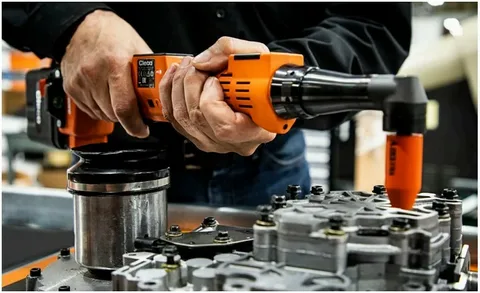
There is a concept in manufacturing that most people outside the industry rarely think about: key seating. It is the practice of cutting a precisely shaped slot into a pre-drilled hole before inserting a fastener, ensuring that the installed component cannot rotate under load. Without it, even a properly torqued fastener can spin free over time, and the entire joint fails.
It sounds like a narrow, technical concern. But the logic behind it applies far beyond factory floors.
The Cost of Skipping Preparation
In industrial settings, skipping the key seating step is tempting when time is short. The fastener goes in. It holds — at first. Then vibration, stress, and repeated load cycles do what physics always does to an unprepared joint. The assembly fails, and someone has to take it apart and do it correctly the second time around.
This pattern repeats itself in business constantly. A team skips the planning phase to hit a deadline. A manager bypasses onboarding to fill a seat quickly. A procurement process gets compressed to close a quarter. The work gets done, technically. But the underlying structure is weak, and the rework comes later, at a higher cost, under worse conditions.
Fit Before Force
In precision fastening, hole geometry matters before you apply any force. The slot has to be right. The fastener has to match. A Rivnut Setter Tool, for instance, requires specific mandrel and anvil combinations for each thread size — there is no universal setting. The material of the fastener, whether aluminum or steel, changes what the tool can actually accomplish. Force applied to the wrong setup does not compensate for a poor fit. It makes things worse.
This is a useful frame for thinking about staffing, vendor selection, and systems design. Forcing a solution into the wrong context, even with significant effort, produces the same result as over-torquing a mismatched fastener: damage that looks like progress until it fails.
Consumables Are Not Weaknesses
One honest admission that precision tooling requires: certain components are consumable. Cutter blades, mandrels, and anvils wear out. Treating them as permanent fixtures is a mistake. Experienced operators keep backups on hand and replace worn parts before they compromise the installation.
Organizations resist this thinking. They want tools, processes, and people to last indefinitely. But some things are meant to cycle—certain roles evolve; certain software gets replaced, and certain workflows need to be rebuilt as the business scales. Treating consumables as failures, rather than as expected parts of a functional system, leads to running degraded equipment longer than is wise.
Matching Capability to Application
The reference to material type in precision fastening is worth pausing. A tool configured for a soft aluminum fastener cannot install the same size fastener in hardened steel. The thread size is identical. The tool looks the same. But the capability does not match the demand.
This is the gap between credentials and capacity. A person can have the right title, the right background, and still not be configured for the specific load the role requires. So can a process, a technology stack, or a vendor relationship. Matching capability to actual application — not assumed application — is what makes a system hold under pressure.
Precision as a Standard, Not a Premium
There is a tendency to treat precision as something reserved for high-stakes or high-budget operations. In reality, precision is what prevents small errors from compounding. Tight tolerances, matched tooling, and prepared surfaces are not luxuries. They are the baseline for anything that needs to stay together under real-world conditions.
The same is true in business. Documented processes, correctly scoped roles, and properly matched tools are not signs of over-engineering. They are the structures that keep operations from failing at exactly the wrong moment. Discipline in setup is what makes everything downstream more reliable.
The lesson from key seating is straightforward: the unseen preparation holds everything together when it counts.

