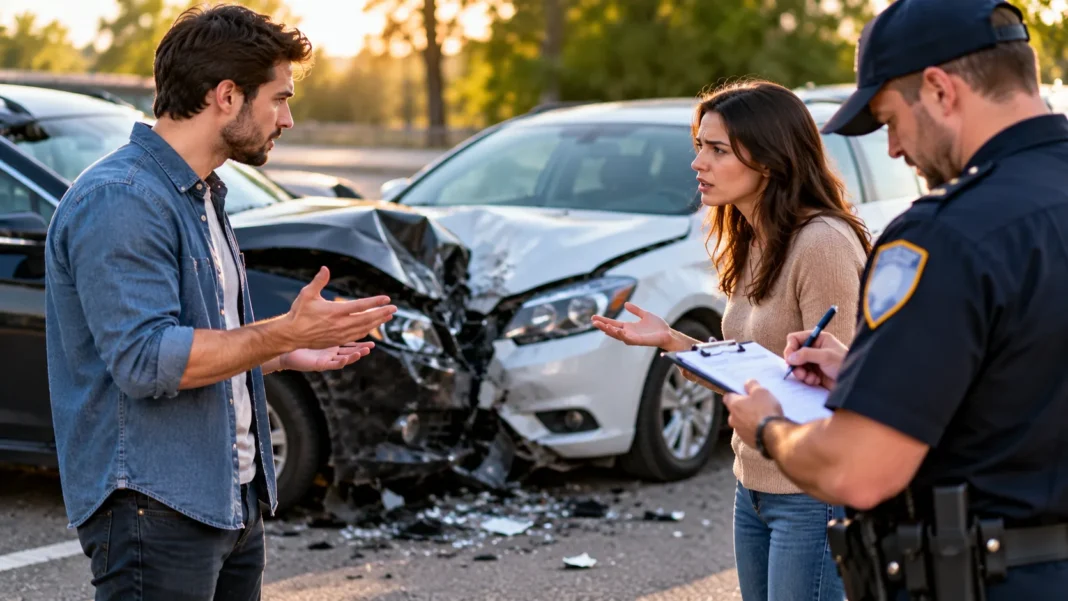
Car accidents can happen unexpectedly, leaving drivers confused about who is responsible for the damage, injuries, and financial losses. Determining fault is one of the most important steps following a collision because it can affect insurance claims, compensation, and legal responsibility. Understanding who is at fault in a car accident helps drivers recognize how liability is assessed and what information matters during an investigation.
Fault is not always obvious, especially when several vehicles are involved or drivers disagree about what happened. Insurance companies, investigators, and courts may examine traffic laws, witness statements, photographs, and other evidence before reaching a decision. Knowing how this process works can help you protect your rights and understand the possible outcomes after a road accident.
What Does Fault Mean in a Car Accident?
Fault in a car accident refers to legal responsibility for causing a collision through careless, unsafe, or unlawful behavior. A driver may be considered at fault when their actions fail to meet the required standard of reasonable care. However, responsibility depends on the circumstances, available evidence, and traffic laws applicable where the accident occurred.
Car accident liability commonly involves negligence, which means failing to exercise reasonable care while driving. Examples may include ignoring traffic signals, following another vehicle too closely, or failing to yield when required. To establish legal responsibility, an injured person generally must demonstrate that a driver’s negligent actions caused the accident and resulted in measurable harm.
Fault can involve one driver, several drivers, or occasionally another responsible party. In some accidents, road maintenance problems, vehicle defects, or unsafe construction conditions may contribute to the collision. Understanding these possibilities matters because legal responsibility is not always determined simply by identifying which vehicle struck another vehicle first.
How Is Fault Determined After a Car Accident?
Determining who caused a car accident usually begins with examining the actions of everyone involved. Insurance adjusters and investigators review available information to understand how the collision occurred. They may evaluate vehicle positions, traffic conditions, road markings, physical damage, and whether any driver violated applicable traffic regulations before reaching their conclusions.
Police reports can play an important role because they document observations, statements, and relevant circumstances shortly after an accident. However, a police report does not automatically establish civil liability in every jurisdiction. Insurance companies may conduct separate investigations, and courts can evaluate additional evidence when drivers disagree about responsibility.
Investigators may also review photographs, surveillance recordings, dashcam footage, and statements from independent witnesses. These materials can help establish the sequence of events and identify unsafe driving behavior. The strength and reliability of the evidence often influence fault determinations, particularly when drivers provide conflicting explanations about how the collision happened.
Who Is at Fault in a Rear-End Car Accident?
Rear-end collisions occur when one vehicle strikes the back of another vehicle traveling or stopped ahead. In many situations, the following driver is considered responsible because drivers are generally expected to maintain a safe distance. Following too closely, becoming distracted, or failing to brake appropriately can contribute to these accidents.
However, the rear driver is not automatically responsible in every situation. Sudden unsafe reversing, malfunctioning vehicle lights, or another driver’s unexpected actions may affect the liability assessment. Investigators must consider whether each driver’s conduct contributed to the collision rather than relying exclusively on the location of vehicle damage.
Evidence such as dashcam recordings, skid marks, witness statements, and traffic conditions may clarify what happened. In chain-reaction accidents involving several vehicles, responsibility can become more complicated because the initial impact may push one vehicle into another. Each collision may require a separate assessment to determine the responsible parties.
Who Is Responsible for an Accident at an Intersection?
Intersection accidents often involve complicated questions about right-of-way, traffic signals, and turning movements. A driver who ignores a red light, disregards a stop sign, or fails to yield when required may be responsible for a collision. However, investigators must consider the actions of all drivers before deciding who caused the accident.
Left-turn accidents are a common example because turning drivers frequently must yield to approaching traffic. Nevertheless, an approaching driver who speeds excessively or violates a traffic signal may also contribute to the collision. Local traffic rules, signal timing, road layout, and visibility conditions can influence how responsibility is assigned.
Traffic camera recordings, witness accounts, and vehicle damage patterns may help investigators reconstruct the event. When both drivers claim they had the right-of-way, independent evidence becomes especially important. A careful assessment can reveal whether one driver violated traffic rules or whether several contributing factors led to the crash.
Can Both Drivers Be at Fault in a Car Accident?
Yes, both drivers can share responsibility when their actions contribute to the same collision. For example, one driver might be speeding while another makes an unsafe turn. If both behaviors contributed to the accident, fault may be divided according to the evidence and the legal rules governing the claim.
Many jurisdictions use comparative negligence principles, which may allow an injured person to recover compensation even when partly responsible. The amount recoverable may be reduced according to their percentage of fault. Some jurisdictions impose additional restrictions, including thresholds that prevent recovery when the injured person’s share of responsibility reaches a specified level.
Other places follow contributory negligence rules that can prevent recovery if the injured person contributed to the accident, subject to applicable exceptions. These differences make location important when evaluating shared liability. Understanding the relevant legal framework helps explain why similar accidents may lead to different compensation outcomes in different states or countries.
What Evidence Helps Prove Fault in a Car Accident?
Evidence is essential when determining liability because drivers may remember events differently or disagree about what occurred. Photographs of vehicle damage, road signs, traffic signals, and accident locations can help establish important facts. Clear documentation may also show weather conditions, visibility problems, or roadway hazards that influenced the collision.
Witness statements can strengthen an investigation when independent observers describe the events leading to the crash. Dashcam recordings and nearby surveillance footage may capture vehicle movements or traffic signal changes. Physical evidence, including debris locations and impact patterns, can also assist accident reconstruction specialists when the circumstances are disputed.
Medical records and repair estimates serve different but related purposes during a claim. They may help establish the extent of injuries and property damage, although they do not necessarily prove which driver caused the collision. Preserving available evidence and recording accurate details can support a more reliable evaluation of responsibility.
Does a Police Report Determine Who Is at Fault?
A police report is an important document because it records information collected by responding officers. It may include driver statements, witness details, vehicle descriptions, roadway conditions, and observations about possible traffic violations. This information can be useful for insurance claims and legal investigations following an accident.
However, the officer’s conclusions do not necessarily decide civil responsibility in every case. Insurance adjusters and courts may reach different findings after examining additional evidence. An officer may also be unable to determine fault if the available information is limited or the accident occurred without independent witnesses.
If a police report contains factual errors, the process for requesting corrections depends on the relevant police department. Supporting documents may help clarify inaccurate names, vehicle details, or other recorded information. Keep copies of official records and avoid assuming that a traffic citation alone establishes every aspect of accident liability.
How Do Insurance Companies Decide Who Is at Fault?
Insurance companies investigate accident claims to determine responsibility and evaluate potential coverage obligations. An adjuster may review statements from drivers, photographs, police records, vehicle damage, and other supporting information. The investigation generally focuses on how the accident happened and whether a particular driver’s conduct contributed to the collision.
Insurance adjusters also consider applicable traffic laws and the terms of the relevant insurance policies. When two insurance companies disagree about responsibility, they may use established dispute resolution procedures. These disagreements can affect how quickly claims are resolved and whether the parties pursue additional legal remedies.
An insurance company’s decision is not necessarily the final legal determination of fault. Drivers may dispute findings, submit additional evidence, or seek legal advice when significant disagreements remain. Understanding the difference between an insurer’s assessment and a court’s decision can help prevent confusion throughout the claims process.
What Happens When the At-Fault Driver Has No Insurance?
An accident involving an uninsured driver can complicate the process of recovering compensation. Even when that driver is legally responsible, obtaining payment may be difficult if they lack sufficient financial resources. Available options depend on local insurance requirements, policy coverage, and the circumstances surrounding the collision.
Some insurance policies include uninsured motorist coverage that may help with certain accident-related losses. Depending on the jurisdiction and policy terms, this protection may apply to bodily injuries, property damage, or both. Coverage limits, exclusions, and claim requirements can vary significantly, making it important to review the policy carefully.
In some situations, an injured person may consider legal action against the responsible driver. However, winning a legal claim does not guarantee that money can actually be collected. Reviewing available insurance benefits and seeking appropriate legal guidance can help clarify practical recovery options after an uninsured driver causes an accident.
Can You Be at Fault for an Accident Caused by Bad Weather?
Bad weather can contribute to car accidents by reducing visibility, limiting traction, and increasing stopping distances. Rain, snow, fog, and icy roads may make driving conditions more difficult. Nevertheless, drivers are generally expected to adjust their behavior to reasonably account for foreseeable weather and roadway hazards.
A driver who travels too quickly for slippery conditions or follows another vehicle too closely may be considered negligent. The posted speed limit does not always represent a safe speed under adverse weather conditions. Investigators may examine whether a driver took reasonable precautions based on the circumstances existing before the collision.
Weather conditions do not automatically excuse every accident, but they can influence the liability assessment. Unexpected hazards, roadway maintenance failures, and the actions of other drivers may also contribute. Determining responsibility requires examining the complete circumstances rather than assuming that the presence of rain or snow makes an accident unavoidable.
What Should You Do After a Car Accident to Protect Your Rights?
After a car accident, prioritize safety and check whether anyone needs urgent medical assistance. Contact emergency services when injuries, serious hazards, or local reporting requirements make it necessary. If it is safe and legally appropriate, move away from dangerous traffic conditions while avoiding actions that could place anyone at additional risk.
Exchange the required contact, vehicle, and insurance information with the other driver. When safe, photograph the accident scene, vehicle damage, road conditions, and relevant traffic signs. Record witness contact details if they are willing to share them, and avoid speculating about the cause of the accident before the facts are established.
Notify your insurance company according to your policy’s reporting requirements and keep copies of relevant documents. Seek medical attention when you experience injuries or concerning symptoms, even if discomfort was not immediately noticeable. If liability is disputed or injuries are significant, a qualified local attorney can explain your rights and available options.
Conclusion
Understanding who is at fault in a car accident requires examining driver behavior, traffic laws, and reliable evidence. Responsibility may rest with one driver, multiple drivers, or another party whose actions contributed to the collision. Police reports, witness statements, vehicle damage, and available recordings can all play important roles in establishing what happened.
Fault determinations can also influence insurance claims and potential compensation for injuries or property damage. Different jurisdictions apply different negligence rules, making it essential to understand the legal standards governing a particular accident. An insurance company’s initial assessment may not settle every dispute, especially when important facts remain contested.
After a collision, focus on safety, accurate documentation, and timely reporting. Avoid making assumptions about responsibility before the relevant evidence has been reviewed. When a case involves serious injuries, disputed facts, or complicated insurance questions, seeking qualified legal guidance can help you understand the next appropriate steps.
Frequently Asked Questions (FAQs)
Who is usually at fault in a car accident?
The driver whose negligent or unlawful actions caused the collision is generally considered at fault. However, responsibility depends on traffic laws, evidence, and whether other drivers also contributed to the accident.
Is the driver who hits another car always at fault?
No. The striking driver is not automatically responsible in every situation. Investigators consider right-of-way, driver behavior, traffic conditions, and other evidence to determine whether responsibility belongs to one or multiple parties.
Can both drivers be responsible for the same accident?
Yes. Both drivers may share fault when their actions contribute to a collision. The effect on compensation depends on whether the jurisdiction follows comparative negligence, contributory negligence, or another liability standard.
Does a police report automatically decide accident fault?
No. A police report may contain valuable evidence and an officer’s observations, but insurers and courts can make separate assessments. Additional records, witness statements, and legal rules may influence the final determination.
What happens if the other driver denies being at fault?
If the other driver disputes responsibility, insurers may investigate using photographs, witness accounts, official reports, and other available evidence. Significant disagreements may require additional claim reviews, negotiations, or legal proceedings.

