Introduction to Smart AI Devices
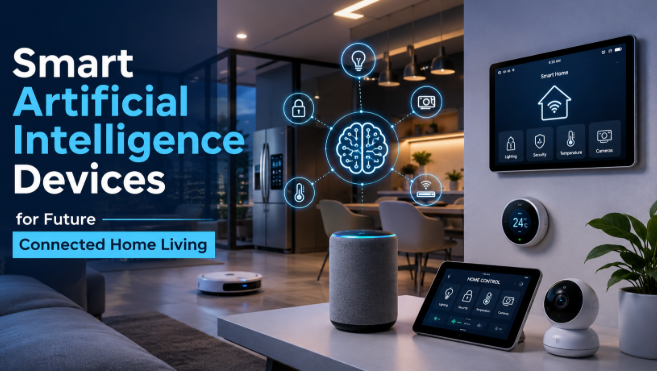
Smart artificial intelligence (AI) devices represent a significant advancement in technology, seamlessly integrating into modern connected home living. These devices leverage AI algorithms and machine learning techniques to automate tasks, improve efficiency, and enhance user experience within the household. By interfacing with various smart home systems, AI devices can communicate, analyze data, and provide solutions that cater specifically to the needs of the residents.
At the core of smart AI devices is their ability to collect and process information in real-time. This capability allows them to adapt to changing environments and user preferences, thus optimizing functionality. For example, smart thermostats can learn from a homeowner’s habits to manage energy consumption more effectively, contributing to both comfort and cost savings. Other applications include security systems that discern between familiar faces and potential intruders, providing a higher level of safety.
The importance of AI in enhancing daily life cannot be overstated. Incorporating smart devices into one’s home significantly transforms the way people interact with their living spaces. Tasks that previously required manual input can be automated or controlled remotely, allowing for a more convenient and efficient home environment. Moreover, the integration of AI fosters a personalized experience, as these smart devices can adjust to the chronological patterns of the users, resulting in increased satisfaction and an overall improved quality of life.
As the technological landscape continues to evolve, the impact of smart AI devices on home living is expected to grow even further. By establishing advanced networking capabilities and connectivity, these devices will play a pivotal role in shaping the future of domestic life, highlighting the fundamental relationship between artificial intelligence and connected home technologies.
The Rise of Home Automation
Home automation has gained significant traction over the last decade, transforming from basic remote-controlled devices to advanced systems powered by artificial intelligence (AI). This evolution is rooted in the increasing demand for convenience, energy efficiency, and enhanced security within the household. Smart devices now encompass a wide array of functionalities, ranging from smart thermostats that learn user behavior to intelligent security systems capable of facial recognition.
The integration of AI into home automation has allowed for seamless communication between devices, creating an ecosystem that responds to user preferences and habits. For instance, voice-activated assistants have become commonplace, enabling users to manage their home environments hands-free. This has set off a trend where homeowners desire more interconnected devices that not only respond to commands but also anticipate their needs.
Technological advancements in machine learning and sensor technology have been pivotal in this area. As devices become smarter, they can share data and insights with one another, creating a synergistic effect. Smart lighting, for instance, can adjust based on the time of day or the presence of residents, significantly enhancing the living experience. Moreover, manufacturers are increasingly focusing on user-friendly interfaces and compatibility among different brands, making it easier for consumers to adopt and integrate new devices into their existing systems.
In addition to comfort and control, the rise of home automation is also driven by energy considerations. Smart devices often offer features that monitor energy usage and suggest optimizations, contributing to sustainable living practices. As technology continues to advance, the field of home automation is positioned to lead the charge towards a more connected, efficient, and intelligent living environment, paving the way for future innovations.
Key Features of AI-Driven Home Devices
AI-driven home devices are at the forefront of transforming everyday living, capitalizing on advanced technologies such as voice recognition, machine learning, predictive analytics, and Internet of Things (IoT) connectivity. Each of these features plays a significant role in enhancing the convenience and efficiency of home environments.
Voice recognition is one of the hallmark capabilities of AI-enabled devices. This technology allows users to interact with their devices through natural language commands. For instance, devices like smart speakers and voice assistants can understand and execute tasks, such as adjusting lighting, playing music, or providing weather updates. The integration of voice recognition simplifies user interactions, making technology accessible to a wider audience, including those who may not be tech-savvy.
Machine learning further enhances the functionalities of smart devices. By analyzing usage patterns, these devices can learn from user behaviors and preferences over time. This adaptability means that home devices can optimize their operations; for example, a smart thermostat can adjust heating or cooling settings based on learned occupancy habits, thereby promoting energy efficiency and reducing utility costs.
Predictive analytics is another critical feature that sets AI-driven home devices apart. By gathering data from various sources and analyzing it, these devices can foresee potential needs and automate responses accordingly. For example, a smart fridge that keeps track of grocery items could alert users when supplies are low or suggest recipes based on available ingredients, thereby enhancing overall convenience.
Lastly, IoT connectivity is essential for seamless integration across different smart devices. Through a unified network, individuals can control multiple devices from a single platform or app. This interconnectivity not only streamlines functionalities but also enhances security measures, as users can monitor their home environment in real time.
Benefits of an AI-Powered Connected Home
The integration of smart artificial intelligence devices into residential environments serves numerous beneficial purposes, effectively transforming the way we interact with our living spaces. One of the primary advantages of adopting AI within a connected home is increased energy efficiency. Smart devices utilize data analytics to optimize energy usage, allowing for better management of heating, cooling, and lighting systems. As a result, homeowners may experience a significant reduction in energy costs while promoting environmental sustainability.
Enhanced security is another crucial benefit offered by AI-powered devices. Smart security systems equipped with AI capabilities have the ability to learn from patterns and detect anomalies, which means they can provide real-time alerts and notifications about potential threats. The implementation of facial recognition at entry points and integration with smartphones allows homeowners to monitor their premises remotely, thus ensuring a higher level of safety and peace of mind.
Moreover, AI technology bolsters convenience considerably. Smart home assistants can respond to voice commands, manage schedules, and automate daily tasks, streamlining routines for users. This heightened level of convenience enables residents to manage various aspects of their home effortlessly, which is particularly advantageous in busy households.
Personalized user experiences are also a hallmark of AI-driven homes. Smart devices can analyze individual preferences and behaviors, allowing for tailored suggestions and settings that enhance comfort. For example, smart thermostats can adjust temperatures based on user habits, while automated lighting systems can adapt to lifestyle patterns, creating a welcoming environment.
Lastly, the potential for remote management of home systems is a significant draw for many users. With AI technologies, homeowners can control appliances, security systems, and other devices from their smartphones or computers, regardless of their physical location. This level of accessibility further streamlines the management of household duties, fostering a more efficient and modern living experience.
Smart AI Devices for Different Areas of the Home
In today’s increasingly interconnected world, smart artificial intelligence devices are making significant strides in enhancing everyday life within our homes. Catering to various areas of the home, these devices rely on AI technology to offer convenience, security, and energy efficiency.
Starting in the kitchen, smart appliances such as AI-powered refrigerators can track inventory and suggest recipes based on the ingredients available. These innovative devices often feature touchscreens that facilitate interaction and can connect to other smart home devices, enabling meal planning and grocery shopping with ease. Additionally, smart ovens and coffee makers allow homeowners to control cooking temperatures and brewing times remotely, streamlining meal preparation.
Moving to the living room, smart speakers like Amazon Echo and Google Nest serve as central hubs for home automation systems. These devices not only play music and answer queries but also control other smart devices through voice commands, making them integral to connected home living. Smart TVs equipped with AI capabilities can personalize viewing experiences, recommending content based on user preferences.
In the bedroom, smart thermostats such as the Nest Learning Thermostat adjust temperatures automatically based on user habits, contributing to energy savings and enhanced comfort. Smart lighting systems, which can be dimmed or color-altered through voice commands or smartphone apps, create the desired ambiance while promoting energy efficiency.
Finally, the bathroom has witnessed the introduction of devices like smart mirrors that provide information on weather, news updates, and even personal health metrics. Smart shower systems can offer a tailored shower experience through programmable temperature settings, thereby enhancing relaxation and luxury.
As the home evolves into a smart ecosystem, these AI devices fundamentally reshape how we interact with our spaces, demonstrating the profound impact technology has on our daily lives.
Challenges and Considerations in Smart Home Integration
The integration of smart artificial intelligence (AI) devices in the home presents various challenges and considerations that future homeowners must address. While these devices promise to enhance convenience and improve the quality of life, understanding their limitations is crucial.
One significant concern is privacy. Smart home devices often require access to personal data to function effectively. For example, smart speakers, security cameras, and thermostats track user preferences and habits, which raises questions about data security and potential unauthorized access. Homeowners must carefully evaluate the privacy policies of these products and consider the implications of data sharing with third-party applications or companies.
Compatibility issues also pose a challenge when integrating smart AI devices. Different manufacturers often use distinct protocols and ecosystems, which can create barriers between devices. Ensuring that new purchases work seamlessly with existing technology can become cumbersome, leading to a fragmented user experience. Households must research and select smart devices that are compatible with one another to minimize these integration difficulties.
A reliable internet connection is another critical consideration. Many smart AI devices rely on constant internet access to function correctly, and intermittent connectivity can disrupt operations or render devices inoperable. Users living in areas with unstable internet service might find the experience frustrating and need to consider investing in improved broadband solutions.
Finally, technology overload may also be a concern for households adopting numerous smart devices. Balancing the convenience of automation with the complexity of managing multiple systems can be daunting, especially for less tech-savvy users. Streamlining interfaces and ensuring user-friendly operation will be vital in mitigating this potential issue.
Future Trends in Smart Home AI Technology
The landscape of smart home AI technology is rapidly evolving, with numerous trends shaping the future of connected home living. One of the most significant advancements is the integration of 5G connectivity. This next generation of wireless technology promises faster data transfer rates, lower latency, and increased device capacity. As a result, smart home devices will communicate more efficiently, enabling real-time interactions and enhancing the overall user experience. For instance, appliances and systems can operate seamlessly together, leading to improved automation and convenience in daily tasks.
In parallel, advancements in AI algorithms are expected to enhance the functionality of smart devices significantly. Machine learning and deep learning techniques will allow these devices to learn user preferences, adapting to their behavior over time. This personalization will lead to smarter homes where systems anticipate needs rather than merely reacting to commands. Moreover, the evolution of AI-driven voice assistants will pave the way for more natural interactions, making technology more accessible to all households.
As we look to the future, sustainability and energy efficiency will play an increasingly pivotal role in the design of smart home devices. With growing awareness of climate change and the need for eco-friendly solutions, consumers are prioritizing energy-efficient technologies. Manufacturers will likely respond by creating devices that not only consume less energy but also utilize renewable sources where possible. This trend will not only contribute to a reduction in household energy bills but also promote a more sustainable lifestyle overall.
Thus, the convergence of 5G technology, sophisticated AI algorithms, and a focus on sustainability heralds a new era in smart home living. These trends will continually shape the devices we use and redefine how we interact with our living spaces, paving the way for smarter, more efficient, and environmentally responsible homes.
Real-Life Applications and Case Studies
The emergence of smart artificial intelligence devices has transformed modern living, allowing families to embrace a connected home ecosystem that enhances convenience, security, and energy efficiency. Numerous households have adopted these advanced technologies, each showcasing unique implementations that illustrate their potential.
One compelling case study involves the Garcia family, who integrated a range of AI-powered devices to optimize their daily routines. They installed a smart thermostat that learns their temperature preferences and adjusts itself accordingly, resulting in a significant reduction in energy bills. This not only demonstrates the efficiency that AI can bring to home heating and cooling systems but also highlights a growing trend towards sustainable living.
In another instance, the Thompson family’s experience with smart lighting systems exemplifies the seamless integration of AI with lifestyle. By employing voice-activated controls and motion sensors, they significantly improved their home security. When away from home, the system is programmed to simulate occupancy by automatically adjusting light intensity based on the time of day, thereby deterring potential intruders. The success of these systems underscores the dual advantages of convenience and security in a connected home.
Furthermore, the Johnsons have taken smart kitchen appliances to a new level. They utilize an AI-driven cooking assistant that can suggest recipes based on the ingredients available in their pantry. This innovative device not only streamlines meal preparation but also helps in reducing food wastage, promoting an environmentally friendly approach to cooking.
These real-life applications illustrate how families are interweaving smart artificial intelligence devices into their daily lives, significantly enhancing their home environments. As the adoption of smart home technologies continues to rise, it will be fascinating to observe how these innovations further evolve and inspire future connected living solutions.
Conclusion: Embracing the Future of Connected Home Living
As society advances into an era characterized by rapid technological innovation, the emergence of smart artificial intelligence devices has transformed the concept of connected home living. Throughout this blog post, we have explored various aspects of these devices, highlighting their ability to enhance convenience, efficiency, and security in everyday life. By integrating AI technology within our homes, we unlock a multitude of benefits that can significantly improve our quality of life.
Smart AI devices, such as voice-activated assistants, automated lighting systems, and intelligent security cameras, have the potential to streamline our daily activities and create a more responsive living environment. These technologies not only facilitate seamless communication among various home systems but also foster energy efficiency, leading to cost savings and a reduced carbon footprint. Furthermore, the ability to customize home settings according to individual preferences enhances user experience and comfort.
Considering the potential of smart AI devices, embracing these advancements is not merely a trend but a step towards a more connected and intelligent future. As these solutions continue to evolve, they promise to offer even greater opportunities to simplify our lives while providing a heightened level of control and comfort within our homes. Moreover, the integration of artificial intelligence can facilitate preventive maintenance, enhance home security, and provide insights into our daily habits, thereby encouraging a more sustainable lifestyle.
In conclusion, the rise of smart AI technologies presents an exciting opportunity for homeowners to reimagine their living environments. By embracing these innovations, we enhance not only our everyday experiences but also contribute to the creation of smarter, more sustainable communities. The future of connected home living is not just about automation; it is about adapting to a more intelligent way of living that enhances our overall well-being and functionality in everyday life.

 devices in modern homes. These advanced technologies are redefining)