Easy Vegetable Soup Recipe for Beginners: A Simple Homemade Meal
An easy vegetable soup recipe for beginners should use familiar ingredients, straightforward steps, and one cooking pot. This version combines onion, carrots, celery, potatoes, tomatoes, and peas in a lightly seasoned broth. It makes about four generous servings and gives you a reliable starting point for learning how to cook soup from scratch.
You will need approximately 15 minutes to prepare the vegetables and another 30–35 minutes to cook them. The exact cooking time depends on the size of your vegetable pieces and how gently the soup simmers. Rather than watching the clock alone, check that the carrots and potatoes are tender before serving.
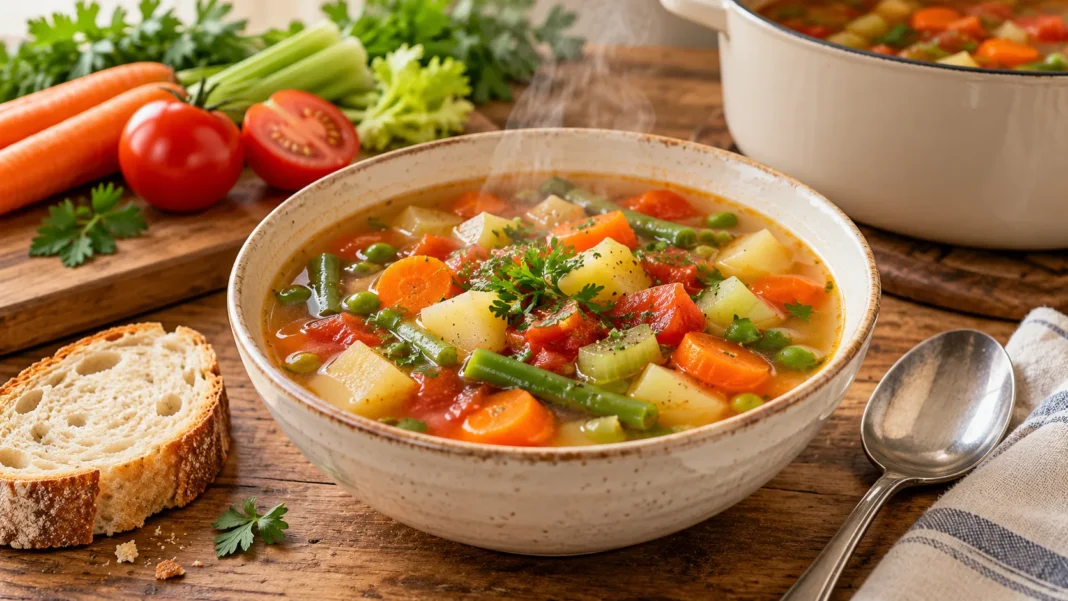
The finished soup has a light tomato broth, soft vegetables, and enough texture to feel satisfying without becoming thick or creamy. You can serve it as a simple lunch, a starter, or part of a larger dinner. Once you understand the basic method, adapting it to the vegetables in your kitchen becomes much easier.
Gather the Ingredients Before You Start
For four servings, prepare one medium onion, two medium carrots, two celery stalks, and two medium potatoes weighing about 300 grams altogether. You will also need two garlic cloves and one cup of frozen peas. Peel the onion and garlic, wash the other vegetables, and peel the potatoes if you prefer them without skin.
For the broth, use one 400-gram can of chopped tomatoes and four cups, or approximately one liter, of vegetable stock. Measure two tablespoons of olive oil, one teaspoon of dried mixed herbs, and one-quarter teaspoon of black pepper. Keep salt available for the final adjustment, since the amount needed depends on how salty your stock is.
Optional finishing ingredients include one tablespoon of chopped parsley and one to two teaspoons of lemon juice. Have a little extra water or stock ready in case you want a thinner consistency after cooking. Set everything near the stove before beginning so you can follow the recipe without searching for ingredients while the vegetables are cooking.
Choose a Suitable Pot and Basic Kitchen Tools
Use a medium-to-large saucepan or soup pot with a capacity of at least three liters. This provides enough room for the broth and vegetables while allowing you to stir comfortably. A pot with a reasonably thick base helps distribute heat more evenly and makes it easier to avoid scorching the onion during the first step.
You will also need a chopping board, a sharp kitchen knife, a wooden spoon or heat-safe spatula, and a measuring jug. A vegetable peeler is useful if you want to remove the carrot or potato skins. Keep a ladle nearby for serving and a small spoon for tasting the broth toward the end.
A lid is helpful, although you do not need to keep the pot tightly covered throughout cooking. Resting it partly over the pot can reduce evaporation while leaving room for steam to escape. Always lift the lid away from your face, and place the pot securely on a burner that suits its base size.
Chop the Vegetables Into Even Pieces
Dice the onion into small pieces and finely chop the garlic so both distribute easily through the soup. Cut the carrots and celery into pieces about one centimeter wide. They do not need to look identical, but keeping them reasonably similar helps prevent some pieces from becoming very soft while others remain noticeably firm.
Cut the potatoes into cubes approximately one to one-and-a-half centimeters across. Larger chunks need more cooking time and can be awkward to eat alongside finely chopped vegetables. If you prepare the potatoes well before cooking, hold them briefly in cold water to reduce browning, then drain them before adding them to the pot.
Place the chopped onion, carrots, and celery together, but keep the garlic and frozen peas separate. The garlic goes in later to reduce the chance of burning, while the peas need only a short cooking time. This simple preparation makes the cooking sequence easier to follow, especially if you are making homemade soup for the first time.
Start With Onion, Carrots, and Celery
Place the pot over medium heat and add the two tablespoons of olive oil. Once the oil is warm, add the chopped onion, carrots, and celery. Stir to coat the vegetables, then cook them for approximately six to eight minutes, stirring regularly, until the onion begins to soften and look slightly translucent.
The aim is to soften this vegetable base without developing dark, burnt patches. If the onion starts browning quickly or the vegetables stick, reduce the heat and stir more frequently. You can add a small splash of water to loosen light sticking, but make sure the pot is not so hot that everything immediately dries out again.
Add the chopped garlic and cook for another 30–60 seconds while stirring. Garlic releases its aroma quickly, so it does not need several minutes on its own. As soon as it smells fragrant, move to the next step rather than waiting for it to become brown, which can give the broth an unpleasant bitter flavor.
Add the Potatoes, Tomatoes, Broth, and Seasoning
Add the diced potatoes and pour in the can of chopped tomatoes, including its juice. Stir through the softened vegetables, then add the four cups of vegetable stock. The ingredients should move freely when stirred, with enough liquid around them to form a soup rather than a thick vegetable mixture that could catch on the bottom.
Sprinkle in the teaspoon of dried mixed herbs and the quarter teaspoon of black pepper. If your stock already contains salt, wait until later before adding more. If you are using an unsalted stock, you can begin with a small pinch, knowing that you will taste and adjust the finished broth before serving.
Increase the heat slightly and bring the soup just to a boil. Stir once to check that nothing is stuck to the bottom, then reduce the heat promptly. A strong rolling boil is unnecessary for this recipe, so aim for a gentle simmer with small bubbles rising steadily rather than the entire surface moving vigorously.
Simmer Until the Vegetables Are Tender
Let the soup simmer gently for approximately 18–25 minutes, with the lid partly covering the pot if needed. Stir occasionally, particularly near the bottom, so the vegetables remain evenly distributed. The cooking time may be shorter or longer depending on the size of your potato cubes and how firmly the carrots were chopped.
To check readiness, lift out a potato cube and a piece of carrot with a spoon. They should yield easily when pressed with a fork, while still holding their shape in the broth. If either remains hard in the center, continue simmering for a few minutes and test again rather than adding the peas immediately.
Keep an eye on the liquid level as the soup cooks. If evaporation leaves the mixture thicker than you want, add a little hot water or stock and return it to a gentle simmer. Avoid adding a large amount at once, because small adjustments make it easier to preserve the flavor and achieve your preferred consistency.
Add the Peas and Adjust the Final Flavor
Once the carrots and potatoes are tender, stir in the cup of frozen peas. Continue simmering for approximately three to five minutes, or until the peas are hot and tender according to their package instructions. Adding them near the end helps them retain their shape rather than becoming overly soft during the longer vegetable cooking stage.
Taste a cooled spoonful of broth before adjusting the seasoning. Add salt in small pinches only if needed, and include a little more black pepper if you prefer a stronger savory finish. Stir after each addition and taste again, since stock, canned tomatoes, and personal preferences all affect how much seasoning feels right.
If you are using parsley, stir it in just before serving. Add one teaspoon of lemon juice if the broth tastes a little flat, then taste before deciding whether to add another. The lemon is optional and should brighten the vegetables gently rather than make the soup noticeably sour or overpower its mild tomato flavor.
Serve the Soup With Simple Accompaniments
Ladle the soup into bowls once the vegetables are tender and the seasoning is balanced. Allow it to cool slightly before eating, as potato pieces can remain very hot inside. A little chopped parsley on top adds freshness, but the recipe is complete without a garnish and does not need extra ingredients to taste homemade.
Bread, toast, or a small sandwich can turn this vegetable soup into a more substantial meal. For a lighter lunch, serve a generous bowl on its own and keep the accompaniments simple. Choose additions according to your appetite rather than assuming every bowl needs cheese, cream, or several toppings to feel satisfying.
If you want to include beans, stir in a drained and rinsed can of cooked beans during the final five to ten minutes. This adds substance without changing the basic method significantly. Check the broth level afterward, because extra ingredients may require another small splash of stock to keep the consistency comfortably spoonable.
Make Easy Vegetable Substitutions Without Losing the Method
You can replace celery with a small amount of chopped leek or use an extra carrot if celery is unavailable. Firm vegetables such as carrots and potatoes need longer cooking, so add them with the main broth stage. Keep the total quantity close to the original recipe while learning, which makes the liquid balance easier to manage.
Softer vegetables need different timing to avoid becoming mushy. Small zucchini pieces or green beans can go in during the later part of simmering, while spinach needs only a brief time near the end. Check each addition for tenderness, and use its texture rather than a single cooking time as your final guide.
Frozen mixed vegetables can also make preparation easier, particularly when you have limited time for chopping. Follow the package cooking instructions and consider which vegetables the mixture contains before deciding when to add it. Keep the onion-and-garlic base if possible, since that early cooking step provides flavor even when most of the other vegetables are frozen.
Fix Common Beginner Soup Problems
If the soup tastes bland, first check whether it needs a small amount of salt rather than immediately adding several new spices. A little pepper, parsley, or lemon juice may also help, depending on what seems missing. Make one adjustment at a time so you can understand its effect instead of accidentally overwhelming the broth.
If the soup is too thick, stir in a little water or stock and heat it through. If it is thinner than you prefer, simmer it uncovered briefly or mash a few cooked potato pieces against the side of the pot. Stir those potatoes back into the broth to add body without introducing a separate flour mixture.
If the vegetables are too firm, continue simmering gently until they soften rather than serving according to the clock. If they become overly soft, you can blend part of the soup for a different texture. Follow your blender’s instructions for hot liquids, because steam can build pressure in equipment not designed for blending hot food safely.
Store and Reheat Leftover Vegetable Soup
Cool leftovers promptly and refrigerate them within two hours of cooking, using shallow containers so the soup cools efficiently. Avoid leaving a large pot on the counter for several hours while waiting for it to reach room temperature. Divide the soup into manageable portions and use refrigerated leftovers within three to four days.
For longer storage, freeze the cooled soup in suitable containers, leaving space for expansion and labeling each portion with the date. Potato texture may become slightly softer or grainier after freezing, although the soup can still be enjoyable. Smaller portions are convenient because you can thaw only the amount you intend to eat.
Thaw frozen soup in the refrigerator or reheat it directly using a suitable method, stirring to distribute heat evenly. When reheating leftovers on the stove, bring the soup to a rolling boil and ensure it is hot throughout. Add a little water if needed, and warm only the portion you plan to serve.
Conclusion
This easy vegetable soup recipe for beginners uses a simple sequence that is useful beyond one meal. Soften the onion, carrots, and celery, briefly cook the garlic, then simmer the potatoes in tomatoes and vegetable stock. Add the peas near the end and adjust the seasoning once the main vegetables are tender.
Even chopping and gentle simmering make the biggest difference to the finished texture. You do not need perfectly cut vegetables or a large collection of spices, but checking tenderness and tasting the broth help you avoid common mistakes. Follow the basic quantities first, then make small substitutions as you become more confident with the method.
Homemade vegetable soup is a practical way to prepare a comforting meal from everyday ingredients. Serve it with bread, add cooked beans for a heartier bowl, or save suitable portions for another day. With a little preparation and careful cooking, you can make a flavorful soup that is easy to repeat and adapt.
FAQs
Can I Make Vegetable Soup Without Stock?
Yes, you can use water, although the broth will have a milder flavor. Keep the onion, garlic, tomatoes, and herbs, then taste carefully and adjust the seasoning near the end.
Should I Cook Vegetables Before Adding Them to Soup?
For this recipe, soften the onion, carrots, and celery in oil first. The potatoes cook in the broth, while frozen peas go in near the end to avoid becoming overly soft.
Can I Use Frozen Vegetables in This Recipe?
Yes, frozen vegetables are suitable. Follow their package instructions and adjust the timing according to the mixture, adding quicker-cooking vegetables later while allowing firmer pieces enough time to become tender.
How Can I Make Vegetable Soup More Filling?
Add a drained can of cooked beans during the final cooking stage, or serve the soup with bread or a sandwich. Add extra broth if the additional ingredients make it too thick.
How Long Does Homemade Vegetable Soup Last in the Fridge?
Refrigerate the soup promptly in shallow containers and use it within three to four days. Freeze portions you will not eat within that period, and reheat leftovers thoroughly before serving.

