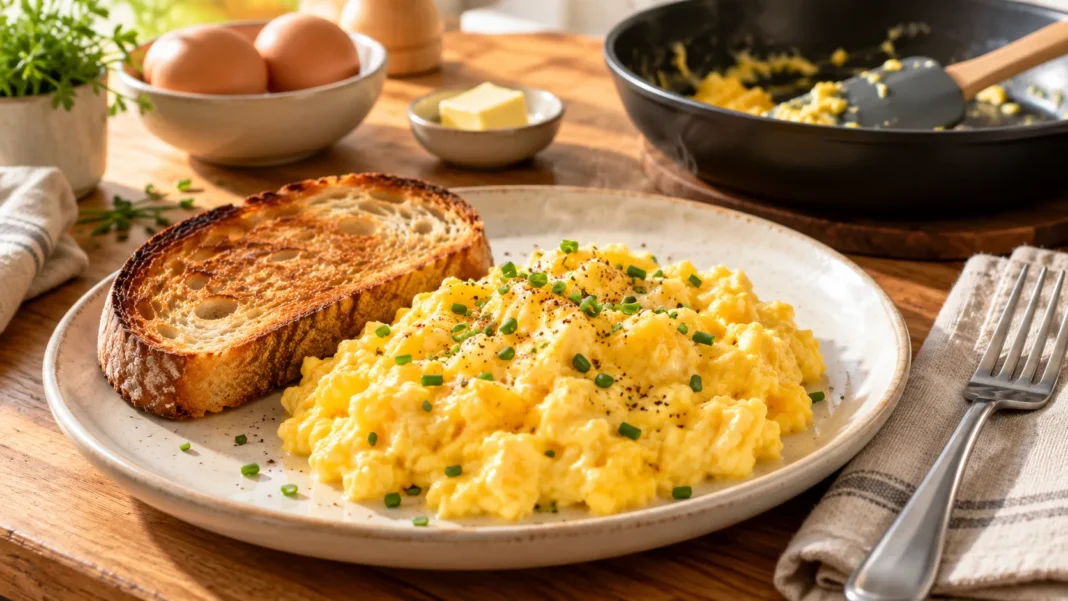
How to Make Perfect Scrambled Eggs at Home
Learning how to make perfect scrambled eggs starts with controlling heat and knowing when to stop cooking. Eggs cook quickly, so a small change in temperature can turn soft curds into a dry breakfast. With a suitable pan, gentle stirring, and a little patience, you can make eggs that are tender, flavorful, and evenly cooked.
This recipe makes two servings using four large eggs, one tablespoon of butter, a quarter teaspoon of salt, and a little black pepper. You can finish with chopped chives if you like, but no milk or cream is required. Allow about five minutes for preparation and another four to seven minutes for cooking.
The method produces soft, medium-sized curds that hold together without feeling rubbery. It works well for beginners because you can watch the eggs change and adjust the heat as needed. Once you understand those visual cues, you can adapt the stirring technique to make smaller, creamier curds or larger, fluffier pieces.
Start With Fresh Eggs and Simple Ingredients
Choose eggs with intact shells and keep them refrigerated until you are ready to cook. Four large eggs provide a practical amount for two people, especially when served with toast or another side. Crack them into a separate bowl rather than directly into the pan so you can check for shell fragments before heating begins.
Measure one tablespoon of butter for flavor and to help the eggs move smoothly across the cooking surface. You can substitute a similar amount of a suitable cooking oil if you prefer. Keep the other ingredients simple during your first attempt, since fewer additions make it easier to understand how heat and stirring affect the texture.
Begin with a quarter teaspoon of salt for four eggs, then adjust the finished dish according to taste. If you use salted butter or plan to add cheese, you may want slightly less. Black pepper and herbs can go in at the end, allowing you to judge the eggs’ flavor before adding stronger seasonings.
Choose a Pan That Gives You Good Control
A small or medium nonstick frying pan is convenient for scrambled eggs because the curds release easily and require little force to move. For four eggs, a pan around 20–24 centimeters wide is usually manageable. An oversized pan spreads the mixture thinly, which can make it cook faster than you expect.
Use a silicone or other non-scratching spatula that can sweep across the base and reach the edges. A flexible edge helps you move cooked egg without scraping aggressively or leaving a layer behind. Avoid sharp metal tools on surfaces that are not designed for them, and follow the pan manufacturer’s guidance for heating and utensils.
Have your bowl, spatula, serving plates, and any side dishes ready before starting the eggs. Scrambling requires attention, particularly during the final minute when the texture changes quickly. Preparing toast and chopping herbs first lets you concentrate on the pan and serve the eggs as soon as they reach the right consistency.
Whisk the Eggs Until the Mixture Is Even
Crack the four eggs into a bowl and add the measured salt. Use a fork or whisk to combine the yolks and whites until the mixture has a consistent color. Check for thick strands of egg white, because uneven mixing can leave separate white patches among the yellow curds during cooking.
You do not need to whisk vigorously for several minutes or create a large layer of foam. A brief, thorough mixing is enough for this method, usually taking about 30–45 seconds. Aim for a smooth mixture that pours easily, rather than judging readiness by the number of bubbles sitting on the surface.
If you find a piece of shell, remove it with a clean spoon before cooking. Keep raw egg away from ready-to-eat ingredients, and wash your hands and any surfaces that become contaminated. These simple preparation habits let you move directly from mixing to cooking without interrupting the process to fix avoidable problems.
Understand Whether Milk or Cream Is Necessary
Milk and cream are optional additions, so you can make tender scrambled eggs without either. The basic recipe relies on butter, moderate heat, and timely removal from the pan. Starting without extra liquid helps you learn the eggs’ natural cooking behavior and makes it easier to recognize when the curds are set.
If you prefer to try milk, add only a small amount, such as one tablespoon for four eggs. Whisk it into the mixture before cooking so it distributes evenly rather than collecting in separate areas. Extra liquid changes the mixture and cooking time, so continue using texture as your guide instead of following a fixed minute count.
Cream adds richness, but it cannot compensate for a pan that is too hot or eggs that cook too long. Avoid treating dairy as the secret to a perfect result, since the cooking technique still matters most. Compare versions once you are comfortable with the basic method and choose according to your preferred flavor and texture.
Warm the Pan Gently and Melt the Butter
Place the pan over low to medium-low heat and add the tablespoon of butter. Let it melt and spread it across the base with the spatula or a gentle tilt of the pan. The butter should be melted and lightly foaming, without turning dark brown or producing smoke before the eggs are added.
If the butter browns rapidly, move the pan off the burner and lower the heat before continuing. A pan that is too hot can set the underside of the eggs immediately and leave little time for controlled stirring. Gentle preheating gives you a more forgiving start, especially on a stove you are still learning to use.
Pour the whisked eggs into the pan once the butter has melted. You may hear a very gentle sound, but a loud, aggressive sizzle suggests excessive heat for this method. Allow the mixture to rest briefly until a thin layer begins setting at the bottom, then start moving it carefully with your spatula.
Stir With Slow Sweeps to Form Soft Curds
Draw the spatula slowly across the bottom of the pan, moving the lightly set egg toward the center. Let the uncooked mixture flow into the space you have cleared, then repeat from another direction. This creates curds gradually while helping prevent the lower layer from cooking much faster than the rest.
Continue with gentle folding and sweeping movements rather than chopping the eggs into tiny pieces. For medium-sized curds, pause briefly between sweeps so another thin layer can set. Keep the spatula in contact with the base as you move it, paying attention to the edges where small patches can cook more quickly.
Watch the texture throughout the process and adjust the burner if the eggs begin setting too rapidly. If progress seems slow, raise the heat slightly rather than jumping straight to high. Depending on your pan and stove, the full cooking stage will usually take around four to seven minutes, but the appearance matters more than timing.
Know When the Scrambled Eggs Are Done
As the eggs cook, the liquid mixture becomes a collection of soft curds that hold their shape. For this recipe, the finished eggs should look moist while being fully set, with no runny raw egg between the curds. A shiny surface alone does not necessarily mean the eggs are uncooked, because butter also adds gloss.
Reduce the heat as the eggs approach readiness and inspect any wetter areas before removing the pan. If you use a food thermometer, an egg dish should reach 160°F, or about 71°C. This is particularly useful when appearance is difficult to judge or when cooking for someone who needs extra care around foodborne illness.
Once the eggs are cooked, transfer them promptly to serving plates. A hot pan continues transferring heat even after the burner is switched off, which can dry the curds if they remain inside. Avoid relying on residual heat to finish visibly raw eggs; complete cooking first, then plate them without unnecessary delay.
Add Cheese, Herbs, or Vegetables at the Right Time
For cheesy scrambled eggs, sprinkle about two tablespoons of finely grated cheese into the pan near the end of cooking. Fold it through gently so it melts without requiring several extra minutes on the stove. Taste before adding more salt, since cheeses vary in saltiness and can change the balance of the finished dish.
Fresh chives or parsley can be folded in during the final moments or scattered over the plated eggs. Start with a small amount, such as one tablespoon of chopped herbs for four eggs. This adds freshness without overwhelming the eggs, and it lets you keep the basic recipe recognizable while experimenting with flavor.
Cook mushrooms, onions, peppers, or other substantial vegetables separately before combining them with the eggs. Raw additions can release moisture or remain undercooked during the short scrambling stage. Drain away excess liquid and add the warm vegetables near the end, using modest quantities so they do not overwhelm the curds or make the mixture difficult to judge.
Fix Dry, Watery, or Uneven Scrambled Eggs
Dry scrambled eggs usually result from excessive heat, extended cooking, or remaining in the hot pan after they are ready. For the next batch, use a lower burner setting and plate the eggs promptly once fully set. Extra butter may add richness, but it will not restore the original texture of already overcooked curds.
If liquid collects around the eggs, consider whether you added too much milk, used watery vegetables, or cooked the mixture unevenly. Check that the eggs themselves are fully cooked before serving. Reducing optional liquids and draining cooked vegetables can help, while gentle, even stirring improves consistency without forcing you to keep the entire batch cooking unnecessarily.
If some sections turn firm while others remain wet, the pan may be heating unevenly or your stirring may not reach every area. Sweep across the full base and fold the edges inward as the curds form. Use a burner that suits the pan size, and lower the heat if the underside cooks faster than you can manage.
Serve Scrambled Eggs While They Are Fresh
Scrambled eggs are at their best immediately after cooking, when the curds are still tender and warm. Prepare your toast, plates, and drinks beforehand so the eggs do not sit while you finish other tasks. Divide them gently between the plates rather than compressing them into a tight mound that hides their soft texture.
Toast, warm flatbread, sautéed mushrooms, or sliced tomatoes make straightforward accompaniments. For a larger breakfast, add suitable cooked sides according to your appetite and preferences. Avoid piling cold, wet toppings directly over the eggs if you want to preserve their warmth, and serve sauces separately when possible so each person can control the amount.
Finish with black pepper and optional chopped chives, then taste before making further adjustments. Scrambled eggs have a mild flavor, so a small amount of seasoning can be enough. Keep presentation simple during your first attempts, allowing the cooking technique and texture to remain the main focus rather than adding several ingredients to disguise the result.
Adjust the Method for One Serving or a Larger Batch
For one serving, use two large eggs, about half a tablespoon of butter, and a small pinch of salt. Choose a smaller pan if available, because two eggs can spread too thinly across a large cooking surface. Follow the same gentle stirring method, recognizing that a smaller quantity may reach readiness more quickly.
For a larger batch, use a suitably sized pan that gives you enough room to fold the eggs without crowding. More eggs take longer to heat through, and the differences between the edges and center can become greater. Maintain moderate heat and stir across the whole base rather than increasing the temperature sharply to speed things up.
If your pan cannot comfortably hold the quantity, cook separate batches instead. Prepare all the mixtures and serving components first so each batch can be cooked with proper attention. Avoid leaving finished eggs over direct heat while waiting, since holding them that way can undo the gentle cooking and produce dry curds by serving time.
Conclusion
Perfect scrambled eggs come from a manageable combination of even mixing, gentle heat, and careful timing. Four large eggs, one tablespoon of butter, and simple seasoning are enough to make two satisfying servings. Whisk the mixture thoroughly, warm the pan without browning the butter, and use slow sweeps to create soft, evenly cooked curds.
Watch the eggs rather than depending entirely on a timer, because pans and burners behave differently. Cook until the eggs are fully set without runny raw portions, then transfer them promptly to plates. This helps you achieve a moist texture while avoiding the extra time in a hot pan that often makes scrambled eggs rubbery.
Once you can repeat the basic method confidently, try small additions such as herbs, cheese, or separately cooked vegetables. Change one detail at a time so you can understand what improves the result for your preferences. With a little practice, scrambled eggs become a reliable breakfast you can prepare without complicated ingredients or equipment.
FAQs
Do You Need Milk to Make Scrambled Eggs?
No, milk is optional. Eggs, butter, and gentle heat can produce tender scrambled eggs on their own; if you add milk, begin with about one tablespoon for four large eggs.
Why Do My Scrambled Eggs Turn Rubbery?
Rubbery eggs usually cook too long or at excessive heat. Use low to medium-low heat, stir gently, and transfer the fully cooked eggs to plates promptly instead of leaving them in the pan.
Should I Salt Eggs Before or After Cooking?
You can salt them before cooking for even distribution. Begin with a modest amount and adjust afterward, particularly when using salted butter or cheese that already contributes salt to the dish.
How Do I Know Scrambled Eggs Are Fully Cooked?
The eggs should be set with no runny raw portions between the curds. A food thermometer provides an additional check: egg dishes should reach 160°F, or approximately 71°C, before serving.
How Can I Make Larger Curds in Scrambled Eggs?
Allow a thin layer to set briefly before moving it with slow, broad spatula sweeps. Fold gently and pause between movements, while keeping the heat controlled so the underside does not overcook.

