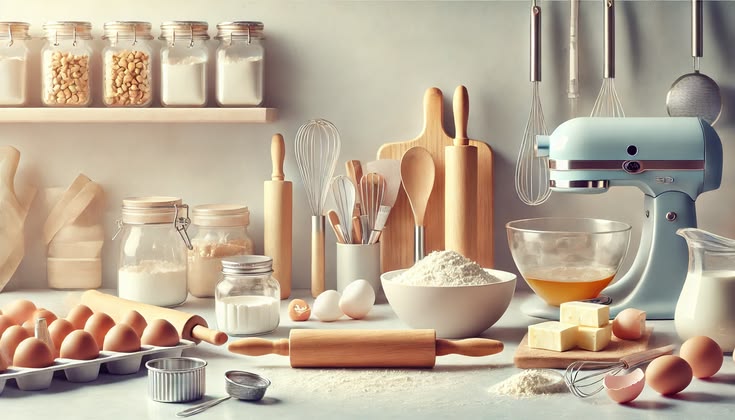
Introduction to Baking Tools
Baking is an art form that requires precision, creativity, and the right set of tools. For beginners, having the appropriate baking tools is crucial in ensuring a successful baking experience. Whether one is crafting a simple batch of cookies or a complex layer cake, the right tools can significantly influence the outcome and overall enjoyment of the process.
The importance of proper baking tools cannot be overstated. High-quality utensils and equipment can streamline various tasks, making them easier and more efficient. For instance, using a good mixing bowl can simplify the process of combining ingredients, while a reliable set of measuring cups ensures accurate quantities—an essential aspect of successful baking. Such attention to detail is critical, as even minor discrepancies in measurements can lead to unsatisfactory results.
Moreover, the right baking tools can foster confidence in new bakers. Using tools designed for ease of use can alleviate some of the intimidation that often accompanies the beginning stages of baking. Baking should be a pleasant and fulfilling activity, and having a well-equipped kitchen can enhance this experience. Essential items like sturdy mixing spoons, flexible spatulas, and reliable baking sheets not only improve outcomes but also make the process more enjoyable.
As you embark on your baking journey, it is important to understand that having the right equipment is just as important as mastering recipes. By investing in essential baking tools tailored to your needs as a beginner, you set yourself up for success in both the short and long term. In this way, the path to becoming a skilled baker is made smoother and more enjoyable.
Measuring Essentials
Accurate measurements are crucial in baking as they directly impact the texture, flavor, and overall outcome of a recipe. To achieve consistent results, beginners should be equipped with essential measuring tools that cater to both dry and liquid ingredients.
First, dry measuring cups are indispensable for measuring solid ingredients such as flour, sugar, and oats. These cups typically come in sets that include various sizes, usually ranging from 1/4 cup to 1 cup. It is important to fill the measuring cup with the ingredient, then level it off with a straight edge, avoiding the temptation to scoop directly from the container, which can lead to inaccurate measurements due to packing.
On the other hand, liquid measuring cups are designed to accommodate ingredients such as water, milk, or oil. These cups usually feature a spout and are often made of glass or plastic with measurement markings on the side. When using a liquid measuring cup, it is essential to pour the liquid in and then bend down to eye level to ensure you are accurately measuring the liquid at the meniscus, the curve at the surface of the liquid.
Measuring spoons serve a different yet equally important purpose, particularly for smaller quantities of both dry and liquid ingredients. Typically sold as a set containing teaspoons and tablespoons, measuring spoons allow for precise additions of baking powder, baking soda, salt, and various extracts. Similar to dry measuring cups, scooping directly from a container can result in inaccurate measurements; therefore, it is advisable to use a spoon to transfer the ingredient to the measuring spoon, leveling it off to achieve the correct amount.
In summary, investing in quality measuring tools and understanding how to measure ingredients accurately is fundamental for successful baking. By doing so, beginners can improve their baking skills and ensure that their recipes turn out as intended, leading to a more enjoyable baking experience.
Mixing Bowls and Utensils
In the realm of baking, mixing bowls and utensils play an indispensable role in the preparation process. Beginner bakers can choose from a variety of mixing bowls, each designed to ease the mixing of ingredients while ensuring efficiency. Common types of mixing bowls include stainless steel, glass, and ceramic. Stainless steel bowls are particularly favored for their durability and resistance to staining, making them ideal for rigorous mixing. Glass bowls, on the other hand, allow bakers to check the consistency of their mixtures easily, as they are transparent and do not absorb odors. Ceramic bowls add an aesthetic touch and provide excellent thermal conductivity, great for tasks involving temperature-sensitive ingredients.
When it comes to utensils, several key items are essential for effective mixing. A spatula is a must-have tool, available in various forms such as silicone and metal; it is invaluable for scraping the sides of bowls and incorporating ingredients thoroughly. Whisks are another critical utensil, especially useful for incorporating air into mixtures, ensuring that batters and creams achieve the desired lightness and volume. Different sizes of whisks cater to various tasks, from small ones for mixing small batches to larger ones for blending larger volumes of ingredients.
Wooden spoons are also staple items in the bakeware arsenal. Their sturdiness makes them ideal for mixing thick doughs, ensuring that ingredients are combined evenly without the risk of damaging non-stick surfaces. Having a variety of these utensils on hand enables bakers to tackle various mixing tasks more effectively, leading to a smoother baking experience.
Baking Pans and Trays
Baking pans and trays are essential tools in any beginner’s kitchen, as they come in various shapes and materials, each suited for different baking tasks. Understanding the purpose and function of each type will help novice bakers make informed decisions when purchasing their first tools.
Common types of baking pans include cake pans, muffin tins, and cookie sheets. Cake pans typically come in round or square shapes, allowing bakers to create layer cakes or single-layer desserts. Muffin tins, often made with six or twelve cups, are designed for creating delightful muffins and cupcakes, while cookie sheets, usually flat and rectangular, are ideal for baking cookies, biscuits, and other smaller treats. Each type of pan offers unique advantages depending on the recipe and desired outcome.
When it comes to materials, baking pans can be found in metal, glass, or silicone, each presenting distinct characteristics. Metal pans, made from aluminum or stainless steel, are excellent for even heat distribution, leading to consistent baking results. They tend to produce a nice golden finish on baked goods. Glass pans, on the other hand, provide visibility to the baking progress and are well-suited for layered desserts, but they may require a slight adjustment in baking time and temperature due to heat retention. Silicone baking molds are flexible and non-stick, making it easy to remove baked items, and are ideal for intricate shapes; however, they may bake unevenly for some products if not used correctly.
In choosing the right baking pans for your needs, consider the specific recipes you plan to try and the materials that align with your baking preferences. Investing in a few versatile pans will enhance your baking experience and allow for a wider variety of creations.
Oven Thermometers and Baking Stones
Accurate temperature control is critical when it comes to baking. An oven thermometer is an indispensable tool in any baker’s arsenal, especially for beginners. Many home ovens can be off by as much as 25 degrees, leading to undercooked cakes or overly browned cookies. With an oven thermometer, bakers can ensure that their oven is operating at the correct temperature, which is vital for the successful outcome of recipes. This small, yet effective device can help prevent common baking mishaps and improve overall results.
Finding the right spot for the thermometer is important; ideally, it should be placed in the center of the oven, where the heat is most evenly distributed. Once you are familiar with your oven’s temperature variations, you can adjust the settings accordingly, leading to a more reliable and consistent baking process.
In addition to an oven thermometer, investing in baking stones or sheets can further enhance your baking results. Baking stones, typically made of ceramic or other materials, absorb moisture and distribute heat evenly. This helps create a crispier crust for items such as bread and pizza. When preheated in the oven, they retain high temperatures, providing a professional quality bake that home bakers often desire.
To effectively use a baking stone, it is recommended to preheat the stone for at least 30 minutes at the desired baking temperature. This ensures that the stone reaches the necessary heat to aid in the cooking process. For those who prefer baking sheets, using a heavy-duty, insulated sheet can similarly improve the texture of baked goods by preventing warping and ensuring even heat distribution.
Incorporating an oven thermometer and using baking stones or sheets not only enhances the baking experience but also elevates the quality of the final product, making them essential tools for beginners.
Cooling Racks and Other Essentials
Cooling racks play a crucial role in the baking process, particularly for those new to the art of baking. Once baked goods are removed from the oven, they need to be cooled to achieve the ideal texture and flavor. Placing hot items directly on a solid surface can trap steam and lead to sogginess, compromising the quality of your desserts and breads. Cooling racks, with their elevated design, allow for optimal air circulation, ensuring that baked items cool evenly and retain their intended texture.
Moreover, cooling racks can also be used to glaze items or to cool multiple pans of baked goods simultaneously without crowding. They’re an investment worth making, as they can significantly enhance the performance of your baking.
In addition to cooling racks, there are several other essential tools that every beginner baker should consider adding to their toolkit. A reliable pastry brush is invaluable for applying egg washes or glazes, ensuring that your baked products achieve a beautiful finish. Similarly, a good rolling pin is necessary for achieving even dough thickness when preparing pastries, cookies, or pizza crusts. Other helpful tools include dough cutters and scrapers, which facilitate managing and shaping the dough, making the process more efficient.
Overall, investing in these fundamental baking tools not only simplifies the process but also enhances the overall results. By ensuring that you have the right equipment, including cooling racks, pastry brushes, rolling pins, and dough cutters, you position yourself for success in your baking endeavors. Mastering the basics with these essential tools paves the way for creating delicious baked goods while delivering a satisfying baking experience.
Storage Solutions for Baking Gear
Efficient storage solutions for baking gear are essential for both novice and experienced bakers. Proper organization not only keeps your workspace tidy but also enhances your productivity in the kitchen. For beginners, implementing a systematic approach to storing baking tools can help streamline the baking process.
One effective method for organizing baking gear is to utilize clear containers. Transparent storage bins allow for easy visibility and accessibility, ensuring that less time is spent searching for equipment such as mixing bowls, measuring cups, or cookie sheets. Using different-sized bins for various categories—such as tools, ingredients, and utensils—can create a more structured environment. Labels can further assist in identifying the contents of each bin.
Another valuable storage solution is the use of wall-mounted racks or pegboards. These options are particularly useful for frequently used tools such as whisks, spatulas, and rolling pins. Not only do they provide easy access, but they also free up counter space, making your baking area more functional. Moreover, incorporating magnetic strips can be an innovative way to store metal tools like cutters, ensuring they remain sharp and readily available.
For baking sheets and pans, consider using a vertical organizer or a file-style holder. This prevents stacking and minimizes scratches, prolonging the lifespan of these essential tools. Additionally, drawer organizers can be beneficial for spatulas and measuring spoons, helping maintain order while keeping these smaller utensils in reach.
Maintaining a clean and organized baking area is crucial for beginners. Regularly assessing and decluttering your tools not only enhances your workspace but also fosters a more enjoyable baking experience. By implementing these storage solutions, new bakers can efficiently store their baking gear, leading to a more productive and enjoyable time in the kitchen.
Safety Tips in the Baking Space
Baking can be a delightful experience, but it is essential to prioritize safety in the kitchen. To ensure a pleasant baking journey, one must adhere to specific safety practices that mitigate the risks of injuries and cross-contamination. Firstly, proper handling of kitchen tools is paramount. This includes using sharp knives and utensils with care. Always ensure that your cutting board is stable, and use appropriate cutting techniques to maintain control over your knife. Additionally, it is advisable to keep your workspace tidy, as clutter can lead to accidents.
When it comes to dealing with heat, oven mitts are an essential tool for any baker. While they protect your hands from burns, it is crucial to ensure that they are suitable for the task at hand. Always check that oven mitts are dry before handling hot pans, as moisture can lead to burns. Moreover, when removing items from the oven, use both hands for better stability and maintain a clear line of sight to prevent any accidents while carrying hot dishes.
Preventing cross-contamination is another important safety measure in food preparation. Always wash your hands thoroughly before and after handling different ingredients, especially when using raw eggs or meat. For added safety, utilize separate cutting boards for different food types, such as one for fruits and vegetables and another for proteins. Regularly cleaning your work surfaces and ensuring that kitchen tools are sanitized can greatly diminish the risk of foodborne illnesses.
By following these essential safety tips while baking, beginners can create a safe and enjoyable environment that fosters a love for this rewarding culinary art. From the careful management of cooking tools to practicing food safety, adherence to these principles will serve budding bakers well in their kitchen endeavors.
Conclusion and Encouragement for Beginners
Embarking on a baking journey can be an exciting yet daunting experience for beginners. However, acquiring a few essential baking tools can significantly ease the process and increase your confidence in the kitchen. Throughout this blog post, we have examined various baking tools crucial for novice bakers, including measuring cups and spoons, mixing bowls, baking pans, and a reliable oven thermometer. Each of these tools serves a particular purpose, enabling you to create a range of baked goods with precision and ease.
As you gather your essential baking tools, remember that mastery comes with practice. Don’t be disheartened by initial setbacks or imperfect outcomes; every master baker started from the same point as you. Experimenting with different recipes, honing your skills, and gradually familiarizing yourself with your tools will only enhance your confidence and ability over time. The key to successful baking lies not only in the tools you use but also in your willingness to learn from each experience.
Treat each baking session as an opportunity to improve your technique and explore your creativity. Whether you’re preparing a simple loaf of bread or an elaborate cake, embrace the journey and celebrate your achievements, no matter how minor they may seem. The joy of seeing your baking projects come to life is one of the most rewarding aspects of this culinary craft.
So, gather your essential tools, don your apron, and dive into the art of baking with enthusiasm. The world of baking awaits you, and with each attempt, you will find joy in your creations and growth as a baker. Happy baking!

