Introduction to AI in Education
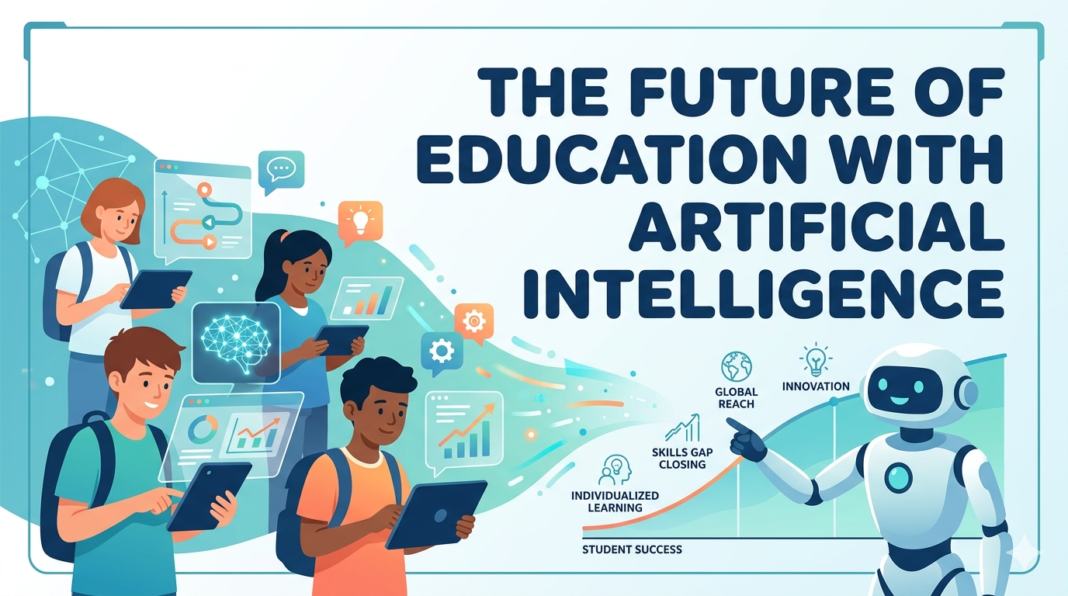
Artificial Intelligence (AI) has become a significant factor in transforming various sectors, and education is no exception. As educational institutions increasingly integrate technology, AI stands out as a powerful tool that is reshaping how students learn, teachers instruct, and administrators manage educational systems. This integration of AI in education enhances learning experiences through personalized instruction, automates administrative tasks, and facilitates data-driven decision-making.
The current role of AI in education encompasses various applications. For instance, AI-powered platforms can analyze students’ performance, identifying strengths and weaknesses in their learning styles. By doing so, these systems can recommend tailored educational resources and strategies, thereby fostering a more individualized learning environment. Such personalization is particularly beneficial for accommodating diverse learning needs, ensuring that every student has an opportunity to succeed.
Additionally, AI technologies streamline administrative operations, helping educational institutions mitigate the burden of routine tasks. Tools such as chatbots can assist with common inquiries from students and parents, while AI algorithms can help schedule classes efficiently based on resource availability and student enrollment. This not only increases operational efficiency but also allows educators to devote more time to teaching and engaging with students.
Furthermore, AI fosters innovative teaching methodologies. Adaptive learning systems, which utilize AI to assess student progress in real-time, facilitate immediate feedback and adjustments to instructional methods. This dynamic adjustment creates an interactive and responsive learning environment that enhances student engagement and achievement.
In light of these advancements, it is evident that the future of education with AI technologies will not only enhance learning experiences but also cultivate a more effective educational experience overall.
The Evolution of Educational Technology
The evolution of educational technology has significantly transitioned from simple teaching aids to complex systems integrating artificial intelligence (AI). Early milestones began with the invention of basic tools such as the abacus and later, the chalkboard, which allowed educators to present information more effectively. The mid-20th century marked a pivotal point with the introduction of films and television into classrooms, offering a visual enhancement to traditional teaching methods.
The later part of the 20th century witnessed the emergence of computers as educational tools. By the 1980s, personal computers began to infiltrate schools, providing access to software that facilitated diverse learning environments. This shift not only expanded the reach of educational resources but also enabled personalization in learning, as students could engage with content at their own pace.
As the internet became widely accessible in the 1990s, the landscape of educational technology transformed once more. Online learning platforms emerged, further democratizing education and allowing for a repository of knowledge to be available at the fingertips of students globally. This era also saw the rise of multimedia content, which fostered deeper engagement and understanding of complex subjects.
Entering the 21st century, the landscape evolved even further with the advent of smart devices, leading to mobile learning (m-learning). The integration of digital tools has prompted educators to rethink traditional methodologies, leveraging technology to enhance the learning experience. Now, with the incorporation of AI applications, educational technology is poised for another transformative shift. AI-driven tools can analyze student performance data, providing insights that allow for tailored educational experiences, thereby significantly impacting instructional strategies and learning outcomes.
This historical context illustrates how educational technology has evolved, laying the groundwork for the innovative applications of AI that are beginning to reshape the future of education.
AI-Powered Personalized Learning
The advent of artificial intelligence (AI) in education is revolutionizing the learning landscape by enabling personalized learning experiences. Unlike traditional methods that often employ a one-size-fits-all approach, AI-powered tools adapt to the unique needs of each student, enhancing engagement and efficacy. These technologies utilize algorithms to monitor and analyze student performance, allowing them to modify content delivery in real time. This level of customization ensures that learners can progress at their own pace, making the learning process more impactful.
Adaptive learning technologies serve as one of the cornerstones of AI-driven education. These systems assess individual student responses and learning habits, providing customized resources and challenging problems based on their competencies. For instance, if a student struggles with specific mathematics concepts, the AI can offer supplementary exercises or alternate explanations tailored to improve understanding. Conversely, students who grasp topics quickly may receive advanced material to keep them stimulated and engaged.
Moreover, AI’s analytical capabilities extend beyond individual learning paths. They help educators by providing insights into class performance trends and engagement metrics, facilitating informed decision-making in instructional strategies. With enhanced data analytics, teachers can identify topics that require review or concepts that might need a different pedagogical approach, fostering a more supportive learning environment.
Furthermore, the integration of AI in education is not solely limited to academic subjects. The emotional and social dimensions of learning can also be catered to; AI systems can now perceive a student’s learning attitude through their interactions, enabling the provision of relevant encouragement or support when necessary. Ultimately, AI-powered personalized learning is paving the way for a more efficient educational experience, equipping students with the resources and attention they need to thrive academically.
Enhancing Teacher Efficiency with AI
The integration of Artificial Intelligence (AI) in the educational sector presents a transformative opportunity to elevate teacher efficiency, thereby allowing educators to focus more on instructional quality and student engagement. One significant way AI contributes to this enhancement is through the automation of administrative responsibilities, a burden that often consumes valuable teaching time. Tasks such as grading assignments and planning lessons can be tedious and time-consuming. By utilizing AI-powered tools, teachers can significantly reduce the hours dedicated to these administrative duties.
For instance, AI-enabled grading systems can evaluate student submissions at a pace and accuracy unattainable by humans, offering immediate feedback. This not only relieves teachers of the laborious task of grading but also provides students with timely insights into their performance, facilitating a more immediate learning process. Additionally, AI can aid in creating customized lesson plans by analyzing the curriculum and assessing the unique learning styles and needs of students. Educators can leverage these insights to design targeted instructional strategies that cater to individual student challenges.
Moreover, AI’s ability to analyze data means that it can identify trends and patterns within student performance, offering educators keen insights into areas where students may struggle. This information enables teachers to implement timely interventions and adapt their teaching methods for optimal effectiveness. By addressing these challenges early and applying tailored strategies, educators can foster a more supportive and successful learning environment.
In summation, the potential of AI to streamline administrative tasks and provide data-driven insights exemplifies its role in enhancing teacher efficiency. As educational institutions adopt these innovations, the focus can shift from mundane administrative work to fostering meaningful student-teacher interactions, ultimately enriching the educational experience.
Challenges and Ethical Considerations
The integration of artificial intelligence (AI) into the educational landscape presents a host of challenges and ethical considerations that must be addressed to create a balanced learning environment. A key concern is data privacy. As AI systems often require vast amounts of data to function effectively, educational institutions must vigilantly protect student information. The implementation of AI technologies entails collecting, storing, and processing sensitive data, prompting serious questions about who has access to this data and how it is being safeguarded. The risk of data breaches is a significant concern, as unauthorized access could lead to misuse of personal information, thereby jeopardizing student privacy.
Another pressing issue is equity in access to technology. While AI has the potential to enhance learning experiences, its benefits may not reach all students equally, exacerbating existing disparities in education. This digital divide can result in unequal opportunities, particularly for students from disadvantaged backgrounds who may lack access to necessary technological tools. Schools need to ensure that all students receive equitable access to AI resources; otherwise, the risk of marginalization may grow, rather than diminish, with the introduction of such innovations.
Furthermore, the incorporation of AI in education raises concerns about the dehumanization of the learning experience. Education is inherently a relational process, involving interactions between students and educators. The reliance on AI could lead to diminished personal connections, with machines substituting for human teachers in some capacities. This shift may affect students’ emotional and social development, highlighting the importance of maintaining a human element within educational frameworks. Striking the right balance between AI tools and human engagement is crucial to ensure that the essence of learning remains intact.
Case Studies of AI in Action
The incorporation of Artificial Intelligence (AI) in education has already begun to influence how learning processes are structured and executed. Several institutions across the globe are leveraging AI technologies to enhance both teaching and learning experiences. One prominent example is the Georgia Institute of Technology, where an AI-based virtual teaching assistant named Jill Watson was developed. Jill was employed in a graduate course on artificial intelligence, providing students with timely answers to their queries and fostering increased engagement. The success of this initiative underscored the potential for AI to efficiently manage routine inquiries, thus allowing educators to focus on more complex aspects of teaching.
In addition, Carnegie Mellon University has implemented AI within its Open Learning Initiative (OLI), which utilizes intelligent tutoring systems to adaptively guide students through coursework. The AI analyzes individual performance data to tailor feedback and resources to the student’s needs, significantly improving retention rates and learning outcomes. This approach not only personalizes the learning experience but also provides educators with invaluable insights into student progress, enabling targeted interventions.
Furthermore, the University of Southern California is exploring AI solutions through its use of predictive analytics. By analyzing student behaviors and academic metrics, the university has been able to identify at-risk students early in their academic journey. This proactive measure allows for timely support from advisors and faculty, leading to higher graduation rates. These case studies exemplify the transformative potential of AI in education, showcasing how it can create more adaptive, efficient, and effective learning environments. As more institutions embrace these technologies, the landscape of education is poised for significant advancement.
The Future Workforce and Skill Development
As advancements in technology continue to unfold, the role of artificial intelligence (AI) in shaping the future workforce has become increasingly evident. The integration of AI into various sectors has not only transformed existing job roles but has also led to the emergence of new career opportunities that require a distinct set of skills. Consequently, it is essential for educational institutions to recognize these changes and adapt their curricula accordingly to adequately prepare students for a tech-driven economy.
A significant aspect of this transformation lies in equipping students with skills that align with the demands of rapidly evolving job markets. Traditional education models often emphasize rote learning and standard assessments, which may no longer suffice in an era where critical thinking, creativity, and adaptability are paramount. Therefore, a paradigm shift towards experiential and project-based learning is crucial, allowing students to engage with real-world problems and develop solutions using AI and other technologies.
Furthermore, integrating AI education within the curriculum is instrumental in familiarizing students with the tools and technologies that are increasingly prevalent in the workplace. By fostering an understanding of AI concepts, programming languages, and data analytics, educational institutions can empower students to navigate complex technological environments with confidence. This type of education not only prepares students for technical roles but also encourages interdisciplinary approaches, where knowledge from various fields synergizes to foster innovation.
Moreover, collaboration between educational institutions and industries is vital to ensuring that students acquire relevant skills that meet employer expectations. Such partnerships can provide students with essential internship opportunities, mentorship, and insights into current industry trends. Ultimately, by prioritizing AI education and skill development, we can equip future generations to thrive in a workforce that is continually adapted to technological advancements.
AI and Lifelong Learning
The concept of lifelong learning has gained significant traction in recent years, emphasizing the importance of continuous education throughout an individual’s life. As the job market evolves due to technological advancements, particularly the rising influence of artificial intelligence (AI), there is an increasing need for individuals to adopt a mindset conducive to self-improvement and skill development. AI plays a pivotal role in facilitating this process, providing diverse and tailored educational experiences suited to the varied needs of adult learners.
One way AI enhances lifelong learning is through personalized learning pathways. By utilizing algorithms that analyze individual performance, preferences, and goals, AI systems can curate educational content that aligns with a learner’s unique requirements. This adaptability makes learning more efficient and engaging, enabling adults, who often juggle numerous commitments, to integrate education seamlessly into their busy schedules. In this context, AI can assist in not only pushing learners towards specific skill sets but also adjusting the learning methodologies to fit each person’s pace and style.
Furthermore, AI-driven platforms can offer flexible learning solutions that accommodate diverse contexts, from professional development to personal interests. For instance, AI can provide recommendations for online courses, workshops, and resources based on the user’s past interactions and objectives. This feature allows learners to select from a plethora of options at their convenience, fostering an environment where education is not confined to traditional classroom settings.
Additionally, AI applications in lifelong learning extend to facilitating collaborative learning opportunities. By connecting like-minded individuals and fostering communities of practice, AI technologies can promote shared learning experiences that enhance motivation and knowledge exchange. As technology progresses, the potential for AI to revolutionize how education is accessed and pursued continues to expand, making lifelong learning more attainable for everyone.
Conclusion: Embracing AI in Education
The integration of artificial intelligence in education is not merely a trend but a profound shift affecting how educational institutions operate and deliver content. As we have explored, AI offers a multitude of benefits, such as personalized learning experiences and efficient administrative processes, which can significantly improve educational outcomes. It is crucial for educational stakeholders—policymakers, administrators, educators, and technology developers—to strategically embrace and adopt these technologies.
One of the key takeaways from the discussions is the potential of AI to tailor learning pathways that cater to individual student needs, thereby encouraging diverse learning styles and removing barriers to achievement. Moreover, AI can streamline routine tasks, allowing educators to focus more on teaching and less on administrative burdens. This shift not only enhances efficiency but also enriches teacher-student interactions, fostering a more engaging learning environment.
However, the integration of AI in education is not without its challenges, including issues related to data privacy, potential biases in AI algorithms, and the need for adequate training for educators. Addressing these concerns requires a collaborative approach involving all stakeholders. Engaging in conversations regarding ethical AI usage, developing robust policies, and creating equitable access to technology are vital components of successfully embedding AI into existing educational frameworks.
As the landscape of education continues to evolve, it is imperative to recognize the value of artificial intelligence as a tool that, when applied judiciously, can enhance educational experiences. By fostering collaboration and open dialogue among all parties, we can work towards a future where AI not only supports educational goals but also enriches the learning community as a whole.

 in the education sector. From personalized learning)