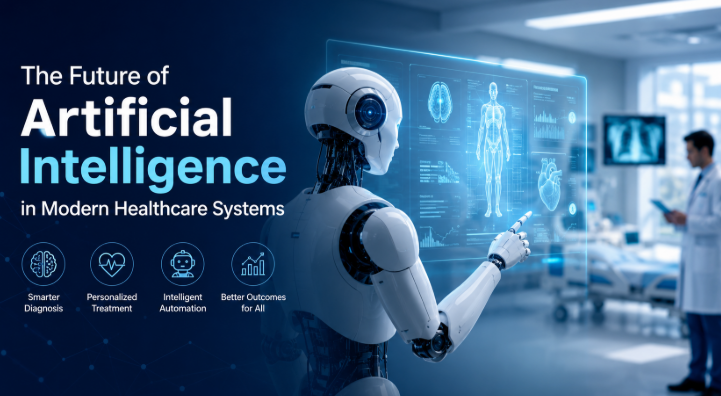
Introduction to Artificial Intelligence in Healthcare
Artificial intelligence (AI) has emerged as a revolutionary technology in various sectors, including healthcare. AI encompasses a range of techniques that enable computers to mimic human cognitive functions such as learning, reasoning, and problem-solving. In the context of healthcare, AI applications are designed to enhance clinical decision-making, streamline administrative processes, and improve patient outcomes.
Currently, the integration of AI into healthcare systems is gaining momentum. Hospitals and clinics are leveraging AI-driven tools for diverse applications such as medical imaging, where algorithms assist radiologists in detecting abnormalities in scans. Furthermore, chatbots powered by AI are being utilized to facilitate patient interaction, providing information and support without human intervention. These applications not only enhance efficiency but also reduce the burden on healthcare professionals.
The types of AI tools available in the healthcare sector are varied and tailored to meet specific needs. Machine learning models, for instance, can analyze vast datasets to uncover patterns that inform treatment protocols. Natural language processing (NLP) is another critical area, allowing for the extraction of valuable insights from unstructured clinical notes and patient histories. Predictive analytics tools help in anticipating patient admissions and potential complications, enabling proactive management of resources.
The integration of AI into healthcare systems presents numerous benefits, including improved accuracy in diagnosis, personalized treatment plans, and enhanced patient engagement. These advancements can lead to significant cost savings and increased accessibility to healthcare services, particularly in underserved regions. As AI continues to evolve, its potential to reshape modern healthcare remains immense.
Current Applications of AI in Healthcare
Artificial Intelligence (AI) is making significant inroads in modern healthcare systems, transforming various aspects of patient care and operational efficiency. One prominent application of AI is found within diagnostic software, where algorithms are designed to analyze medical data with remarkable accuracy. Deep learning models can process extensive datasets indeed, drawing insights from patient records, laboratory results, and historical outcomes to assist healthcare professionals in making informed diagnoses.
Additionally, predictive analytics is rapidly becoming an indispensable tool in healthcare settings. By harnessing AI to analyze patterns and trends in patient data, healthcare providers can foresee potential health issues before they arise. This proactive approach not only enhances patient care but also contributes to more efficient resource allocation. For instance, AI can predict hospital admissions based on patient history, thereby ensuring that appropriate resources are available when demand spikes.
Radiology imaging is another domain significantly influenced by artificial intelligence. AI-powered imaging tools aid radiologists by automating the detection of anomalies in images such as X-rays, MRIs, and CT scans. These technologies assist in highlighting areas of concern that might be missed by the naked eye, thereby improving the diagnostic process and patient outcomes. Moreover, they expedite the workflow for radiologists, enabling them to focus on more complex cases.
Lastly, AI-driven chatbots are enhancing patient interaction and support within healthcare systems. These virtual assistants are capable of answering patient inquiries, scheduling appointments, and even providing preliminary health assessments based on symptoms reported by users. By improving access to information and streamlining communication between patients and healthcare providers, chatbots play a crucial role in enriching the overall patient experience.
Potential Innovations on the Horizon
As artificial intelligence (AI) continues to advance, its application within healthcare systems is on the brink of a significant transformation. One of the most promising areas of innovation lies in the development of advanced machine learning algorithms. These algorithms can analyze vast amounts of healthcare data more efficiently and accurately than traditional methods. By identifying patterns and making predictions, machine learning can enhance diagnostics, facilitate early detection of diseases, and optimize treatment plans tailored to individual patient needs.
Another exciting frontier for AI in healthcare is personalized medicine. This approach leverages AI’s analytical capabilities to understand a patient’s genetic makeup, lifestyle, and environmental factors, ultimately leading to more effective treatments. By utilizing AI-driven models, healthcare providers can predict which therapies will be most effective for specific patient profiles, thereby minimizing trial-and-error approaches in treatment. Consequently, patients can receive targeted interventions that significantly improve their outcomes and reduce healthcare costs.
Furthermore, advancements in robotic-assisted surgeries present an innovative leap forward. Integrating AI in robotic systems can enhance precision during complex surgical procedures. These AI-driven robots can analyze real-time data to provide surgeons with enhanced visualizations, predictive analytics, and recommendations, all while maintaining high levels of safety and efficiency. This not only boosts the accuracy of surgeries but also potentially reduces recovery times for patients.
Overall, the potential innovations that AI can bring to modern healthcare systems are vast and varied. As machine learning algorithms become more sophisticated, personalized medicine becomes increasingly feasible, and robotic assistance evolves, the healthcare landscape will likely experience unprecedented changes that improve patient care and outcomes.
Challenges Facing AI Integration in Healthcare
The integration of artificial intelligence (AI) into modern healthcare systems presents a multitude of challenges. One significant hurdle is data privacy. As AI systems process vast amounts of sensitive patient information to derive insights, ensuring the confidentiality and security of this data is paramount. Concerns regarding unauthorized access or data breaches can deter healthcare providers from fully embracing AI technologies, hindering advancements in patient care and operational efficiency.
Moreover, interoperability among various healthcare systems is essential for successful AI integration. The healthcare landscape is characterized by disparate systems that often do not communicate effectively. For AI to analyze and utilize data across these platforms, seamless interoperability must be achieved. This requires standardization of data formats and protocols to facilitate the exchange of information, which can often be a lengthy and complex process.
Another notable challenge is the resistance to change among healthcare professionals. Many practitioners may be skeptical about the efficacy and reliability of AI applications, particularly when it comes to clinical decision-making. This reluctance can stem from a lack of understanding or familiarity with AI technology, leading to hesitation in adopting new practices. Education and training play a critical role in addressing these concerns, helping professionals comprehend the potential benefits and applications of AI in their daily workflows.
Lastly, ethical considerations surrounding AI implementation cannot be overlooked. Issues such as algorithmic bias, accountability, and the implications of AI-driven decisions must be examined thoroughly. The development of robust ethical guidelines is necessary to ensure that AI tools are used responsibly and transparently, ultimately enhancing trust within the healthcare community and among patients.
Enhancing Patient Care through AI
Artificial Intelligence (AI) is increasingly recognized as a transformative force in modern healthcare systems, particularly in enhancing patient care. By leveraging vast amounts of data and advanced algorithms, AI technologies facilitate the development of personalized treatment plans tailored to individual patient needs. These treatment plans take into account a patient’s medical history, genetic information, and lifestyle factors, allowing healthcare providers to offer targeted therapies that improve patient outcomes.
Moreover, AI significantly accelerates the diagnostic process. Traditional methods often require extensive tests and time-consuming evaluations, but AI-powered diagnostic tools enable quicker analysis of medical images and patient data. For example, AI algorithms can identify anomalies within radiological scans far more rapidly than human radiologists, thus enabling earlier interventions that can be critical in conditions like cancer or cardiovascular diseases. This rapid diagnosis not only enhances patient satisfaction through reduced wait times but can also be life-saving.
Another noteworthy advancement is AI-driven patient monitoring systems. These systems utilize wearable technologies and smart devices to continuously track patient vitals and health metrics in real-time. By analyzing this data, AI can detect potential health issues before they escalate, providing healthcare professionals with actionable insights that lead to timely medical responses. Enhanced patient monitoring ensures a proactive approach to healthcare, minimizing risks and optimizing treatment effectiveness.
Overall, the integration of AI into healthcare systems fosters increased efficiency in service delivery. With automation of routine tasks and enhanced decision-making capabilities, healthcare providers can allocate more time and resources to patient care. This seamless synergy not only improves health outcomes but also paves the way for a more responsive and adaptive healthcare environment, fundamentally changing the way we approach patient care in the 21st century.
The Role of AI in Healthcare Administration
Artificial Intelligence (AI) is transforming healthcare administration by optimizing various operational tasks, leading to improved efficiency and accuracy. One significant area where AI can contribute is in streamlining operations. Through automation, healthcare facilities can reduce the time spent on mundane, repetitive tasks such as appointment scheduling, billing, and claims processing. This not only minimizes human error but also allows administrative staff to focus on more complex, value-added activities, enhancing overall productivity.
Moreover, AI-driven systems can improve record-keeping by utilizing electronic health records (EHRs) effectively. Machine learning algorithms can analyze vast amounts of data, ensuring that patient records are updated in real time with accurate information. By implementing AI in this regard, healthcare administrators can maintain comprehensive patient histories, which can be accessed instantly when needed, facilitating better clinical decision-making.
Furthermore, predictive analytics powered by AI can immensely assist in resource allocation within healthcare systems. By analyzing historical data and identifying patterns, AI tools can forecast patient volume, predict which services will be in demand, and allocate resources accordingly. For example, such predictive models can help hospitals manage staff schedules during anticipated peak times, ensuring that the right number of healthcare professionals is available to meet patient needs without overextending resources. This proactive approach to resource management not only enhances operational efficiency but can also improve patient care outcomes significantly.
In conclusion, the integration of AI in healthcare administration is paving the way for more efficient processes, higher accuracy in record management, and better resource allocation. This technological advancement is not only reshaping the administrative landscape of healthcare but also ensuring that the systems operate effectively to serve patients better.
AI and Data Management in Healthcare
Artificial Intelligence (AI) is increasingly becoming integral to healthcare systems, particularly in managing the vast amounts of patient data that modern facilities generate. With electronic health records (EHRs), imaging data, and various interconnected devices, healthcare organizations are faced with the challenge of handling large volumes of information effectively. AI technologies streamline this process by automating data management tasks, allowing healthcare professionals more time to focus on patient care.
One significant benefit of integrating AI into data management is its capability to ensure data quality and accuracy. AI algorithms can analyze patterns in data to identify inconsistencies or errors that may be overlooked by human administrators. For instance, machine learning techniques can effectively detect anomalies in health records, contributing to a more reliable and effective database for healthcare providers. As a result, AI not only enhances the data integrity but also fosters improved clinical decision-making through accurate and up-to-date information.
Furthermore, employing AI for data analysis provides healthcare professionals with valuable insights that can enhance patient outcomes. Advanced analytics powered by AI can sift through massive datasets, identifying trends and correlations that clinical staff may not easily recognize. This capability allows for predictive analytics, which can help anticipate patient needs, personalize treatment plans, and optimize resources within healthcare facilities. As AI continues to evolve, its applications in data management are likely to expand, supporting healthcare systems in becoming more data-driven and patient-centric.
Regulatory Considerations for AI in Healthcare
The integration of artificial intelligence (AI) into healthcare systems presents a unique set of regulatory challenges that necessitate careful consideration. As AI technologies continue to evolve, existing laws may not adequately address the complexities and implications of these advancements. Regulatory bodies are thus faced with the critical task of creating frameworks that not only ensure patient safety but also foster innovation in healthcare delivery.
Currently, many jurisdictions have established guidelines and regulations that govern the use of medical devices and patient care technologies. However, the rapid proliferation of AI applications—ranging from diagnostic tools to predictive analytics—points to a significant regulatory gap. The challenge lies in determining whether existing legislation can encompass the unique operational characteristics of AI systems or if new regulations should be enacted.
Compliance issues also arise as healthcare providers seek to implement AI solutions that align with both ethical considerations and legal requirements. Key concerns include data privacy, informed consent, and accountability in decision-making processes facilitated by AI. For instance, healthcare professionals must navigate regulations such as the Health Insurance Portability and Accountability Act (HIPAA) in the United States, which imposes strict standards on the handling and sharing of patient information. Furthermore, the algorithms used within AI systems often require access to vast amounts of data, raising concerns about data security and potential breaches.
In light of these complexities, it is crucial for regulatory agencies to engage with stakeholders—including AI developers, healthcare practitioners, and patients—to create comprehensive regulations that support the ethical integration of AI. Additionally, fostering a culture of transparency and accountability within AI systems is paramount. As such, there is a need for ongoing regulatory adaptations to not only keep pace with technological advancements but also to ensure the safe and responsible application of AI in modern healthcare.
Conclusion: The Path Forward for AI in Healthcare
The potential of artificial intelligence (AI) to transform modern healthcare systems is substantial, with advancements promising to enhance patient care, streamline operations, and improve diagnostic accuracy. As we look toward the future, it is crucial to recognize the importance of ongoing innovation in this field. AI technologies, when integrated thoughtfully within existing healthcare frameworks, can significantly lower costs and increase efficiency while simultaneously increasing the quality of care.
Collaboration among healthcare providers, AI developers, policymakers, and patients will be essential to harness the full potential of AI in healthcare. Such partnerships can drive the necessary research and development efforts and ensure the alignment of AI tools with the unique needs of the healthcare sector. By engaging diverse stakeholders, the healthcare community can create robust solutions that are both innovative and practical, addressing specific challenges such as predictive analytics for patient outcomes, personalized medicine, and administration optimization.
However, it is critical to prioritize responsible implementation as AI technologies become more integrated into healthcare systems. This entails ensuring ethical practices, maintaining trust, and protecting patient data. AI systems must be transparent, auditable, and accountable, fostering an environment that preserves patient autonomy while enhancing clinical effectiveness.
In conclusion, the future of artificial intelligence in healthcare holds great promise, but its success will depend on the commitment to innovation, collaboration, and responsible practices. By focusing on these key areas, we can pave the way for AI to play an indispensable role in shaping healthier futures for individuals and communities alike.

 is revolutionizing the healthcare industry by enhancing patient care, optimizing operations, and improving)